Earnest Money: Track Your Deposit and Release
Keep a private four-part deposit record, reconcile two fictional receipts with a closing credit and identify missing evidence when a purchase stalls.

An earnest-money record should answer three separate questions: what did you agree to pay, what happened to the payment, and how was the money finally applied or released? A receipt helps with the second question. It does not settle every question about who is entitled to the money.
Chase describes earnest money as a good-faith home-purchase deposit, commonly held by a third party and applied toward the purchase at closing. Keep receipts and review the actual agreement’s conditions with the appropriate professional.
Your contract and applicable law determine obligations and rights. Get unclear terms explained before signing or sending funds, especially when money could be lost. This guide organizes evidence; it does not determine whether you can terminate, obtain a refund or owe more than the deposit.
Identify the holder and verify the destination
Find the named holder in your transaction documents and ask how it acknowledges deposits. Do not infer the correct recipient from a familiar company logo or a message appearing in an existing email chain.
As a precaution for deposit payments, apply the CFPB’s closing-funds verification advice: confirm instructions in person or through a previously established trusted phone number. Do not use the number supplied in a changed-instructions email as your independent check.
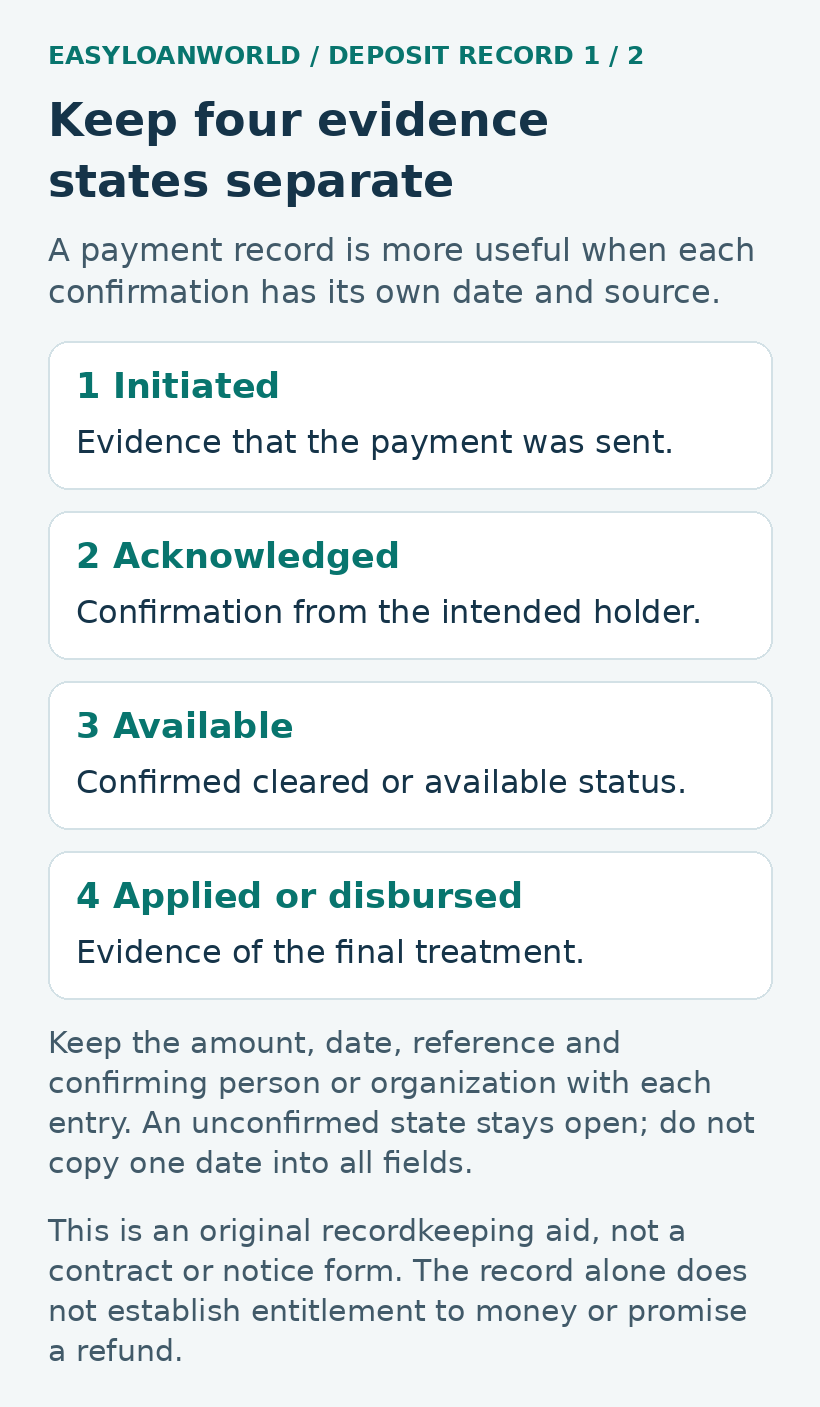
Keep these milestones distinct in your record:
- Initiated: you have evidence that a payment was sent
- Acknowledged: the intended holder confirms receipt
- Available: cleared or available status has been confirmed
- Applied or disbursed: the final treatment has supporting evidence
Date each confirmation. A screenshot saying “sent” does not, by itself, establish every later milestone. Leave unconfirmed fields open rather than copying the same date into all four.
A Texas illustration
The Texas Real Estate Commission’s Form 20-19, effective July 1, 2026, separates deposits and option fees, with distinct payment, notice and release provisions. This Texas illustration excludes condominiums and builder-new-home transactions.
Record separate fees individually, even when included in a combined payment.
Build four private records for one transaction
Keep these records with your documents; do not upload private contracts or payment details to EasyLoanWorld. Use a document name and page or clause reference beside each important entry. The records below are an organizing method, not a substitute contract or notice form.
1. The obligation record
Record the property or transaction identifier, governing state, signed agreement version and amendments. List initial and additional deposits, any separate fee, the named holder and the supporting clause. Check the signed terms before treating an amount as agreed. A blank amount remains unresolved.
2. The date-and-notice record
Record each event’s date, time, time zone, recipient, delivery requirements and clause reference, with the interpretation confirmed.
Keep your calendar reminder in a separate field. For example, “review documents Tuesday” is your private task; it does not establish a contractual deadline. Likewise, keep an extension request separate from evidence that an extension was agreed.
3. The payment-evidence record
Give every installment its own entry: amount, initiation date and reference, verified destination, acknowledgment, confirmed funds status and receipt location. Identify the person or organization supplying each confirmation. Ask your lender which evidence it needs for your particular file.
4. The outcome record
For a closing, compare the receipt total with the proposed deposit credit and save the final explanation of any difference. For an ended transaction, record notice evidence, the holder’s instructions, and release or dispute status.
Use separate entries for requested, authorized and received. Ending a transaction and obtaining a disbursement need separate verification. A hoped-for return should not fund a new commitment before you can establish that the money is available.
Example: two receipts, one incomplete credit
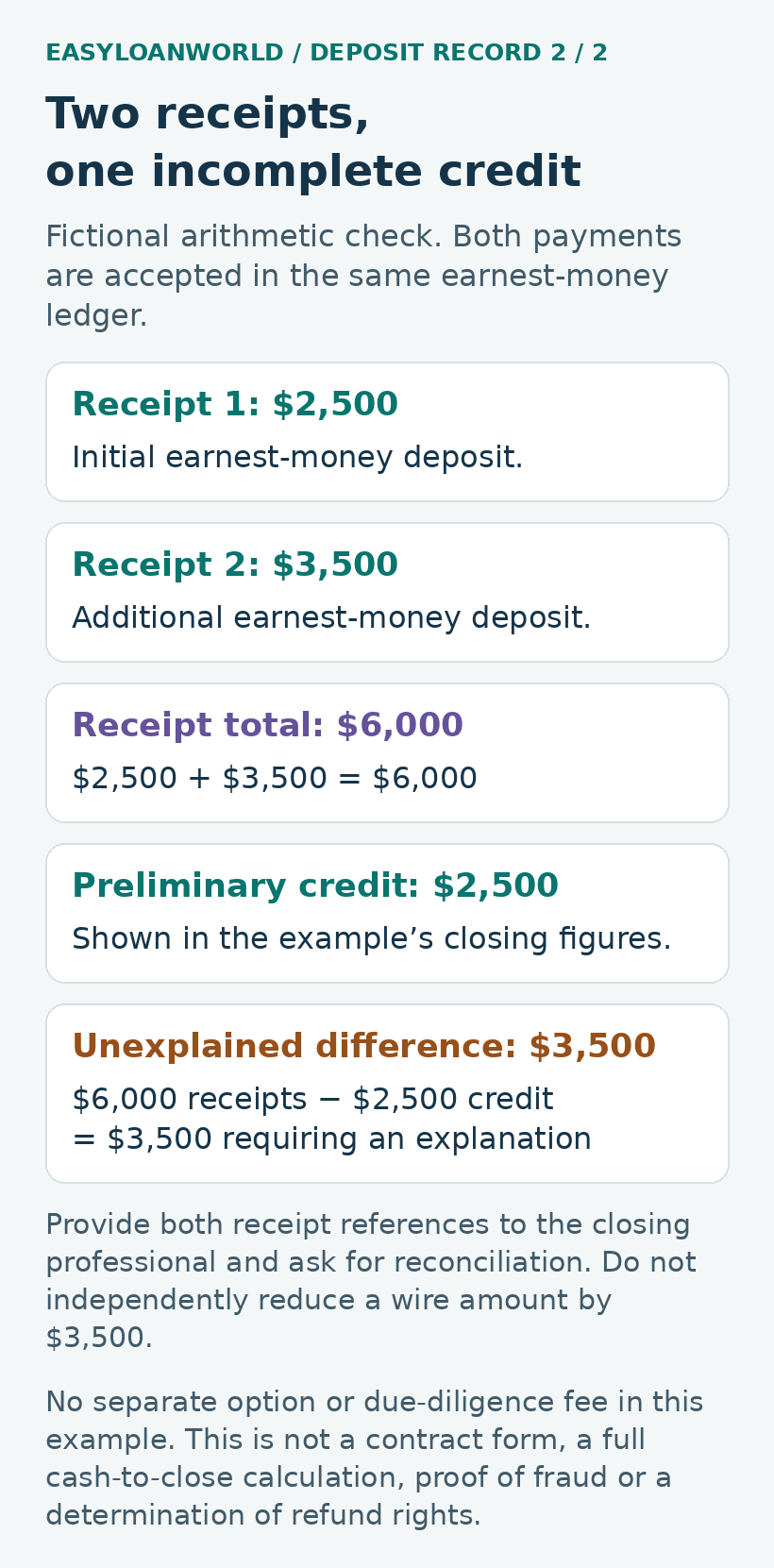
A fictional transaction calls for $2,500 initially and an additional $3,500 in earnest money. Assume both amounts were correctly delivered, accepted and credited to the same transaction’s earnest-money ledger. There is no separate option or due-diligence fee. These are invented amounts, not suggested deposits or market norms.
- Initial receipt: $2,500
- Additional receipt: $3,500
- Combined receipts: $6,000
- Preliminary closing credit shown: $2,500
- Difference requiring an explanation: $6,000 − $2,500 = $3,500
Give both receipt references to the closing professional and request a corrected reconciliation or an explanation of different treatment. Do not independently reduce a wire amount by $3,500. The mismatch also does not, by itself, establish fraud.
This calculation checks one credit against two receipts. It does not calculate the full amount due at closing or determine refund rights if the purchase fails.
If financing fails, collect evidence before assuming a refund
Consider a separate branch of that fictional transaction: before closing, the lender declines the loan. The buyer has the denial message, the signed agreement with a financing provision, and an email to their own agent saying they want to withdraw.
The buyer has not established whether that email satisfied the agreement’s notice requirements or what is needed for release. The record should read: “Contract/legal review needed; funds not yet confirmed available.”
Use the four records to identify missing evidence. An attorney in the property’s jurisdiction should assess uncertain rights before you act on an interpretation.
A financing denial, inspection concern or wish to withdraw alone does not prove an immediate refund right. Nor does this example establish forfeiture, effective termination or breach. Keep the unresolved question visible until the evidence and qualified advice support the next step.
U.S. educational information, not legal advice. Contract terms and applicable state and local law require individual review.
Featured photo: Photo by Filip Szalbot on Unsplash. Used under the Unsplash license. Illustrative house keys. Photo by Filip Szalbot on Unsplash.
California Supplemental Property Tax: Check the Bill, Payment and Cash
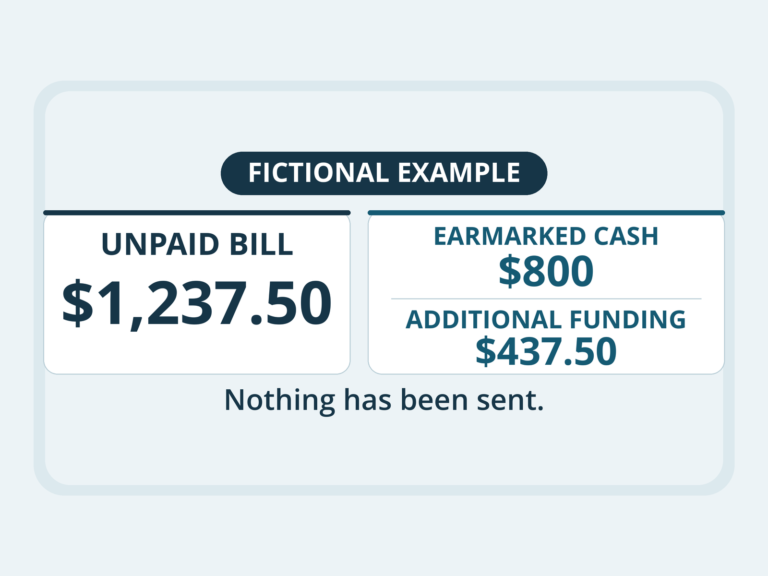
Organize one California supplemental property tax bill, its payment evidence and the cash earmarked for it. A fictional example shows why a funding gap…
Title Insurance Quotes: Compare Policies, Services and Payers
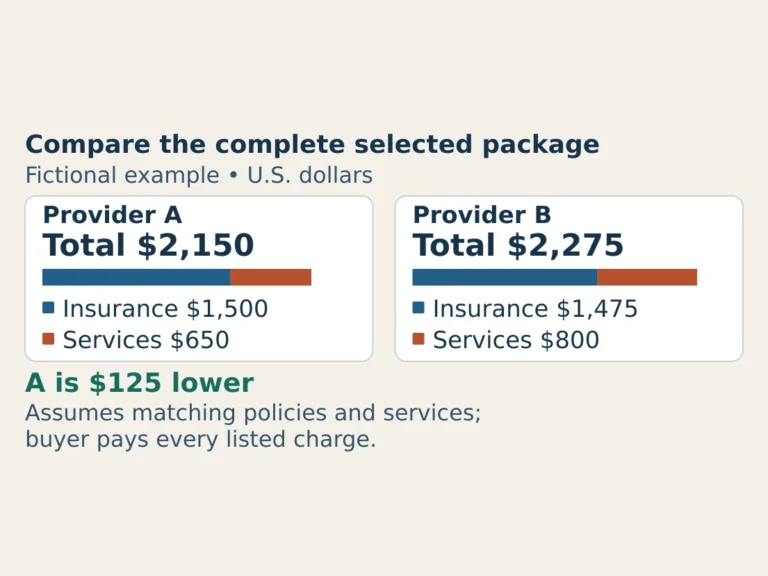
Compare fictional $2,150 and $2,275 title packages using matched coverage, complete service charges and a separate payer worksheet.

Flood Insurance Quote: Test Two Deductibles Against Your Cash Reserve
Test fictional flood quotes against a $6,000 reserve: $180 in annual savings comes with $3,000 more building deductible exposure.