California Supplemental Property Tax: Check the Bill, Payment and Cash
Organize one California supplemental property tax bill, its payment evidence and the cash earmarked for it. A fictional example shows why a funding gap is different from an unpaid balance.
Estimated reading time: 8 minutes
This guide builds a private, bill-specific record around those questions. The worked example is fictional, for California residential secured property. It isn’t an assessment, a county bill, or individualized tax, legal or financial advice. Official guidance checks updated October 25, 2026.
Start here if the bill has just arrived
- Identify the bill. Match its reference, property and covered period; keep it separate from the assessment notice and annual bill. Sort the records.
- Read its dates. Copy the bill’s installment amounts, due dates and delinquency dates now. Don’t wait until you have reconstructed the assessment. Record dates and contacts.
- Confirm the payer and status. Ask whether the servicer will pay this exact bill. Distinguish a plan from a completed disbursement and a matched county posting. Use the payment-status checks.
- Calculate available cash separately. If payment remains your responsibility, compare the required amount with accessible funds that haven’t already been sent. Work out the funding gap.
- Resolve mismatches promptly. If payment was sent but can’t be matched, contact the payer and county with the reference. Obtain bill-specific instructions when a deadline is close; avoid sending a duplicate merely because an online balance is slow to update.
If you want to understand the assessment arithmetic, continue to the fictional value-and-period calculation. That calculation is separate from confirming who will make your payment.
1. Supplemental property tax: put each record in place
Los Angeles County says supplemental bills generally are not paid through impound accounts; check with the lender. Separate an assessment notice, annual bill, supplemental bill and payment evidence. A mortgage escrow balance or planned disbursement doesn’t establish that this specific bill was paid.
Use these questions to organize your paperwork. This is an editorial worksheet, not an official county form; document labels can differ.
| Record | Question to answer |
|---|---|
| Assessment notice | Which event, date and assessed figures are shown? |
| Regular annual bill | What reference and period identify this bill? |
| Supplemental bill | What amount, installments and payment instructions are shown? |
| Payment records | What was sent, by whom, and what has the county posted? |
A supplemental bill is separate from the regular annual bill.
Choose one supplemental bill for the exercise. Record its reference alongside the event and covered period. Don’t match two documents only because their dollar amounts happen to agree. A repeated copy of one bill shouldn’t become a second bill in your worksheet.
If you have only an assessment notice, leave the bill amount, payment dates and bill reference unfilled until you obtain the corresponding billing record. “Not yet established” is more useful than an invented zero or a payment date guessed from the notice.
2. Supplemental property tax: follow the fictional calculation
California supplemental assessments follow qualifying ownership changes or completed new construction. The assessor determines the value difference and sends a notice. Tax uses that difference, the applicable rate and an event-month factor.
Assume one qualifying event on September 15, 2026, with the same owner throughout the covered period. For this exercise, the fictional assessor records show a new assessed value of $450,000 and a prior assessed value of $300,000. These are supplied assessment figures, not numbers inferred from a purchase price.
For the September 15 event, October 1, 2026, through June 30, 2027, covers nine months: factor 0.75.
Los Angeles County’s rate lookup requires a tax rate area and fiscal year. The example’s 1.10% aggregate rate is stipulated; it isn’t a California rate quote.
The assumed 1.10% is the entire value-based rate used in this exercise. Convert it to 0.011; don’t add another 1%. We assume no separate charges, penalties, exemptions, exclusions, corrections or other assessment events.
| Step | Arithmetic |
|---|---|
| Assessed-value increase | $450,000 − $300,000 = $150,000 |
| Annualized increment, for this calculation only | $150,000 × 0.011 = $1,650 |
| Apply the period factor | $1,650 × 0.75 = $1,237.50 |
The result is a fictional $1,237.50 supplemental bill. The $1,650 intermediate figure isn’t the property’s total annual tax bill. This exercise also doesn’t predict a future mortgage payment.
Exclusions, exemptions or multiple events can change the result.
Use your own assessment and bill for your own numbers. For questions about your assessed figures, contact the county assessor; don’t force a different real case into this simplified example.
3. Supplemental property tax: calculate the cash gap
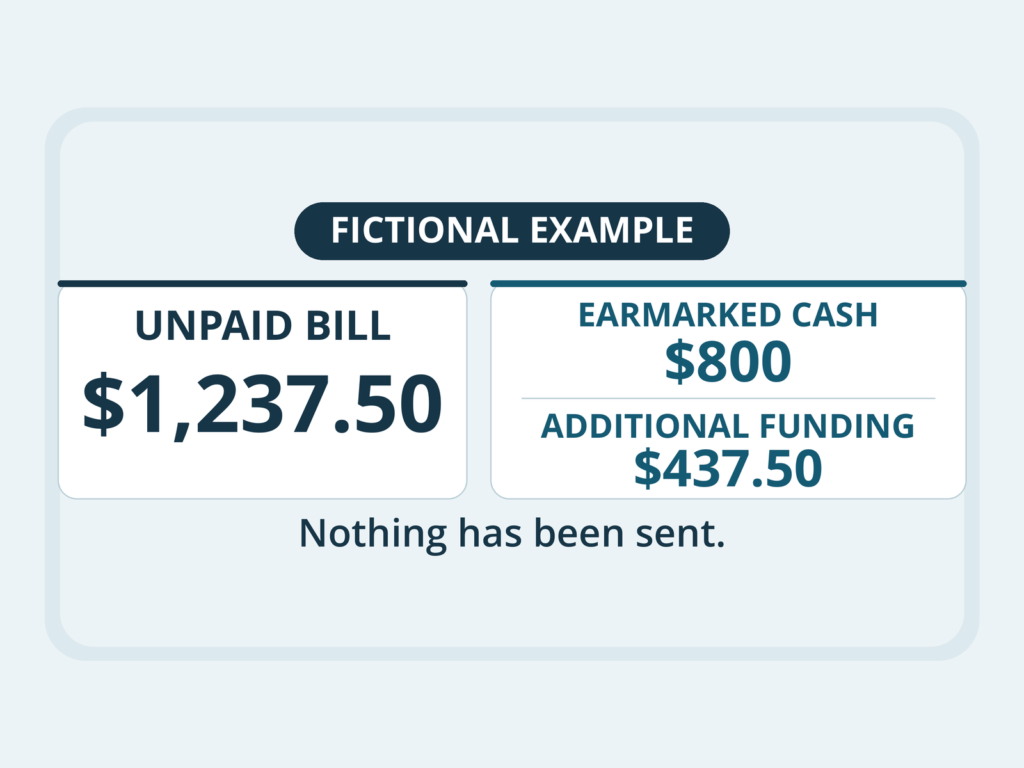
Now assume nobody has sent a payment. The household has $800 of separate, accessible cash earmarked for this bill. It isn’t a mortgage escrow balance, a tax credit, or money already remitted.
| Question | Answer in this example |
|---|---|
| How much of the bill is unpaid? | $1,237.50 |
| How much cash is earmarked? | $800 |
| How much additional funding is needed? | $1,237.50 − $800 = $437.50 |
| Does the funding add up? | $800 + $437.50 = $1,237.50 |
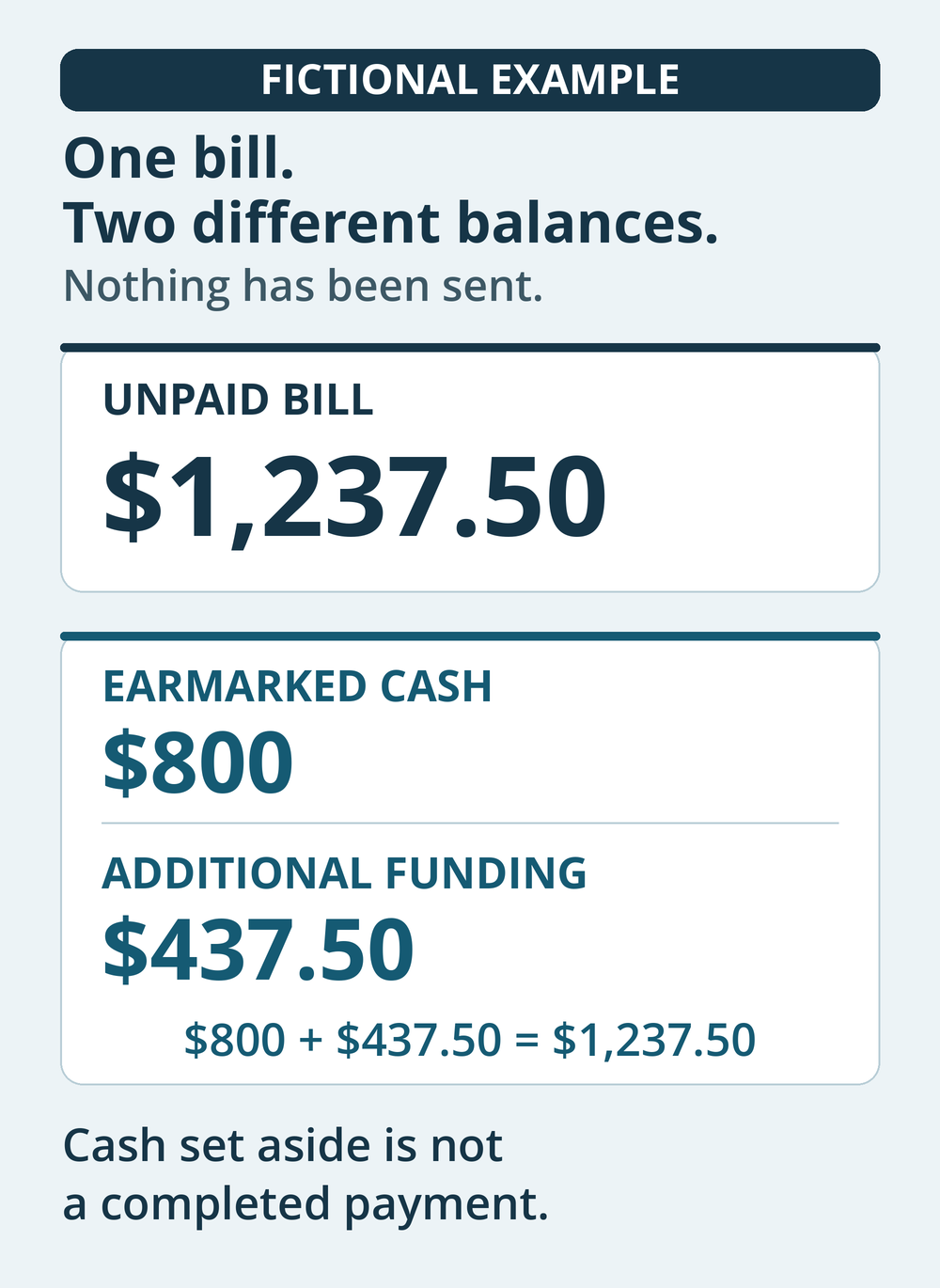
The $437.50 is a funding gap. The unpaid bill is still $1,237.50. Earmarking money changes your household plan; it doesn’t record a tax payment. Sending only the funding gap wouldn’t pay the stipulated full bill.
Don’t treat the $800 as a recommended reserve size or the $437.50 as an escrow shortage. They answer a narrow question about available cash for this selected bill. Neither figure establishes a borrowing need or an amount to subtract from a mortgage installment.
4. Supplemental property tax: verify the payment status
Each scenario below starts over with the same fictional bill. These are alternatives, not four transactions to add together.
- Cash earmarked; nothing paid. No payment has been sent. The unpaid bill is $1,237.50; the household has $800 earmarked and needs another $437.50 to fund the full amount.
- Servicer payment planned; not sent. Assume the servicer has explicitly confirmed an unexecuted plan. The unpaid bill remains $1,237.50. Keep the $800 reserve and $437.50 funding gap visible while you establish who will pay and when.
- Owner payment confirmed. A full $1,237.50 payment, its receipt and the matching county posting are verified. The bill’s remaining balance is $0. In this alternative, the household used its $800 plus the additional $437.50, leaving $0 of that earmarked cash.
- Servicer payment confirmed. The servicer’s full $1,237.50 payment and the matching county posting are both verified. The bill’s remaining balance is $0. The separate $800 hasn’t been used for this payment. Inspect the servicer’s account entries before deciding that cash is available for another purpose.
If payment was sent but hasn’t posted
A completed disbursement awaiting county posting belongs in a separate status: sent, confirmation pending. It’s different from the unexecuted promise above. Record the amount, date, recipient and transaction reference, then reconcile with the county and payer.
Missing posting alone doesn’t prove that no payment was sent. Don’t make a duplicate payment merely because an online balance hasn’t updated. At the same time, don’t mark the bill settled from a promise or unmatched transaction. If a deadline is close, contact both parties promptly for bill-specific instructions and resolution.
5. Write down the dates and the next unanswered question
Orange County explains that supplemental delinquency dates depend on the bill’s mailing date. Use the dates and payment instructions on your own bill; don’t import an annual-bill calendar.
In your private record, keep due dates and delinquency dates in separate fields. Copy any installment amounts as well. This example supplies no payment deadline; don’t calculate one from its September event.
When contacting the servicer, identify the exact bill through its appropriate private channel and ask:
- Will you pay this specific bill, and from which funds?
- Is that payment only planned, or has it been sent?
- If sent, what are its amount, date and transaction reference?
- If the county can’t match it, who is resolving that mismatch and what is the next step?
Retain the answer with the bill. Add a dated follow-up entry rather than overwriting an earlier promise. Don’t wait past a bill deadline for an unanswered message, and don’t reduce your scheduled mortgage payment yourself.
A compact private bill record
Use a notebook or an offline document with these fields:
- County and property identifier; assessment event and period
- Assessment reference; selected bill reference and amount
- Installment amounts; due dates; delinquency dates
- Proposed payer; payment status; amount and date sent
- Payment reference; county posting and any remaining balance
- Separate cash earmarked; additional funding needed
- Unresolved question; contact made; next action
Leave unknown fields marked “verify.” Keep names, addresses, parcel identifiers, mortgage-account numbers, banking details and tax documents out of public comments.
Finish when you can match the selected bill to its payment evidence and explain any remaining balance. If your separate question is about an ongoing monthly payment change, use the escrow-shortage and mortgage-payment guide. This bill record doesn’t calculate that future payment.
Related reading
For a related question, read Mortgage Paid Off: Where Did the Remaining Escrow Money Go? and Mortgage Charge Questions: Choose the Record That Answers Them.

Down-Payment Savings: Can Waiting Require a Bigger Monthly Deposit?
Compare fictional down-payment savings deadlines when the target changes with the assumed price. Separate exact deposits, cent rounding and fixed-deposit gaps.

Down-Payment Assistance: Is Your Paperwork Enough to Decide?
Use three invented teaching cards to identify missing evidence, resolve version questions and prepare a clearer request for assistance paperwork.
Title Insurance Quotes: Compare Policies, Services and Payers
Compare fictional $2,150 and $2,275 title packages using matched coverage, complete service charges and a separate payer worksheet.