FHA Condos: Prepare Your Lender Questions
Match the property record to the question, identify who holds the requested evidence and keep unresolved answers visible.

When a condo search produces a confusing record, the next useful step is a focused lender question. Save what you found, identify the property accurately and ask what review remains. Do not turn a search label or an administrative reference into your own financing decision.
This guide is a preparation aid for an ordinary FHA forward-purchase inquiry. It does not cover refinancing, HUD-owned property purchases or site-condominium treatment. Ask the lender to confirm the property’s classification and which current requirements apply before using this workflow.
Match the project before interpreting the record
HUD’s condominium search accepts location, name and status criteria. Enter details you know; fewer criteria broaden the results. Modify the search if necessary.
A similar building name is a lead to check, not proof of identity. Ask the lender or association contact to confirm the legal project name and the connection to the unit under discussion. Save the date, link and exact displayed wording privately, without rewriting an unfamiliar status into your own conclusion.
If you find nothing, preserve the criteria you tried. That lets the next person investigate the same question rather than guessing which location or spelling you used. No actual property search was performed for this guide.
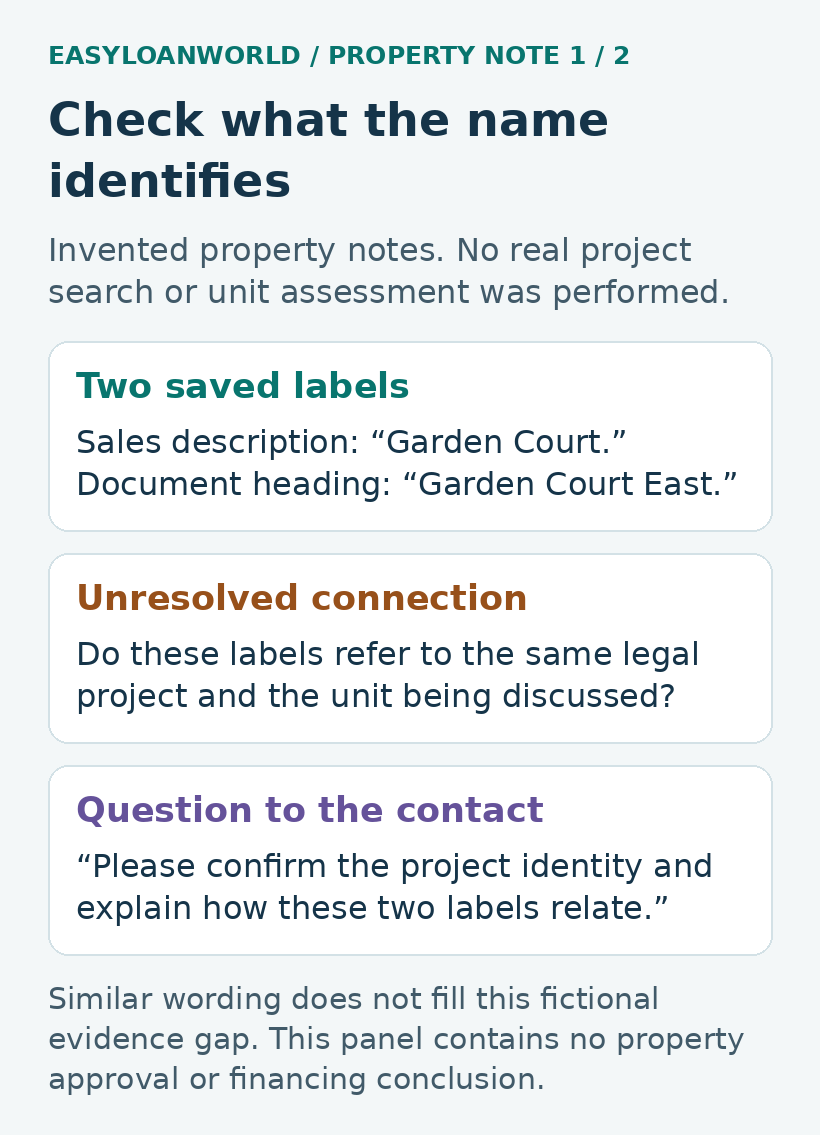
Ask which review is being considered
HUD’s condominium overview describes FHA-approved projects and Single-Unit Approval (SUA) for qualifying units in projects that are not FHA-approved. SUA has additional requirements; an unapproved project does not automatically qualify.
Ask the lender to name the applicable route and the unresolved question. If its explanation differs from a sales description, request clarification rather than choosing the more reassuring wording. Keep the answer with the dated record it addresses.
Separate a case number from the substantive review
HUD’s May 20, 2026 announcement, FHA INFO 2026-10, describes streamlined SUA case-number assignment. It explicitly separates case-number issuance from unit or project approval. The change concerns internal processing, not an expansion of the condo program.
Find the owner of each requested document
HUD’s SUA documentation list is a minimum, not an exhaustive checklist. It includes HUD-9991 and applicable legal, financial, insurance, flood and litigation material. The lender must analyze the required evidence for compliance; additional records may be needed.
Work from the lender’s actual request. Beside each item, write who holds it, which version was requested and who will confirm receipt. If the association manager and lender use different document names, ask them to resolve the mismatch before ordering a replacement. Do not complete another party’s certification yourself.
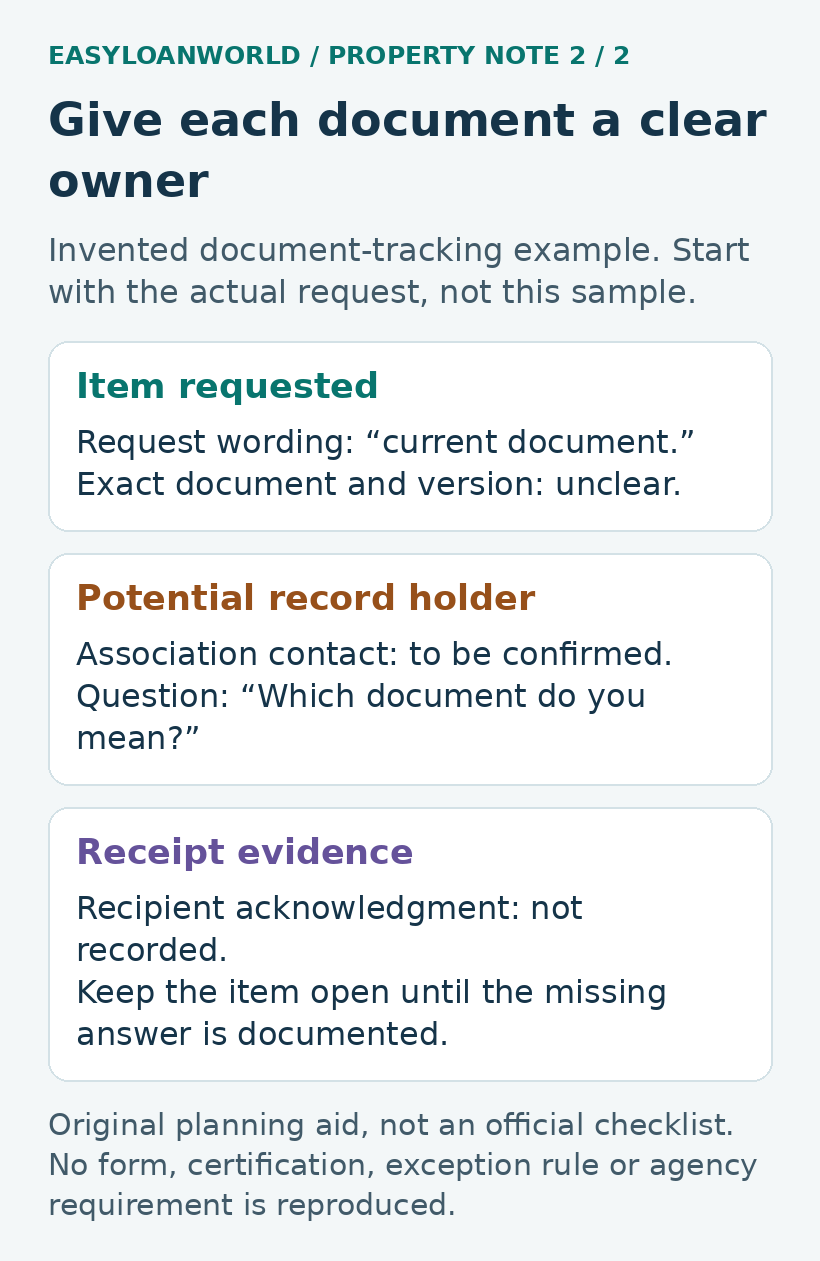
A fictional inquiry that stays open
A buyer finds a project entry that is not currently approved and hears that a case number has been assigned. The buyer asks: “Which review applies to this unit, and which evidence is still outstanding?” The working note remains “review outstanding.” Neither the example nor its administrative reference establishes a favorable outcome.
For your own inquiry, record the confirmed project identity, lookup date, exact result, lender’s proposed review, association contact role and missing evidence. Leave a final space for the next answer you need. Keep real buyer and association documents out of public comments. This educational organizing aid does not certify a project, interpret every FHA exception or establish loan eligibility.
Featured photo: Residential-building exteriors, shown for illustration. Photo: Dmytro Koplyk / Unsplash. Used under the Unsplash license.

Limited 203(k) and HomeStyle: Three Renovation Projects
Compare three fictional renovation projects, then change one logistical detail and prepare a private project brief.
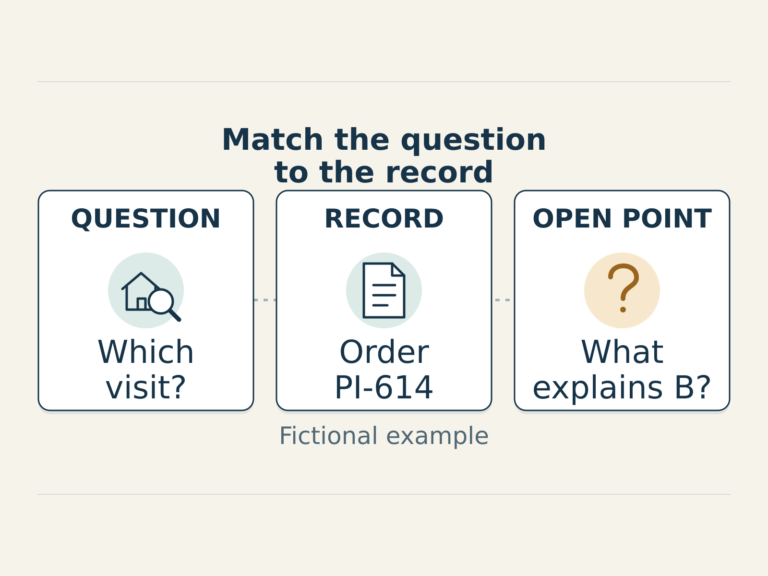
Mortgage Charge Questions: Choose the Record That Answers Them
Match a questionable mortgage charge to account detail, service records or adjustments with a worked property-inspection example and a two-part index.

Partial Mortgage Payment: Track Money Held in Suspense
Follow a fictional $1,100 and $700 mortgage payment trail, compare dated records, and build a precise question about an unexplained entry.