NIH Award: Read the Funding Period
Read an NIH award's budget period, project period, and funding conditions separately. Identify which amount and time period support the spending question you need answered.
Estimated reading time: 5 minutes
An NIH grant notice contains several financial signals. This guide separates them without deciding a recipient’s spending authority.
Start with the issued document
The NIH award chapter describes the Notice of Award as the legal document notifying a recipient that an award has been made. Read the issued notice, not an announcement.
Page one identifies the award, recipient, dates and financial amounts. Later sections contain award data, payment information and applicable terms. Restrictions may appear beyond the first page; a saved screenshot of the headline amount isn’t the entire document.
A revised notice can change support or terms during a budget period. NIH doesn’t issue a revision merely to reflect a recipient’s post-award rebudgeting. Compare the actual notice versions before treating an internal spreadsheet edit as an agency change.
Don’t combine funding stages
Under NIH’s project-period funding system, most grants receive support in budget-period increments. A project extending further doesn’t make later projected funding guaranteed. Future support depends on satisfactory progress, available funds and the federal government’s continued best interests. A subsequent notice formalizes next-period funding.
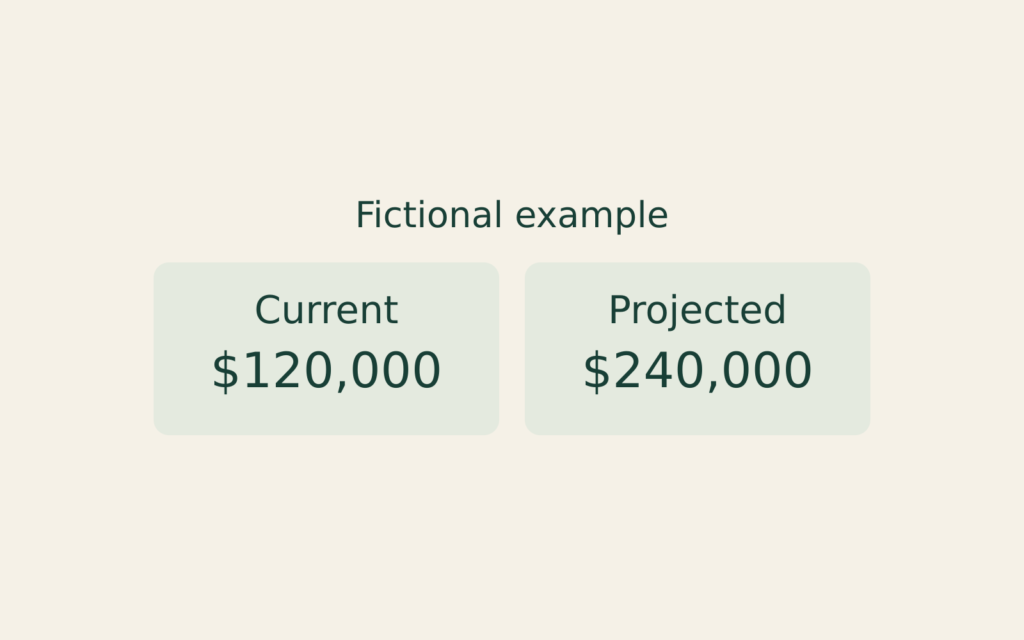
Consider a fictional reading exercise: current-period funding is $120,000, while two later periods each show projected support of $120,000. Adding the three figures produces $360,000, but doesn’t turn the later $240,000 into current-period funding.
Budget periods are usually twelve months, but exceptions and awards covering an entire support period exist. Check the actual structure.
Recognize the budget’s presentation
The NIH budget section explains that an award may show line-item categories, or total direct costs together with applicable indirect costs. Modular awards don’t use a categorical budget.
An internal worksheet may divide an amount among named activities while the award presents a broader total. Different levels of detail don’t, by themselves, prove a missing award line.
For a practical comparison, mark each worksheet amount as an exact transcribed figure, an internal subdivision or an unresolved difference. Don’t present a locally chosen subdivision as though NIH printed it. Some rebudgeting flexibility isn’t unlimited permission. This guide doesn’t determine whether a proposed change is allowable.
Read the carryover condition
NIH’s standard terms distinguish unobligated balances from unliquidated obligations. The latter are recipient commitments, not simply unused funds available for a new purpose.
The notice specifies whether automatic carryover authority applies or prior approval is required. Some award types are excluded from automatic authority, and a specific award condition can override an otherwise available authority.
When an accounting summary says “remaining,” ask what that label includes. Does it separate amounts already committed from amounts not obligated? Does the award permit the relevant carryover, or identify an approval requirement? Keep those questions separate: a balance classification and an authorization condition answer different things. A positive balance alone is insufficient.
An award amount isn’t a cash receipt
The NIH payment chapter identifies the Payment Management System and distinguishes advance-payment methods from reimbursement, as specified in the notice. Cash management seeks to limit the interval between government transfer and recipient disbursement.
Consequently, reading an award amount is different from checking a payment transaction. For an internal cash forecast, ask which document establishes the payment method and which separate record establishes that money actually arrived. An award summary isn’t a bank receipt.
This is a document-reading distinction, not instructions to request funds, hold advances or pay an invoice. Authorized personnel must follow applicable procedures. Don’t infer a deposit date from the issue date.
Match the question to the responsible role
NIH’s staff-role guide assigns scientific and technical matters to program officials. Grants management officers interpret grants administration policies and address financial or administrative issues. Scientific review officers have a different role in peer review.
Identify whether the question concerns science, administration or review. Consult the organization’s sponsored-research or comparable administrative office where available. Scientific discussion doesn’t establish responsibility for financial interpretation.
A useful question identifies the document and the precise passage causing uncertainty. Explain the uncertainty, not a predetermined conclusion. Keep any response attached to its original question; a general explanation shouldn’t be rewritten as a specific approval that the responder never gave.
Don’t substitute another agency’s policy
The current HHS Grants Policy Statement explicitly excludes NIH awards and directs readers to NIH’s own policy statement. A shared department name doesn’t make every agency’s procedures interchangeable.
The HHS document also identifies which awards and funding modifications its version covers. That illustrates why a policy’s applicability paragraph matters: reading its title alone can’t establish that it governs a particular document. Keep the issuer, applicable policy and version together. This article uses NIH guidance; it doesn’t extend NIH practices to every federal grant or resolve another agency’s award conditions.
| Field | Question |
|---|---|
| Budget period | Which interval is funded? |
| Project period | What longer interval is shown? |
Sources checked October 29, 2026. U.S. business-finance education only. No grant application, acceptance, payment request or project change is made here.


