Crowdfunding Before Borrowing
Examine a U.S. physical-product crowdfunding campaign’s costs and commitments before comparing it with borrowing.
Estimated reading time: 5 minutes
What will the campaign cost, and what will you commit to? Start there before comparing crowdfunding with borrowing. This guide focuses on U.S. physical-product projects and doesn’t make individual funding recommendations.
Calculate fees from the actual pledge structure
Kickstarter’s U.S. fee page lists a five-percent platform fee for successfully funded projects, plus payment processing. Its standard processing formula is three percent plus thirty cents per pledge; pledges below ten dollars have a different formula. Unsuccessful funding carries no fees under that page’s terms.
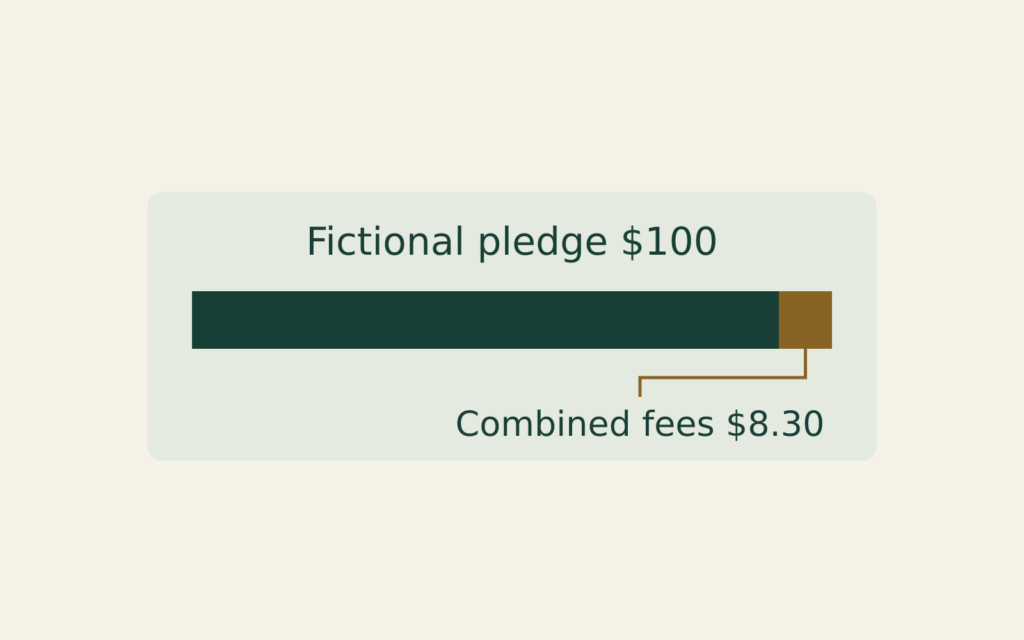
Fictional standard pledge: $100 produces a $5 platform fee and $3.30 processing fee, totaling $8.30. This isolates those published charges; it excludes taxes, refunds, failed collection, shipping and production costs. It isn’t a complete campaign payout calculation.
A percentage-only estimate misses the per-pledge charge. Use the actual pledge sizes rather than assuming that every contribution has the same effective processing percentage.
A funding summary isn’t the same as collection
BackerKit’s separate crowdfunding guidance describes a funding summary that remains blank while a project is live. Its payment setup distinguishes successful charges, failed charges and applicable installment payments. The later estimated payout subtracts fees, failed charges, uncharged cards and refunds from the amount raised.
Those are BackerKit records, not a description of Kickstarter’s dashboard. Review the processor’s detailed reports for the actual breakdown; an estimated payout isn’t a bank receipt.
The campaign’s promises constrain the spending plan
The FTC’s business guidance uses its 2015 crowdfunding case to explain why a creator’s representations matter. The agency alleged that the creator misrepresented the use of funds and failed to deliver promised rewards. Its practical lessons include honoring promised rewards and refunds and using funds for the represented project rather than personal purposes or another project.
Before presenting a campaign as a substitute for debt, review exactly what the public page promises. A production budget that silently diverts funds to an unrelated venture doesn’t match a promise to manufacture the advertised product.
Keep proposed changes visible for qualified review instead of assuming that reaching a funding goal cancels earlier representations. This case-based explanation doesn’t decide anyone’s liability or prescribe a dispute remedy.
Separate tax reporting from the platform deduction
The IRS says crowdfunding receipts may be taxable, while some may qualify as gifts. A Form 1099-K doesn’t by itself settle taxability. Its gross payment amount isn’t adjusted for fees, refunds, shipping or other listed adjustments.
Give the tax preparer the campaign description, payment reports and supporting expense records, not only the bank deposit.
Securities crowdfunding is a different route
The SEC’s Regulation Crowdfunding overview concerns eligible companies offering and selling securities, not merely a reward-delivery schedule. Transactions under that regulation must occur online through an SEC-registered broker-dealer or funding portal. The rules also require disclosures to the Commission, investors and the intermediary.
Don’t transplant a reward campaign’s fee or fulfillment description into a proposed ownership offering. If the proposal involves a security, ask qualified counsel which offering route and documents apply before soliciting money. This article doesn’t determine whether an instrument is a security or whether an exemption is available.
The SEC also identifies resale restrictions and disqualification provisions. A platform page alone isn’t a complete securities-compliance review, and a successful fundraising target doesn’t remove those separate questions.
Review invention disclosures before publishing the pitch
USPTO’s intellectual-property presentation specifically lists crowdfunding campaigns when discussing offers for sale and disclosure risks. Its examples of public disclosure include online posting, public demonstrations and offering an invention for sale. For an invention-based project, the campaign’s publication can therefore raise a question separate from how much money it attracts.
Discuss the proposed public material with an appropriate patent professional before release. Preserve the actual proposed text and demonstrations for that review; a vague description of “marketing” doesn’t show what would be disclosed.
The presentation also distinguishes provisional applications, which aren’t examined, from nonprovisional applications that can result in patents. Don’t turn an application record into a claim that a patent has been granted. No filing strategy, patentability conclusion or deadline calculation is supplied here.
Include the product’s testing evidence in preparation
For covered general-use consumer products, CPSC explains that the domestic manufacturer or importer is responsible for the General Certificate of Conformity, even when another party helps draft it. The certificate rests on testing or a reasonable testing program. This isn’t a statement that every product requires the same certificate; children’s products have a different framework.
For a domestically manufactured product, ask who is responsible for the applicable testing and certificate and what evidence supports the production plan. A consultant’s document-preparation service doesn’t itself eliminate the manufacturer’s responsibility.
CPSC distinguishes drafting a certificate from optional paid laboratory or consulting assistance. Clarify which service a quoted charge covers. This guide doesn’t choose tests, certify a product or address import filing procedures.


