Vending Purchase Records
Check a vending seller’s offer alongside equipment funding, reader transfer and operating obligations, including the limits of the New York examples.
Estimated reading time: 5 minutes
A vending seller’s offer is only part of the financing picture. Check equipment funding, reader transfer and operating obligations separately. The U.S. examples here include New York rules with limited scope.
Identify a covered business-opportunity disclosure
The FTC’s Business Opportunity Rule guide describes covered arrangements involving a new business, a required payment and specified seller representations, including certain help obtaining locations or customers. Not every machine sale automatically falls within that definition.
For covered transactions, the guide describes a one-page disclosure provided at least seven days before signing or paying. It separately requires an earnings-claim statement when the seller makes such claims. That statement identifies the claim, its measurement period, the number and percentage of buyers achieving it, and relevant differences between those buyers and the prospect.
Ask qualified counsel which disclosure regime applies to the actual offer. A machine photograph and a revenue headline aren’t the required disclosure packet. This guide doesn’t decide coverage, accuse a seller or authorize signing.
Read what the financing provider actually offers
Vendnet’s financing page describes its relationship with Financing Vending and lists possible financing for parts, route acquisitions, cashless devices, micro markets and capital equipment. Its stated assessment factors include the monthly budget, business needs and time in business.
That list doesn’t mean every invoice item is financed under a particular agreement. Ask which proposed purchase the actual offer covers, rather than treating a general product list as a commitment. A route acquisition and a replacement payment reader are different described uses.
The page’s language about retaining liquidity is marketing, not an analysis of your repayment capacity. This article supplies no rate, guaranteed approval or recommendation to borrow.
A used payment reader needs its own transfer review
Nayax’s U.S. and Canada transfer guide distinguishes a customer-to-customer device transfer from simply possessing the hardware. Its standard process requires both parties’ Operator IDs, device serial numbers and both parties’ submissions. A new customer has a separate registration route.
After receiving the forms, Nayax reviews outstanding balances or pending payments before completing the system ownership update. A submission confirmation is therefore not the same as a completed transfer. Its stated processing time can be extended by financial or compliance issues.
The guide expressly excludes AMIT devices from ownership transfer between operators. Identify the actual reader model before treating a used-machine package as ready for your account. This is a documentation comparison, not instructions to change payment routing, submit credentials or activate a device.
Separate tax-inclusive receipts in the New York example
New York’s vending-tax bulletin distinguishes taxable and exempt products and exceptions based on item and payment method. For taxable sales, it describes including tax in the displayed selling price and separating sales from collected tax using the applicable locality’s rate.
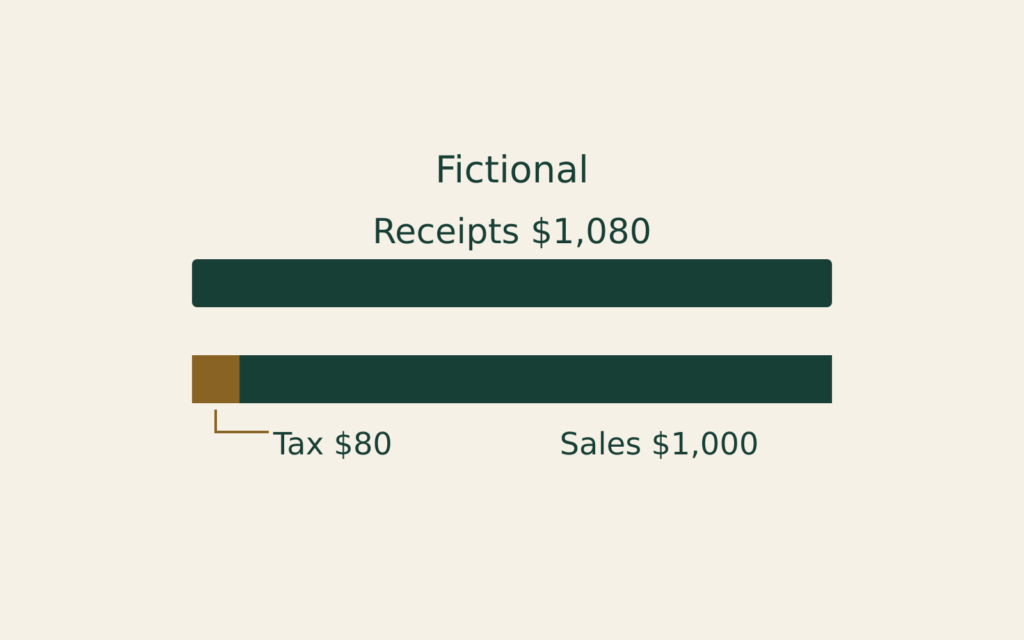
Fictional example: assume $1,080 of wholly taxable, tax-inclusive receipts at an invented 8% rate, with no deposits, refunds or other adjustments.
| Sales | $1,080 ÷ 1.08 = $1,000 |
|---|---|
| Tax | $1,080 − $1,000 = $80 |
This assumed rate isn’t a current quote for any locality. Mixed products and jurisdictions require their own records and qualified tax review. Don’t classify an actual item or prepare a return from this exercise.
Count the operator’s machines for the labeling question
FDA’s vending-labeling overview describes calorie-disclosure requirements for operators owning or operating twenty or more vending machines, and smaller operators who voluntarily register, subject to exemptions. The threshold concerns machines, not twenty outlets carrying the same brand.
The page also distinguishes calorie information visible on front-of-package labeling in glass-front machines. Seeing a package through glass isn’t, by itself, a complete compliance assessment; the applicable presentation requirements still matter.
Ask the responsible compliance adviser which machines and display method the actual operation must evaluate. The equipment invoice alone doesn’t answer this labeling question, and this article neither registers an operator nor certifies a display.
Read energy features alongside the service arrangement
ENERGY STAR’s vending-machine guidance covers certified refrigerated beverage machines, including new and rebuilt models. It describes efficient components and low-power options; those are equipment features, not a forecast of a particular route’s receipts or electricity bill.
Its buying guidance notes that host sites often have multi-year vending-service contracts and that the operator generally owns the machines. Identify whether you’re reading the host’s service arrangement or the operator’s equipment purchase. An address where a machine stands doesn’t answer that contract question.
The guidance distinguishes replacing machines from upgrading existing ones and links a model finder. Use the exact model’s evidence rather than assuming that “rebuilt” alone means certified. No energy-saving percentage or payback promise is used in this guide.
City property adds a separate stocking requirement
New York City’s Food Policy page says vending machines on City property must comply with the City Food Standards. It provides separate food and beverage standards and implementation guides.
This is a location-specific question for a proposed City-property placement, not a claim about every private workplace. Ask which applicable standards the location’s agreement identifies before relying on a proposed product mix. A federal labeling discussion doesn’t replace that separate stocking review.