Equity Valuation and Ownership
Clarify valuation timing.
Estimated reading time: 1 minute
The SEC’s small-business glossary distinguishes pre-money valuation, before new funding, from post-money valuation, after it. The distinction changes ownership calculations.
Fictional business: 1,200 identical founder shares and a $60,000 investment for new identical shares. Compare meanings of $180,000 valuation. Exclude debt, fees, options, convertible instruments and other share classes.
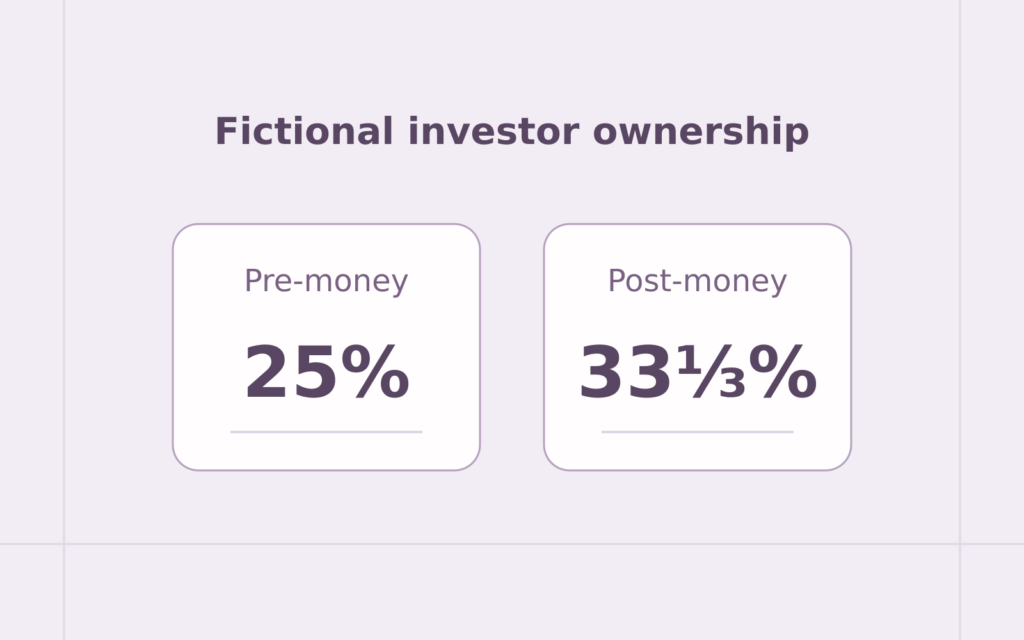
If $180,000 is pre-money, the share price is $180,000 ÷ 1,200 = $150. The investor buys 400 shares. With 1,600 shares afterward, investor ownership is 25%; the founder retains 75%. Post-money value is $240,000.
If $180,000 is post-money, subtract the $60,000 investment first: pre-money value is $120,000. Each share costs $100, creating 600 new shares. The investor owns 600 ÷ 1,800 = 33⅓%; the founder retains 66⅔%.
Both alternatives deliver $60,000 to the business, not the founder. They do not provide equal ownership for that funding.
Ask whether the valuation includes new cash and which securities enter the share count. These stipulated prices are not appraisals or promised resale values; ownership arithmetic establishes neither control rights nor permission to offer securities.


