Consignment Inventory Counts
Reconcile owned units.
Estimated reading time: 1 minute
IRS Publication 334 (2025) explains that sending merchandise on consignment is not a sale: unsold goods remain in the sender’s inventory. Goods received on consignment are excluded from the recipient’s inventory.
Reconcile ownership, not location
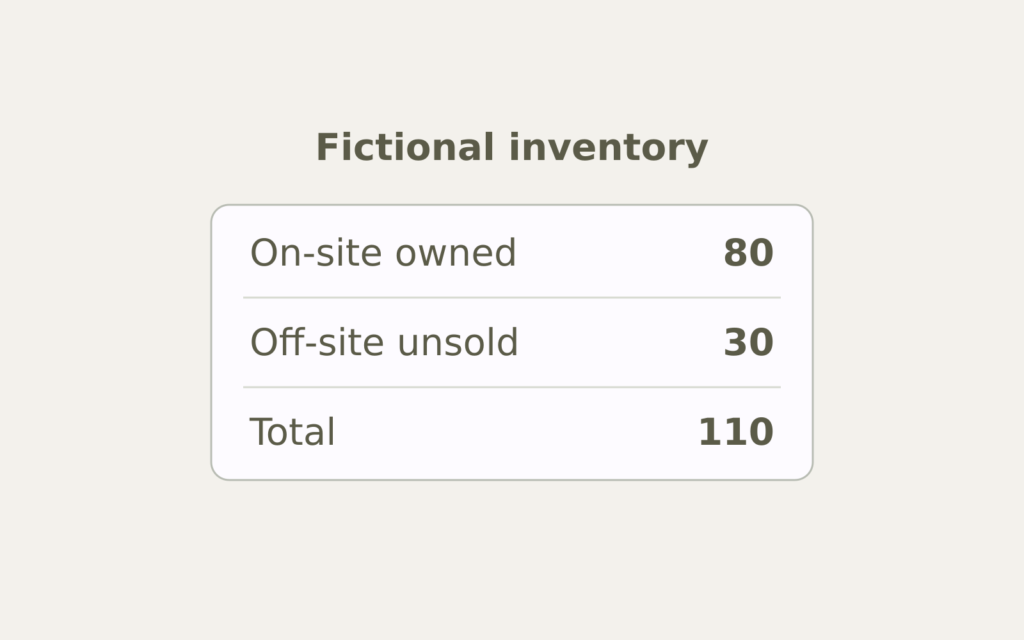
Fictional business already using inventory accounting: at one cutoff, 100 units are on its premises. Twenty belong to another consignor, leaving 80 owned units there.
The business also sent 35 owned units to an outside seller. That seller’s cutoff report confirms five sold and 30 unsold. Add only those 30: owned ending inventory is 80 + 30 = 110 units.
Assume each owned unit carries $12 cost, with no other stock or valuation adjustments. Ending inventory is $1,320—not the $1,200 obtained by multiplying the on-site count by $12.
Keep the evidence together
Match count sheets, consignment agreements, shipment records and seller sales reports to the same cutoff. Shipment alone does not establish sale. This count reconciliation does not determine commissions, cash collections, collateral eligibility or the appropriate tax accounting method.


