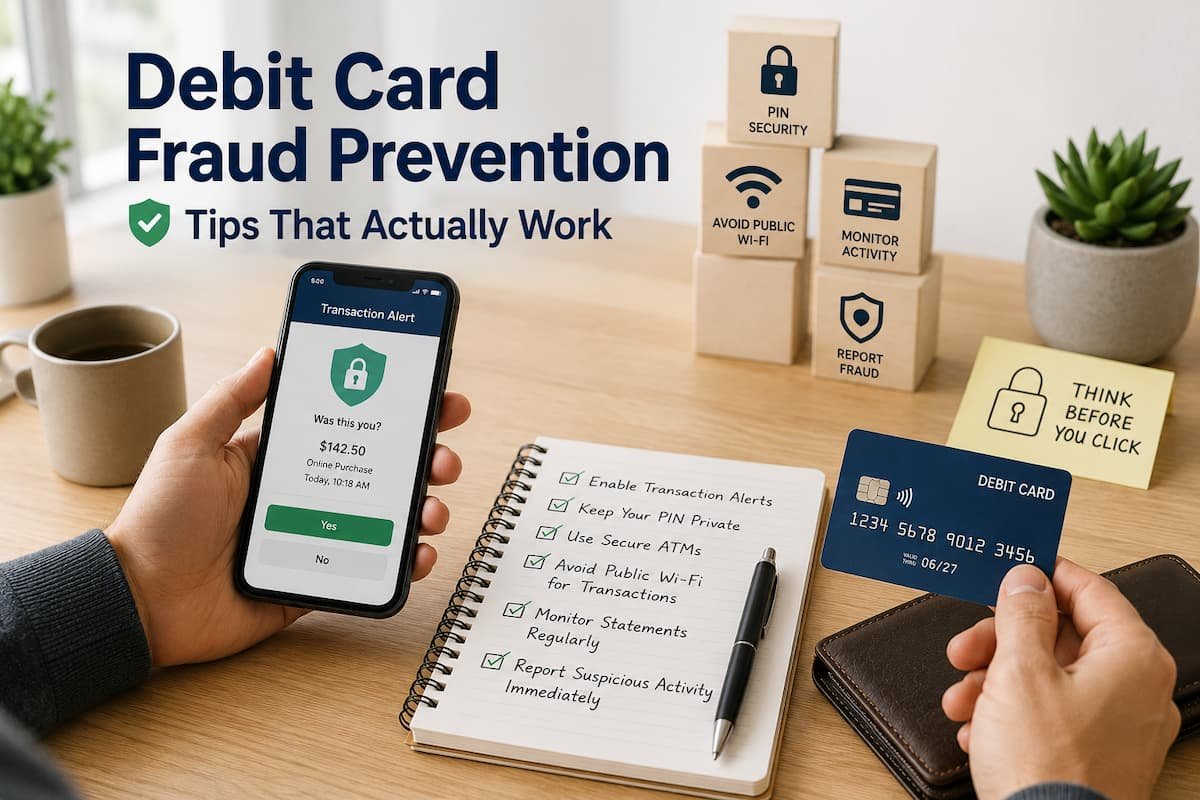
Debit Card Fraud Prevention Tips That Actually Work
This guide provides everyday debit card fraud prevention tips. Learn how to protect your card information, recognise scammers, use ATMs safely, shop online safely, check your bank account, and act fast if something goes wrong. Since no security system is flawless, the goal is not to eliminate all risks. The idea is to minimise exposure and identify issues early.
Protect the Card and Data: Start Simple
Debit card fraud doesn’t usually start with a theft. Criminals often simply require the card number, expiration date, and security code. They may also try to get your PIN or online banking account. That means securing your debit card requires more than keeping it in your wallet. You must also safeguard its data.
Don’t provide your card number over text, email, or social media. Be wary of unexpected calls asking you to “verify” your card information. A bank representative may seem plausible, but real companies can verify account activity without requesting critical information via unwanted email. Keep your actual card safe and out of reach of others. Report lost cards to your bank immediately rather than waiting to find them.
Enable Transaction Alerts Before You Need Them
Transaction alerts are a simple but effective fraud prevention tool. When a debit card is used, a transaction exceeds a certain amount, or money is withdrawn from an ATM, many banks notify customers. Alerts help you catch fraudulent transactions faster. You may not notice an unfamiliar purchase until you review your account days later without alerts. With notifications, suspicious transactions may appear immediately.
Choose useful notifications without being so loud you ignore them. Depending on your bank, you can receive notifications for card purchases, cash withdrawals, internet transactions, and account settings. Update your contact info. To receive security notifications, update your account information if your phone number or email changes. Alerts are an early warning system, not a substitute for account review. If a notification fails or the fraud occurs in a way that does not elicit an alert, you may miss a transaction.
Regularly Check Your Bank Account
Even with transaction alerts, check your bank account regularly. A quick check every few days can reveal unfamiliar transactions. Think beyond big purchases. Fraudsters may test a card or account with a tiny transaction. Do not disregard an unknown tiny charge as innocuous. Pay attention to unfamiliar merchant names when reviewing your account. A bank statement may not match the brand name you saw in the store. Thus, a business’s legal name or payment processor may appear on a legitimate purchase.
Investigate unexpected things before thinking they’re scam. Review receipts, subscriptions, online orders, and authorised family purchases. If you cannot explain the transaction, contact your bank immediately. Regular account monitoring makes fraud detection a routine rather than a last-minute concern.
Online Shopping with a Debit Card Requires Caution
Online shopping is convenient, but entering debit card information on unknown websites can reveal account details. Before buying, verify the website and address. Be wary of unexpected ads, social media messages, and emails that lead to websites. Scammers sometimes create professional-looking online stores to deceive shoppers.
Check the website’s domain before paying. See if recognised corporate names are misspelt or altered. HTTPS helps safeguard a website, but it does not establish its legitimacy. Another good habit is not saving debit card details on rarely used websites. Saving payment information speeds up checkout, but it may save your card information in many online accounts. When applicable, use payment options that put a layer between your primary bank account and the business for frequent internet buying. Before using a payment method, read the terms to determine the protections.
Never Give Your PIN to Callers
Consider your debit card PIN sensitive. A legitimate bank staffer shouldn’t ask for your PIN on an unexpected call. Scammers may employ urgent rhetoric to get sensitive information. They may allege suspicious behaviour and request your PIN, card number, password, or verification code to “secure” the account.
This is typical social engineering. Criminals instill fear and urgency, preventing careful thought. Distrust suspicious calls and do not give out information. End the conversation and call your bank at the number on the back of your debit card or another reputable source. Caller ID is unreliable. Phone numbers can be altered, thus a bank call may not be from them.
Be Careful With One-Time Verification Codes
One-time passwords and verification codes can help protect financial accounts, but they can also be targeted by scammers. A criminal who already has some of your information may contact you and ask for a code that was sent to your phone. The scammer may claim that the code is needed to stop a fraudulent transaction. In reality, the code may be required to authorize an action the criminal is attempting to perform.
If you receive a verification code unexpectedly, treat it as a warning sign. Do not automatically give the code to someone who contacts you. Instead, contact your bank through an official channel and ask whether there is suspicious activity on your account. An unexpected verification code can mean that someone is trying to access an account or complete an action using your information. Do not share it with an unsolicited caller or message sender.
Use ATMs With More Awareness
ATMs can be targeted by criminals using devices designed to capture card information. These attacks are commonly associated with card skimming, which involves placing unauthorized equipment over or inside an ATM’s card reader. You do not need to become an ATM security expert, but you can take a few precautions. Use ATMs in well-monitored locations, such as inside bank branches, when possible. Be cautious if the card reader looks unusual, loose, damaged, or different from what you normally see.
Protect your PIN by covering the keypad while entering it. This can help prevent someone nearby or a hidden camera from observing the numbers you type. Be especially careful if someone unexpectedly offers to “help” you with an ATM. If the machine appears to be malfunctioning, cancel the transaction and contact the bank instead of accepting assistance from a stranger. After using an ATM, check your account periodically to make sure the withdrawal amount matches what you actually received.
Do Not Ignore Suspicious Messages About Your Bank Account
Phishing messages are designed to trick you into clicking a link, opening an attachment, or providing sensitive information. A message might claim that your debit card has been blocked or that your account requires immediate verification. These messages often rely on urgency. The goal is to make you act before you stop to examine the situation.
Instead of clicking the link in an unexpected message, open your bank’s official mobile app or manually visit the bank’s known website. If there is a genuine problem, you should normally be able to see account notifications through a trusted channel. Be careful even when a message looks professional. Grammar mistakes can be a warning sign, but well-designed phishing messages may contain correct spelling and convincing branding. Never assume that a message is legitimate simply because it contains your name or partial account information. Criminals can obtain personal details from many sources.
Consider Using Debit Card Controls
Many modern banking apps provide card management tools that allow customers to control how their debit cards are used. Depending on your bank, you may be able to temporarily lock a card, enable or disable certain transaction types, or receive notifications about specific activity. A temporary card lock can be useful if you cannot immediately find your card. Instead of leaving it active while searching, you may be able to pause transactions and reactivate the card if you locate it.
Some banks also provide controls for online purchases, international transactions, or contactless payments. The availability of these features varies, so check your bank’s current options. These controls are helpful, but they should not create a false sense of security. A locked card may not address every type of account compromise, particularly if someone has gained access to your online banking credentials.
Keep Your Banking App and Phone Secure
Your debit card and your smartphone are increasingly connected. If someone gains access to your phone or banking app, they may be able to access financial information or attempt to change account settings. Use a strong screen lock and keep your operating system and banking applications updated. Updates often include security improvements in addition to new features.
Avoid installing apps from unknown sources. Be careful with apps that request unnecessary permissions, especially if they are unrelated to the service they provide. Do not leave your phone unlocked in public places. If your phone is lost or stolen, contact your mobile provider and financial institutions as appropriate, particularly if banking or payment applications are installed on the device. Protecting your phone is now part of protecting your financial accounts.
Use Strong, Unique Passwords for Online Banking
Your debit card is only one part of your financial security. If a criminal gains access to your online banking account, the consequences may be more serious than a single unauthorized card purchase. Use a strong password that you do not reuse on other websites. Reusing the same password creates a chain reaction risk. If another website experiences a data breach and your password is exposed, criminals may try the same credentials against your banking account.
Where available, enable multifactor authentication. This creates an additional verification step beyond the password. Password managers can also help create and store unique passwords. The important goal is to avoid using simple or repeated passwords that are easy to guess or already exposed elsewhere.
Be Careful When Using Public Wi-Fi
Public Wi-Fi can be convenient at airports, cafes, hotels, and other locations, but you should be cautious when accessing sensitive financial accounts on unfamiliar networks. Before accessing online banking, consider whether you truly need to do it at that moment. If the task can wait until you are on a trusted network, waiting may be the simpler choice.
Never assume that a Wi-Fi network is legitimate simply because its name looks familiar. Criminals can create networks with names designed to resemble legitimate public hotspots. Using a trusted cellular connection or a properly configured secure network can reduce some risks. Regardless of the connection, continue using strong passwords and multifactor authentication.
Understand How Debit Card Fraud Usually Starts
Knowing common fraud patterns makes suspicious situations easier to recognize. Debit card fraud may begin with a stolen physical card, a compromised online store, a phishing message, a fake bank call, a card skimmer, or stolen login credentials.
| Fraud Method | What It Looks Like | Useful Prevention Habit |
|---|---|---|
| Lost or stolen card | Someone gains physical access to your card | Report the loss quickly and use card controls when available |
| Phishing | Fake messages asking for account information | Use official banking channels instead of message links |
| Card skimming | Card information is captured at a compromised terminal | Use trusted ATMs and protect your PIN |
| Fake bank calls | Someone pretends to be a bank employee | Never share sensitive information with unsolicited callers |
| Online shopping fraud | Card details are entered on a fake or compromised website | Check the merchant before entering payment details |
| Account takeover | Criminal gains access to online banking credentials | Use unique passwords and multifactor authentication |
The more familiar you are with these patterns, the easier it becomes to recognize suspicious behavior before it turns into a financial problem.
What to Do If You Notice an Unauthorized Transaction
If you discover a transaction you do not recognize, do not panic, but do not ignore it either. Start by checking whether the transaction could be legitimate. Review recent purchases, subscriptions, receipts, and transactions made by authorized users. If you still believe the transaction is unauthorized, contact your bank promptly using an official phone number or secure banking channel. Explain what happened and follow the bank’s instructions.
Depending on the circumstances, you may need to replace your debit card, change your online banking password, or take additional steps to protect your account. If you suspect that your login credentials have been compromised, changing only the debit card may not be enough. Secure the underlying account as well.
What to Do If Your Debit Card Is Lost or Stolen
A lost card should be treated as a security issue, even if you believe it will eventually be found. The longer a missing card remains active, the longer someone else may have an opportunity to use it.
If your banking app provides a temporary lock feature, you may be able to use it while searching for the card. If you know the card is permanently lost or stolen, contact your bank and follow its instructions for reporting the card. Review recent transactions to identify any activity that occurred after the card went missing. Keep an eye on your account even after the card is replaced. If the lost card was stored in a wallet containing other sensitive information, consider whether additional accounts or identification documents may also need attention.
A Simple Monthly Debit Card Security Routine
You do not need to spend hours every week checking every detail of your finances. A short monthly security routine can make a meaningful difference. Start by reviewing recent debit card transactions and checking for anything unfamiliar. Confirm that your contact information is current with your bank. Review security alerts and make sure they are still configured in a useful way.
Next, check whether your banking app and phone operating system are updated. Review your saved payment methods and remove old accounts or websites you no longer use. Finally, think about whether anything has changed. Did you recently lose a card? Receive a suspicious message? Install a new financial app? Change your phone number? These events may require additional security steps. A regular routine makes fraud prevention a normal part of managing your money instead of something you think about only after a problem occurs.
Debit Card Fraud Prevention Checklist
- Enable transaction notifications when available.
- Review your bank account regularly.
- Keep your debit card physically secure.
- Never share your PIN with unsolicited callers.
- Do not share one-time verification codes with unexpected contacts.
- Use strong, unique online banking passwords.
- Enable multifactor authentication when available.
- Be cautious with unexpected bank-related messages.
- Use trusted ATMs when possible.
- Cover the keypad when entering your PIN.
- Check websites carefully before entering card information.
- Keep your phone and banking apps updated.
- Use card-lock features when available and appropriate.
- Report lost or stolen cards promptly.
- Contact your bank quickly when you see suspicious activity.
FAQs
1. How should I handle suspicious bank SMS messages?
Do not click links or reply with sensitive data. Instead, use your bank’s official mobile app or a trusted phone number like your debit card’s back. If the message says your account is at risk, check it yourself. Remember that scammers use urgency to get people to act without thinking. The mail may contain your name or partial account information, but it is not from your bank.
2. Can someone get my debit card info without stealing the card?
Yes. Criminals can steal debit card information through phishing, stolen websites, data breaches, card skimming, and other techniques. So safegeffective tips for preventing debit card fraudfraud protection. Your account credentials, PIN, verification codes, and personal information should be protected. Even with your card in your wallet, bank account monitoring and transaction alerts can help you spot suspicious activity quickly.
3. Am I safe using an ATM?
ATMs are widely used, but criminals may skim or otherwise target them. Use ATMs in trusted bank branches to decrease risk. Check the machine for anything unusual, protect your PIN when entering it, and avoid strangers’ help. Try another ATM if it looks damaged or suspicious. Regular bank account checks can help you spot unauthorised withdrawals quickly.
4. Should I lock my debit card when not using it?
When you lose your card or want to stop card transactions, your bank’s temporary card-lock option can help. However, bank functionality differs. A card lock may not prevent all account compromises, especially if someone has your online banking credentials. Consider card locking a supplement to strong passwords, account monitoring, and transaction notifications.
5. What if I see an unauthorised debit card transaction?
First, verify the transaction by reviewing receipts, subscriptions, and authorised user purchases. If you can’t identify it, contact your bank immediately via official channels. Report the transaction and protect the account per the bank’s instructions. Change your online banking credentials or replace your card, depending on the situation. Record your bank communications and monitor the account for suspicious activity.
6. Are debit cards fraud-proof?
No payment option is risk-free. Fraud prevention reduces unauthorised activity and detects issues quickly. Use alerts, monitor your account, secure your information, purchase safely online, and respond fast to suspicious activities to increase your security. You should also know your bank’s unauthorised transaction and reporting policies. Knowing what to do before an issue arises will help you respond.
Conclusion
Complex technology or persistent dread are not needed to avoid debit card fraud. Regularly practicing simple routines can provide the best protection. Secure your card and PIN, use strong and unique passwords, set transaction notifications, watch your account, and think before reacting to unexpected bank account messages or calls.
Pay attention to scam hotspots. Scammers use fake bank messages, phishing websites, ATM skimmers, stolen login credentials, and social engineering to steal private information. If something goes wrong, act fast. If you observe suspect behaviour, contact your bank, follow its instructions, and secure any associated accounts. Integrating a small security routine into your financial life is best. Few minutes reviewing transactions and account security can help you spot problems earlier. Although no strategy can prevent fraud, careful habits can make your debit card and bank account harder targets.
References and Reliable Resources
The following organizations provide reliable information about payment security, identity theft, scams, and consumer financial protection:
- Consumer Financial Protection Bureau — Consumer Banking and Financial Protection
- Federal Trade Commission — Consumer Protection and Identity Theft
- IdentityTheft.gov — Federal Trade Commission Identity Theft Resources
- Federal Deposit Insurance Corporation — Identity Theft Information
- Federal Reserve — Consumer Resources
- USA.gov — Identity Theft Resources