Business Check Positive Pay: An Exception Is Not a Fraud Verdict
Identify the mismatch and the evidence still missing.
Estimated reading time: 5 minutes
A business-check exception needs timely review, not an automatic accusation of fraud. Ask what failed to match, which record supports the explanation, and what the bank requires before its decision cutoff.
This U.S. educational guide compares published bank examples. It doesn’t decide whether to pay or return a check, change account controls or establish who bears a loss. If an actual item is urgent or suspicious, contact the bank through a verified treasury-management channel promptly rather than finishing this worksheet first.
Confirm which service is checking which fields
Capital One’s service terms distinguish standard Positive Pay, which matches check serial number and amount, from Payee Positive Pay, which also uses the payee name. Its terms identify mismatches, apparent duplicates and checks marked void as possible exceptions. Don’t assume that every service bearing the Positive Pay name verifies every field.
In that provider’s terms, the operational instructions govern the cutoff and permitted response channel. A late request or one sent through the wrong route may be treated as not received. The bank also describes pay and return defaults selected for the service.
Before relying on a control, ask which product is active on the particular account, which fields it compares and what its exceptions mean. A general brochure isn’t confirmation of an account’s enrolled features. Record the answer without treating this article as an instruction to change settings.
A name mismatch doesn’t explain its cause
Pinnacle’s payee-match guidelines explain that image recognition compares the check’s payee with the issued-check file. Image quality, wrinkles and other limitations can produce exceptions. An exception therefore calls for investigation; it isn’t itself a finding of fraud.
Fictional example: a report flags a payee mismatch, but the available check image is blurred. The reviewer should identify the missing readable evidence, not guess what the obscured letters say. A familiar supplier name in internal notes doesn’t resolve the unreadable image.
Check the import result, not just the upload
Independent Bank’s check guide, reviewed June 29, 2026, distinguishes an uploaded but unprocessed file from a successfully processed one. It also describes rejected files and processing with exceptions, where duplicate checks weren’t loaded. Its processing log provides file details and error information.
Consider a separate fictional file: an employee saved an upload confirmation, but the relevant processing entry says rejected. That isn’t evidence that the bank accepted the issued-check information. The missing question concerns the processing result, even though the employee genuinely attempted the upload.
Preserve both records and ask the bank which item-level information is present. Don’t repeatedly resubmit files merely to make the warning disappear. An explanation of an import problem and a decision on a presented check are separate matters; neither should be silently marked complete because the other was discussed.
Build a short evidence card for the reviewer
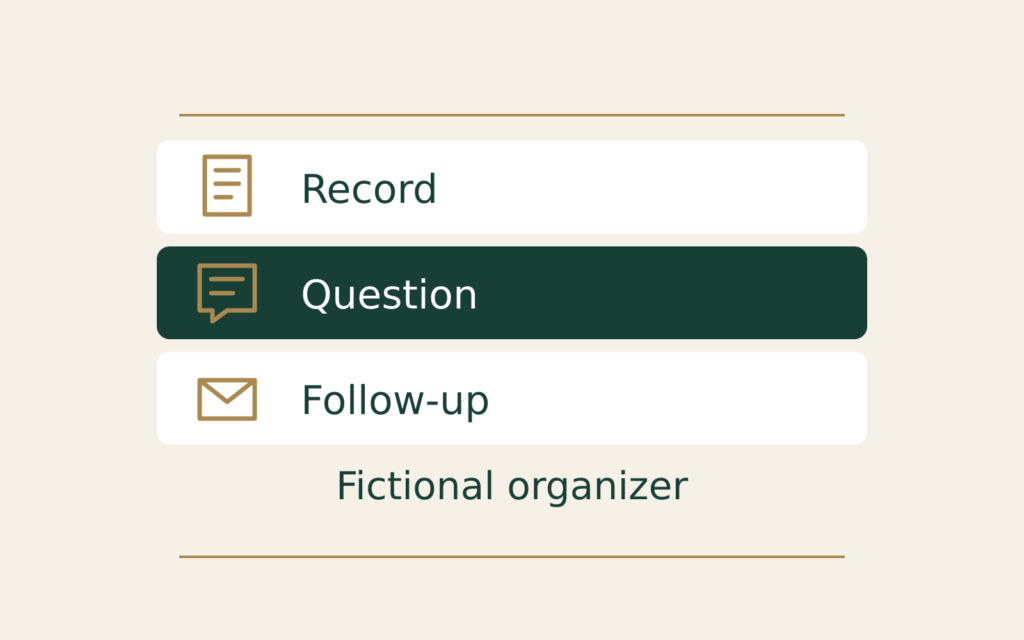
Keep the following organizer private. It’s a preparation aid, not a substitute for the bank’s required instructions.
| Question | Private note |
|---|---|
| Which item? | Account reference, check number and report date |
| What differs? | Exact field or reason shown, without guessing the cause |
| What supports the explanation? | Source document and any missing evidence |
| Who is following up? | Responsible person, bank contact and unanswered question |
Keep a working note separate from the original record. If a colleague supplies a verbal explanation, identify it as such until the supporting record is located. Don’t replace an uncertain entry with a confident label simply to finish the daily checklist.
Know the cutoff and the no-response outcome
Independent Bank’s current update page states that exception decisions are due by noon Eastern Time on business days. Unreviewed exceptions follow the account’s default settings. It also explains that a successfully saved decision moves the item from the group needing decisions to the group already decided.
That’s a provider-specific example, not a universal noon deadline or a promise that silence always returns a check. Ask your own bank to confirm the date, time zone, default and required channel. Don’t assume an email question suspends the cutoff.
For an existing internal review process, identify who will handle an urgent question when the usual reviewer is unavailable. Keep a bank acknowledgment separate from an internal “reviewed” note. If the expected status is missing, seek clarification promptly instead of inferring that the intended instruction took effect.
Record when an event occurred separately from when someone wrote the note. A reconstructed timeline should identify dates that remain unconfirmed.
A completed evidence card should distinguish what the record shows from what someone believes happened. The next reviewer should be able to find the source, understand the remaining uncertainty and see who owns the next question without being asked to approve a check from this article.
Primary sources checked October 29, 2026. Bank examples aren’t endorsements, comprehensive service terms or guarantees against loss.


