Escrow Shortage: Read the Two Parts of a Mortgage Payment Increase
Resolving an escrow shortage does not reverse higher ongoing tax and insurance bills. Consider a fictional current U.S.
Estimated reading time: 1 minute
Resolving an escrow shortage does not reverse higher ongoing tax and insurance bills.
Separate the two increases
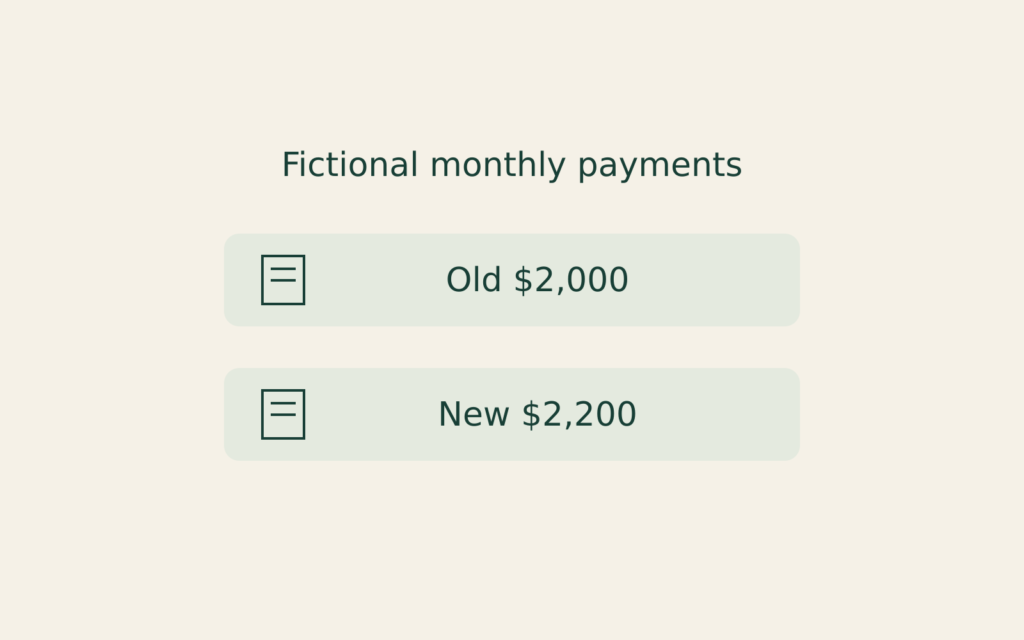
Consider a fictional current U.S. mortgage covered by Regulation X with monthly principal and interest fixed at $1,600, no mortgage insurance, other charges or old shortage installment. Annual escrowed bills rise from $4,800 to $6,000: recurring escrow rises from $400 to $500 monthly.
The completed analysis separately supplies a $1,200 shortage, collected over 12 months:
- Old payment: $1,600 + $400 = $2,000.
- New payment: $1,600 + $500 + $100 = $2,200.
If the shortage is fully resolved and projected bills and other charges remain unchanged, the modeled payment is $2,100—not $2,000.
Regulation X defines shortage against the analysis’s target balance; it is not simply the annual bill increase or necessarily a negative balance. This illustration does not calculate that target or authorize changing payments. Confirm the required amount and effective date with the servicer.

One Mortgage Form, Two Borrowers
Match each person’s share.