Fund Distribution Values
Reconcile both paths.
Estimated reading time: 1 minute
SEC staff guidance explains that fund distributions reduce net asset value (NAV), transferring value to shareholders. A distribution is not, by itself, investment performance.
Fictional mutual fund: you hold 120 shares at $25 NAV, worth $3,000. It distributes $1 per share. Assume no market movement, fees, taxes or other changes, and a post-distribution NAV of $24.
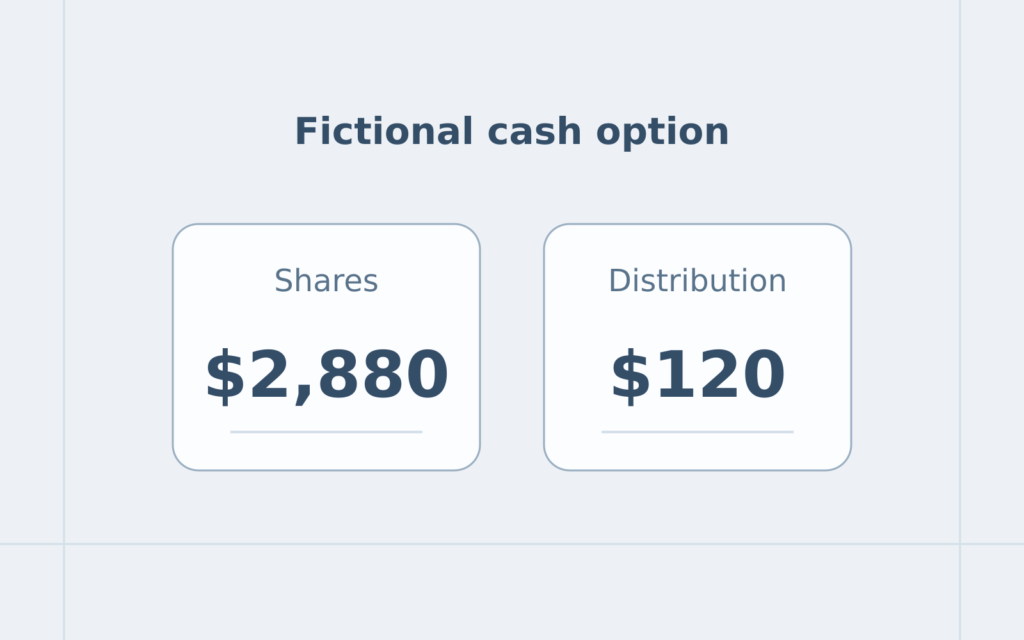
Taking cash leaves 120 shares worth $2,880 plus a $120 distribution: $3,000 combined. Calling the $120 NAV decline a loss ignores the cash; calling the distribution a new $120 gain ignores the lower NAV.
Alternatively, assume immediate reinvestment at $24 with fractional shares permitted. The $120 buys five shares. You now hold 125 shares worth $3,000, with no distribution cash left.
These are alternative paths, not benefits to add together. Neither creates extra value merely by distributing or reinvesting.
For spending plans, confirm whether the distribution was paid in cash or reinvested. Actual market changes and taxes can alter results. Review fund records and total return rather than judging performance from the share-price change or distribution alone.