NYC Co-op Purchase Documents
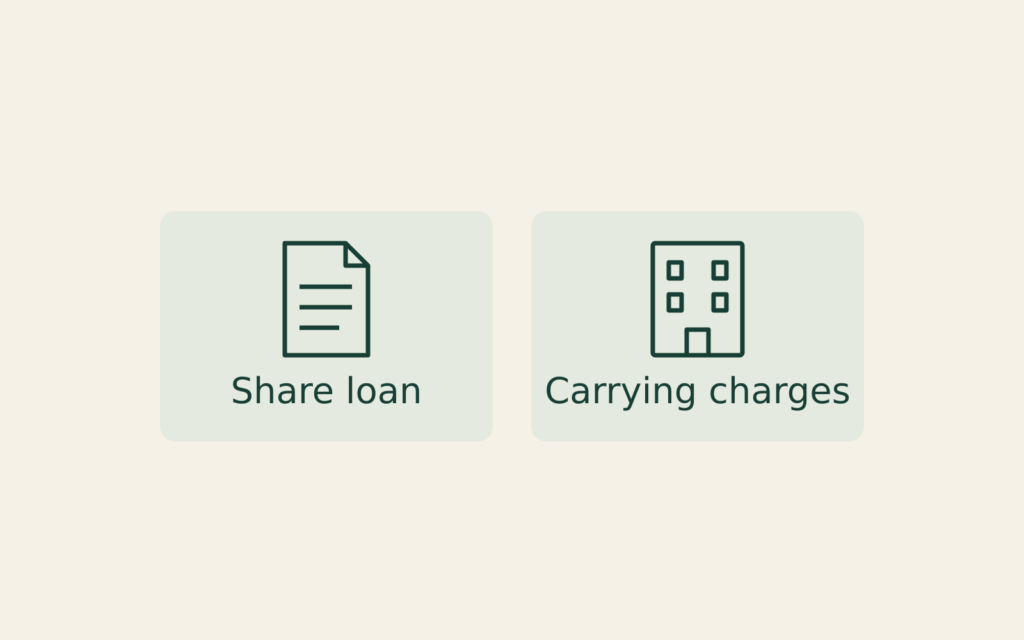
Quick answer: A co-op budget needs the individual share-loan payment and the building’s carrying charge on separate lines.
Estimated reading time: 6 minutes
Quick answer: A co-op budget needs the individual share-loan payment and the building’s carrying charge on separate lines. Ask what maintenance includes, check current building records, and have your attorney and lender resolve purchase conditions before you rely on the total.
Identify two payment destinations
National Cooperative Bank explains that a share loan finances corporate shares and accompanying occupancy rights, rather than ownership of an individual condominium unit.
Its cost explanation separates carrying charges paid to the cooperative from principal and interest paid directly to the individual share lender. Carrying charges can include operating expenses, building-loan payments, insurance and reserves; some cooperatives include utilities.
Ask for the actual maintenance breakdown before adding separate estimates for items already included. Conversely, the individual loan payment isn’t erased merely because the building also has financing. Use the quoted loan obligation and the building’s current charges, not one unlabeled monthly total. NCB lists fixed-rate and adjustable-rate products; a product type doesn’t supply an actual offered rate for this purchase.
Distinguish a sponsor sale from a resale
The New York Attorney General’s buying guide highlights a distinction that changes how documents should be read. For a resale by an individual owner or company rather than the sponsor, an offering plan may be unavailable or no longer accurately describe current conditions. The guide says those resales aren’t regulated by the Attorney General in the same manner as sponsor sales.
An old plan is therefore not a current inspection. The guide identifies board minutes and financial-report footnotes as possible evidence of building defects and repair costs. Have an appropriate professional interpret technical or contractual questions; this article doesn’t decide whether a defect must be repaired.
For sponsor representations about amenities, compare the actual offering-plan description rather than relying on sales pictures or verbal assurances. A promised rooftop feature and an attractive rendering aren’t interchangeable evidence.
Identify the transfer charge before assuming eligibility
Fannie Mae’s share-loan guidance addresses co-op transfer charges commonly called flip taxes. Its delivery requirements distinguish lender-exemption and appreciation-based provisions from certain other permitted fee structures. A fee’s familiar nickname doesn’t establish which provision applies.
Ask the lender and your attorney to identify the actual clause and its treatment. This is a Fannie Mae delivery framework, not a universal rule that authorizes a building’s charge or determines who must pay it.
The guidance also points to state-specific documentation, including share-ownership evidence and recognition agreements. A familiar mortgage-note title doesn’t establish that the co-op documentation is complete. Have the lender identify the applicable requirements.
Don’t substitute a tax value for an apartment price
New York City’s 2026 Class Two guide describes a different valuation purpose. For larger co-ops with eleven or more units, the city estimates income and expenses using comparable rental buildings, then applies a capitalization rate. It assigns a market value to the entire co-op building.
That building-level tax figure isn’t a quoted sale price for one shareholder’s apartment. The comparable-property inputs describe the city’s valuation method; they don’t establish what a buyer should offer.
The city’s Notice of Property Value reports valuation information, not a payment request. Compare it with the actual bill rather than treating the two records as interchangeable. This guide provides no tax estimate.
Check who supplies tax-abatement information
The city’s co-op and condo abatement FAQ separates the shareholder’s certification from the managing agent’s work. Owners certify primary residence to the board or managing agent. The board or agent retains that information and applies or renews for the development; the city follows up directly on residency-verification issues.
Some developments must also provide a prevailing-wage affidavit. Required-filer status depends on unit count and average assessed value, and the city updates its list after the tentative assessment roll. The shareholder’s residence certification isn’t that building-level affidavit.
Ask management which record is outstanding and which tax year it concerns. Don’t treat a seller’s previous benefit as confirmation of your own eligibility. This is a document-routing question, not an instruction to claim an abatement or a guarantee of lower carrying charges.
Read the personal insurance coverage separately
The New York Department of Financial Services insurance guide describes policies for cooperative occupants covering contents and personal liability. Read the actual policy’s covered and excluded causes of loss; a building-related insurance expense doesn’t describe every protection in a personal policy.
For belongings, distinguish actual-cash-value treatment from replacement-cost coverage. The guide explains depreciation and notes that insurers can use different depreciation formulas. Replacement-cost treatment may be available through an endorsement. Don’t assume that a contents limit alone tells you how a damaged item would be valued.
Prepare an inventory with purchase receipts and photographs, and keep it updated when major belongings change. Ask the insurer to identify the valuation provision, exclusions and applicable deductible in the proposed coverage. This is preparation for a coverage discussion, not a claim determination or a recommendation to buy a particular policy.

One Mortgage Form, Two Borrowers
Match each person’s share.