Peer to Peer Payment Fraud You Should Know About
Meaning of Peer-to-Peer Payment Fraud
Peer-to-peer (P2P) payment services let people send money via mobile apps or financial accounts. Services vary in features and protections, but the concept is simple: one person sends a payment to another. The issue is that technology is generally designed for speed and convenience. Once money is sent, it may be harder to recover than credit card purchases. If you authorize a payment to a scammer, the payment service may have limited recovery options. This is why P2P payment fraud generally manipulates victims rather than hacking into the payment system. A scammer may use a plausible story to get you to pay. That distinction matters. Although frauds abound, payment apps are not necessarily risky. Understanding that transferring money to the wrong person because you trusted a phoney identity or deceptive request is likely the biggest risk.
Faked Bank Fraud Alert
A bank or payment provider message or call is one of the most convincing P2P scams. The fraudster may say your account shows suspicious activity and that you must transfer funds to a “secure” account. The caller may know your name or other basic details, making the claim convincing. They may manipulate your phone’s screen to look like a legitimate company. Scammers usually ask you to pay money to yourself, a bank employee, a security account, or another bank account. The criminal generally receives the payment. A real bank won’t ask you to transfer money to a stranger’s account to prevent fraud. Stop a questionable call and call your bank using the number on your debit card or another verified source.
Family and Friend Impersonation Scams
Scammers often impersonate friends. They may say they need money, have a new phone number, or lost their wallet. The story makes you feel like you’re assisting someone significant. These frauds work best when they appear to be family-related. A criminal may use social media or a compromised account to make the message seem real. Verify the request via another method before sending money. If a new number claims to be your relative, call the original number or another family member. Use more than the phone number or account that contacted you. Be careful when the request requires immediate action. Real emergencies happen, but you should still check who you’re talking to.
Marketplace/Online Selling Scams
Online marketplaces are prone to peer-to-peer payment fraud since buyers and sellers may not know each other. Scammers may sell fake goods, take payment, and disappear. Other variations include bogus buyers. A criminal may request a refund for sending too much money. The original payment may be fraudulent or reversed, leaving you liable for the money you sent back. Scammers may send official-looking payment confirmation emails or images. Never think a screenshot confirms you got paid. Open your payment app or bank account and verify the transaction. If someone insists on using a risky payment method or wants to leave the platform immediately when buying or selling online, be wary. Buyers and sellers who create unnecessary urgency should be scrutinized.
The “Accidental Payment” Scam
Someone claims to have unintentionally wired money to your account in this scam. They request a new payment to a different account to repay it. Problem: the original transaction may be fraudulent. The payment may have been made with stolen account information or another scam. If you return money, you may lose it even if the original payment is overturned. Do not immediately return an unexpected payment from a stranger. Please inform the payment service of what happened through its official support channels. Please allow the service to investigate and suggest an appropriate process. One key general rule: if a stranger claims they made a payment by mistake, do not send a separate payment just because the narrative sounds convincing.
Fraudulent Customer Support
Scammers know that when anything goes wrong, consumers search online customer service numbers. They may construct bogus help websites, misleading ads, or payment service-looking social media identities. You could contact customer support and say your account is having trouble. The fake representative may request your login, security code, or other sensitive data. Always use the payment service’s website or app for customer support. Do not trust random search results, internet comments, or unsolicited help communications. A legitimate support worker shouldn’t need your password. Be cautious when asked for a one-time authentication code. Giving a scammer that code could let them access your account or authorize transactions.
Dating Payment Scams
Long-term P2P payment fraud occurs. A scammer may befriend someone online and ask for money. The request may involve travel, medical fees, an emergency, or an emotional story. The scammer may avoid meeting in person or keep making excuses. Over time, the victim may become emotionally invested and send more money. A request for money from a stranger, especially online, is a serious warning sign. Emotional closeness doesn’t reveal identity or intentions. Never let shame prevent you from seeking help. Before giving more money, consult a trusted friend if you suspect financial manipulation in an online connection.
Lottery, Prize, Refund Scams
Scammers often claim you won a prize, refund, or special payment. You must first pay taxes, processing fees, verification fees, or another requirement. P2P payment services are rarely needed to receive legitimate prizes. If someone asks you to pay a charge before giving you money you won, beware. Refund scams are convincing too. Someone may pretend a corporation unintentionally owes you money and request payment to “verify” your account. Never trust a communication that uses a well-known company’s name. Independently verify unexpected financial offers. Contact a company via its website or a reliable phone number if you suspect it owes you money.
Why P2P Payments Are Hard to Reverse
Speed makes peer-to-peer payments convenient, but fraud can cause problems. Payment services may not automatically reverse authorized payments that reach the intended receiver. This is different from presuming that every fraudulent payment is unrecoverable. The outcome relies on the situation, payment service, transaction type, and problem reporting speed. Contacting the service quickly is crucial. Don’t wait weeks to report fraud. If you sent money to a scammer or had your account compromised, contact the payment service’s official support channel and explain what happened. Keep payment details, including recipient, date, amount, and communications. These details may aid an inquiry.
Never Share Verification Codes
One-time verification codes verify your account access. Consider it dubious if someone abruptly asks for a code given to your phone or email. Scammers may claim they need the code to cancel a fraudulent transaction or protect your account. They may be trying to sign in or complete a transaction with the code. Never give out authentication codes to unsolicited callers or messages. Open the official app or contact the company using verified contact information to check your account. To summarize, if you did not initiate the security procedure, be very wary about giving a verification code to someone who contacts you.
Use Payment Apps Safer
Verify the recipient’s information before sending money. A wrong number, username, or phone number can send money to the wrong person. Before paying, verify the recipient. Send tiny amounts of money to new contacts as suitable. This method does not guarantee safety, but it can verify recipient information. Update your payment app and secure your account with a strong password and multi-factor authentication. Lock your phone’s screen to prevent unauthorized access to financial apps. Check your payments regularly. Unknown transactions should be reported immediately through official assistance.
Do Not Trust Screenshots as Payment Proof
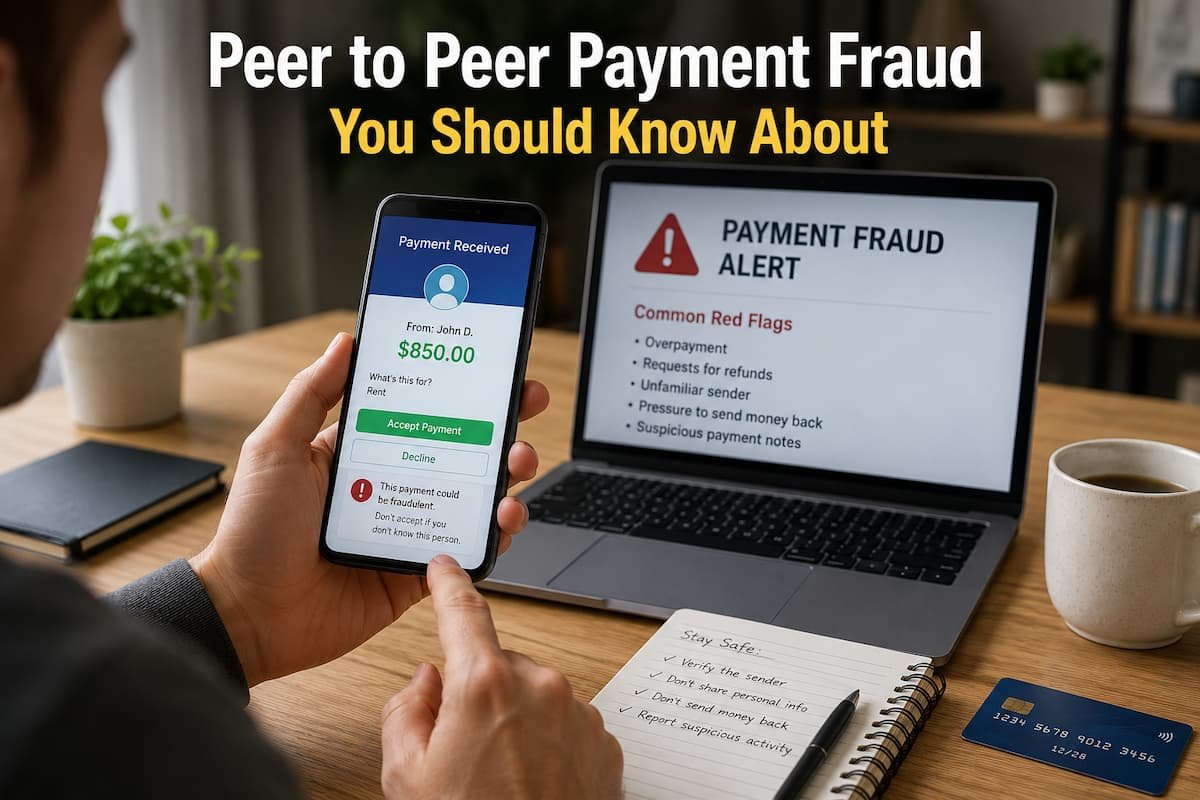
Edit or construct a screenshot. Never use it to prove money was delivered or received. If someone says they paid you, check your bank account or payment app. Instead of using an email, text, or image from the other person, check your account for the transaction. This is crucial for internet sales. A buyer may present a persuasive payment confirmation and demand the product immediately. Wait to independently verify funds. Similar rules apply to refunds and transfers. Always check your finances before acting on someone else’s allegation.
Beware Business and Work-From-Home Payment Requests
Some scammers target freelancers, sellers, and distant workers. They may offer a job or business and ask for money, equipment, or part of a payment. A complex payment arrangement that requires you to move money for someone else is a warning sign. Another is a fake employer who sends you money and asks you to repay part of it via P2P. A legitimate job should not require you to pass suspicious transactions through your personal account. Before accepting a job that includes receiving and sending money, research the company. Avoid trusting professional-looking employment offers. Check the employer independently and be wary of complicated payment arrangements.
If You Sent Money to a Scammer
Respond swiftly if you send money to a scammer. Report the transaction to the P2P payment service’s official support channel immediately. Say you were duped into paying. Also call your bank or debit card provider if the payment was made. What procedures are possible for the transaction and circumstances? Change your account password if you exchanged credentials or suspect a breach. Check account activity and enable security mechanisms if available. Save evidence. Keep messages, emails, usernames, phone numbers, transactions, and screenshots. Keep conversations that could explain what happened. Depending on the situation, you may denounce the scam to the government or police. The Federal Trade Commission’s official reporting service lets Americans report many scams.
If Someone Accessed Your Payment Account
Compromised accounts require different responses than willingly sending money to scammers. If your account was accessed without authorisation, notify the payment service immediately and describe the situation. Use a trusted device to change your password and enable multi-factor authentication. Remove strange devices and sessions and review account recovery information. If the payment account is linked to your bank or debit card, check these also. A compromised payment account may be part of a larger security issue if the attacker got your login credentials or personal information. Be careful with the payment service’s instructions. The sooner you report unauthorised activity, the faster the service can investigate and act.
P2P Payment Scams: How to Tell Before Sending Money
If the request is urgent, confidential, or pecuniary, hesitate before paying. Consider whether you know the recipient and have verified the request. Be careful if someone insists on a payment method, asks you to send money to another account, or tells you not to contact anyone else. These methods can make story verification harder. Watch for gift card, cryptocurrency, unusual wire transfer, or multiple payment service requests. A complicated payment method does not necessarily mean fraud, but unusual instructions should be investigated. When uncertain, slow down. Most legitimate financial decisions don’t need you to ignore your instincts or act before checking the facts.
A Simple P2P Payment Safety Rule
Before transferring money, check who is receiving it, why, and the request’s legitimacy. Avoid relying on message or payment request identities. In appropriate cases, contact the person via another trusted way. Check the seller’s legitimacy and payment protections before buying. Independently verify emergencies for friends and family. Avoid unwanted calls to banks and contact them directly. Scammers use pressure, emotion, and distraction to persuade people to act. The best defence is a careful pause before transmitting money.
FAQs
1. If someone says they are my bank and wants me to send money, what should I do?
Stop and verify the request yourself. Most reputable banks will not ask you to send your money to a stranger’s account to keep it safe. Stop talking to them and call your bank using the number on your card or another official number you trust.
2. Should I tell someone about a P2P payment scam even if I don’t think I’ll get a refund?
Yes, you should tell the payment service about what happened and, if necessary, the police or government body in charge. Reporting something makes a record that could help the service find fake accounts or patterns of behavior. It also gives you a chance to find out what other safety steps you should take.
3. Can I believe a payment request just because it has my friend’s name on it?
Yes, someone else can copy and use names and account details. If someone you know sends you an unexpected request for money, make sure it’s real by checking it out in a different way before giving the money. Do not think that a person’s familiar name proves that they are who they say they are.