Receivables Allowance Reconciliation
Separate balances and expense.
Estimated reading time: 1 minute
Yale’s accounting lesson distinguishes allowance adjustments from specific receivable write-offs. This example uses the allowance method.
Fictional starting balances: gross receivables of $104,000 and a $6,000 credit allowance. Net receivables are $98,000.
Write off a $4,000 uncollectible account: reduce gross receivables to $100,000 and the allowance to $2,000. Net receivables remain $98,000. This entry uses the existing allowance; it does not record another $4,000 expense.
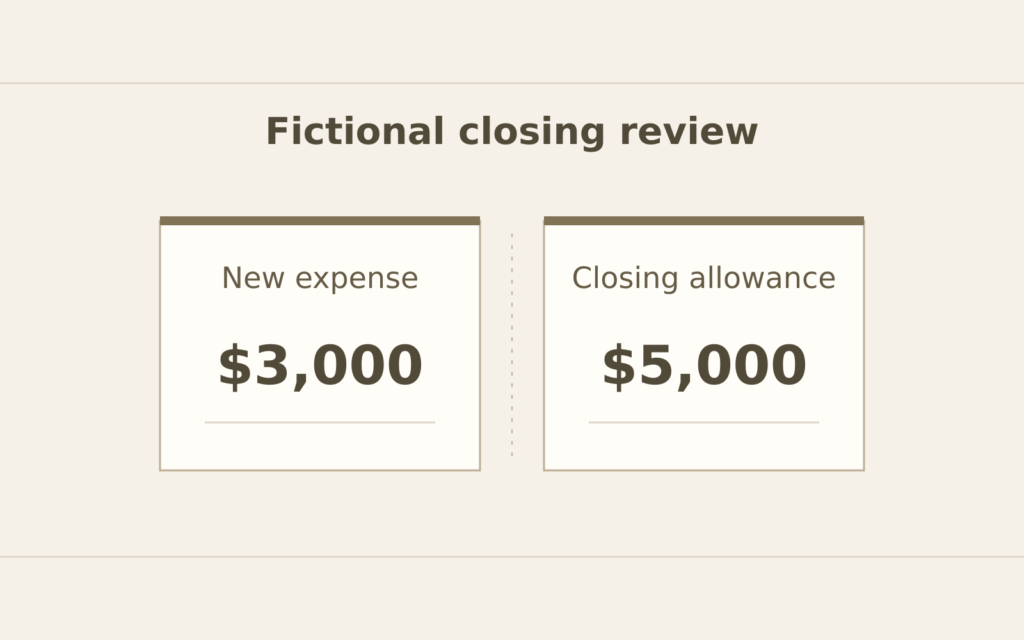
Now assume a review requires a $5,000 closing allowance. With $2,000 already remaining, add $3,000: debit bad-debt expense and credit the allowance. Closing net receivables become $100,000 − $5,000 = $95,000.
Charging the entire $5,000 as new expense would leave a $7,000 allowance and understate net receivables by $2,000.
Assume no other receivable or allowance movements. Neither entry collects cash or identifies money available for loan payments. The required estimate is stipulated, not a recommended loss percentage. Ask the accountant to reconcile the opening allowance, write-offs and updated estimate before using the statements. Tax deductions, legal forgiveness and borrowing eligibility require separate review.


