Standby Credit and Working Cash
Compare cash collateral with reserved credit.
Estimated reading time: 1 minute
A 2019 SBA explanation describes backing a standby letter of credit with cash collateral or a restriction on an existing credit line. Compare where each arrangement ties up resources.
Fictional alternatives start with $80,000 cash and a $100,000 credit line already owing $20,000. A $50,000 standby must be backed. Assume remaining credit capacity is drawable; no fees, interest, standby claims or other transactions.
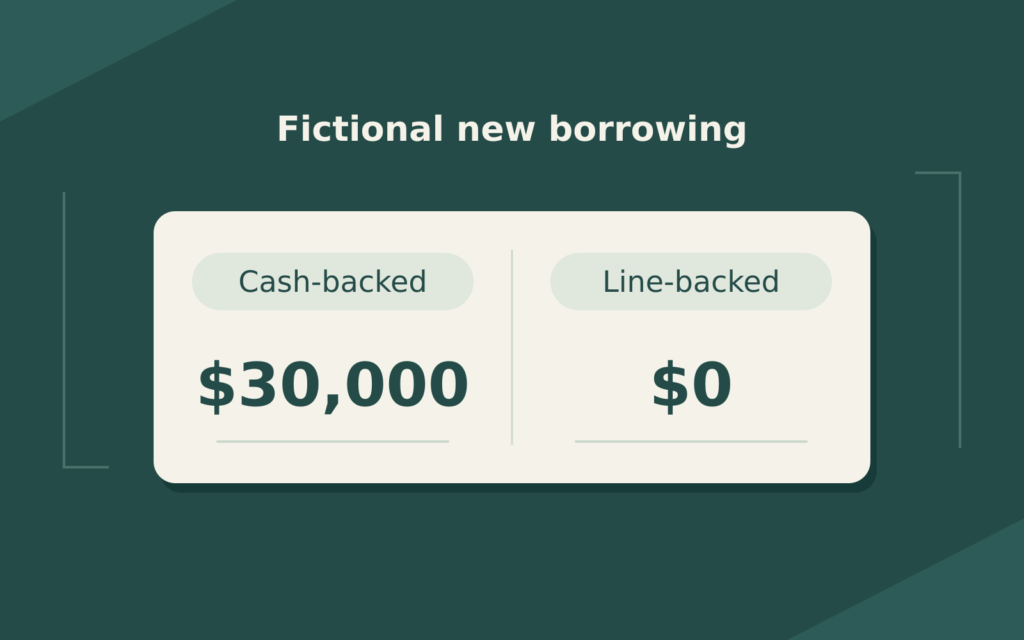
Cash collateral: restrict $50,000, leaving $30,000 spendable cash and $80,000 line capacity. To pay a $60,000 bill, borrow $30,000. Loan principal becomes $50,000; spendable cash becomes zero. Collateral remains restricted.
Line restriction: reserve $50,000 against the line instead. Cash remains $80,000; line capacity becomes $100,000 − $20,000 − $50,000 = $30,000. Pay the bill from cash, leaving $20,000 cash and unchanged $20,000 loan principal.
Neither backing amount is free spending money. Ask the bank about release conditions, fees and continued draw access. This is not a cost ranking or funding approval.