Home Appraisal vs Inspection: Track Open Questions
Use a fictional roof finding to separate property questions, repair costs and next steps.
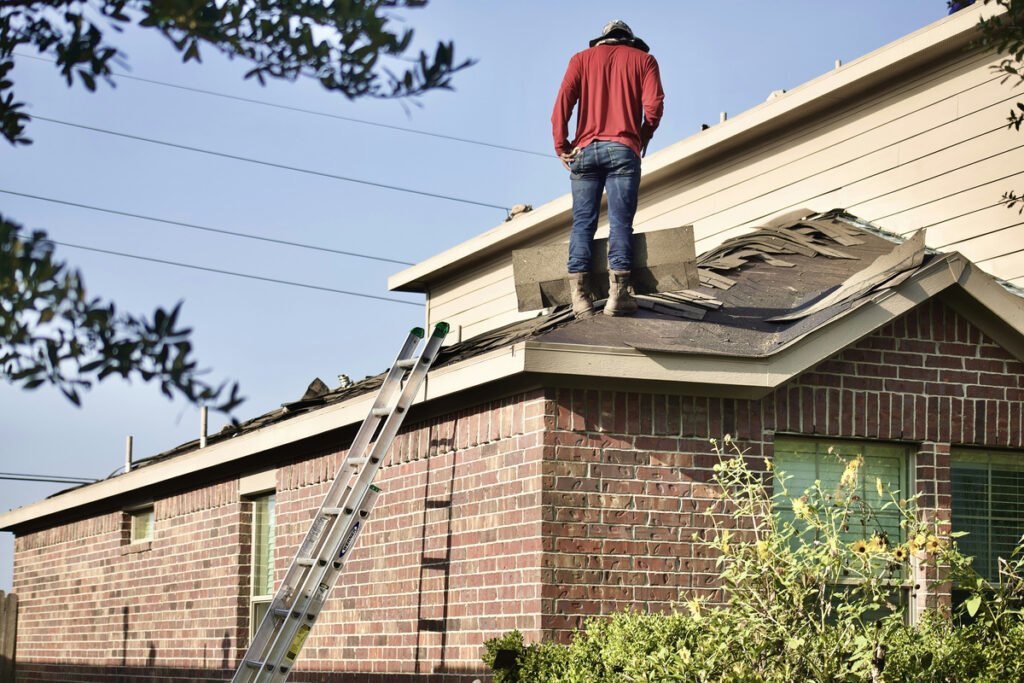
What each report can tell you
An appraisal gives an opinion of value for the lending decision; an independent inspection examines physical condition for the buyer. A valuation is not a substitute for that inspection. Some lenders use other valuation methods. CFPB valuation guidance.
Major repairs can also become financing conditions. An appraisal may be subject to repairs, and a lender may require completion before closing. A seller need not accept a requested repair concession; contract terms matter. CFPB inspection guidance.
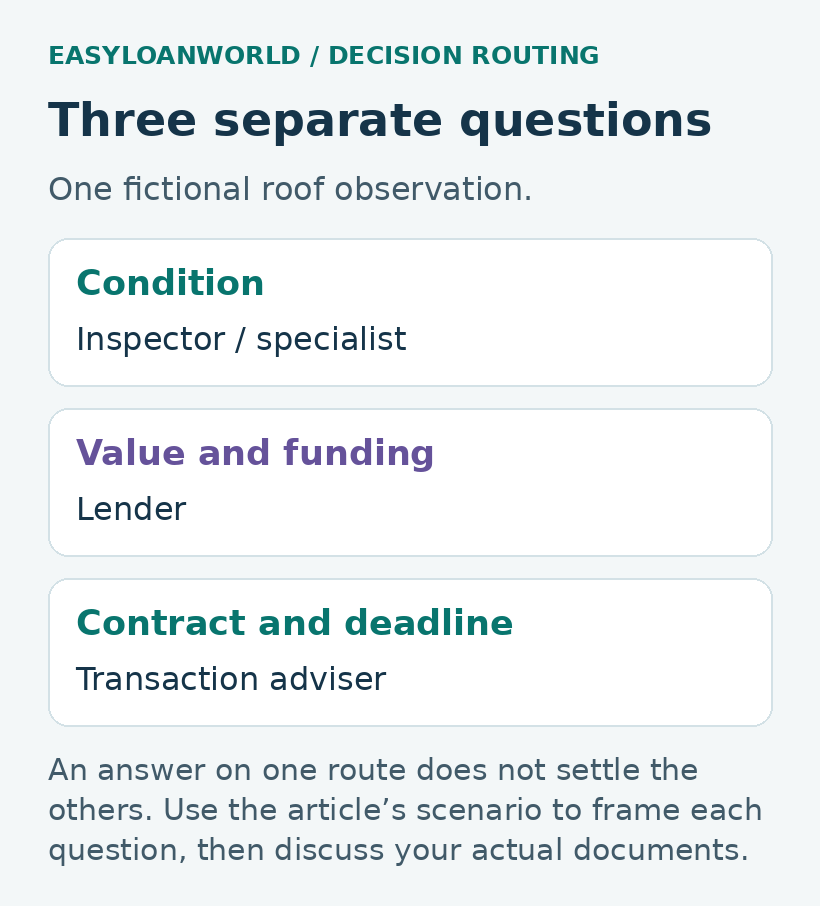
One roof finding, three separate decisions
Imagine an inspector reports staining beneath the roof and recommends further evaluation. This is a fictional observation, not a diagnosis of a leak or a statement about any real property. The buyer also has a valuation report whose stated value matches the agreed price. That number does not answer what caused the stain.
- Condition: Ask the inspector what was observed, which areas were inaccessible and what specialist should investigate. Suppose a roofer then identifies a repair scope and supplies a $6,100 estimate. Ask what the estimate excludes and whether the assessment supports the proposed work; do not infer that every stain requires a new roof.
- Value and funding: Ask the lender whether the valuation is conditional on repairs, what completion evidence it requires, and whether the specialist’s findings change its requirements. Send the actual finding rather than reporting only “the estimate is affordable.” A quote describes proposed work, not completed work.
- Your purchase commitment: Ask your transaction adviser about the inspection deadline, permitted notices and contractual options. In this example, suppose an inspection deadline is tomorrow while the lender’s response is outstanding. Bring up both dates now; waiting for one answer should not silently decide what you do about the other.
The buyer could be satisfied with the proposed repair yet unwilling to accept its disruption. Or the buyer could want the house while still needing a lender answer. Identify which decision remains open instead of compressing all three into “the property passed.”
Put the repair cost in its proper place
Assume the buyer separately earmarked $10,000 that is genuinely available for work, after other purchase commitments. A $350 specialist assessment plus the $6,100 repair estimate uses $6,450, leaving $3,550. There is no seller contribution in this example, and the assessment is not included in the estimate.
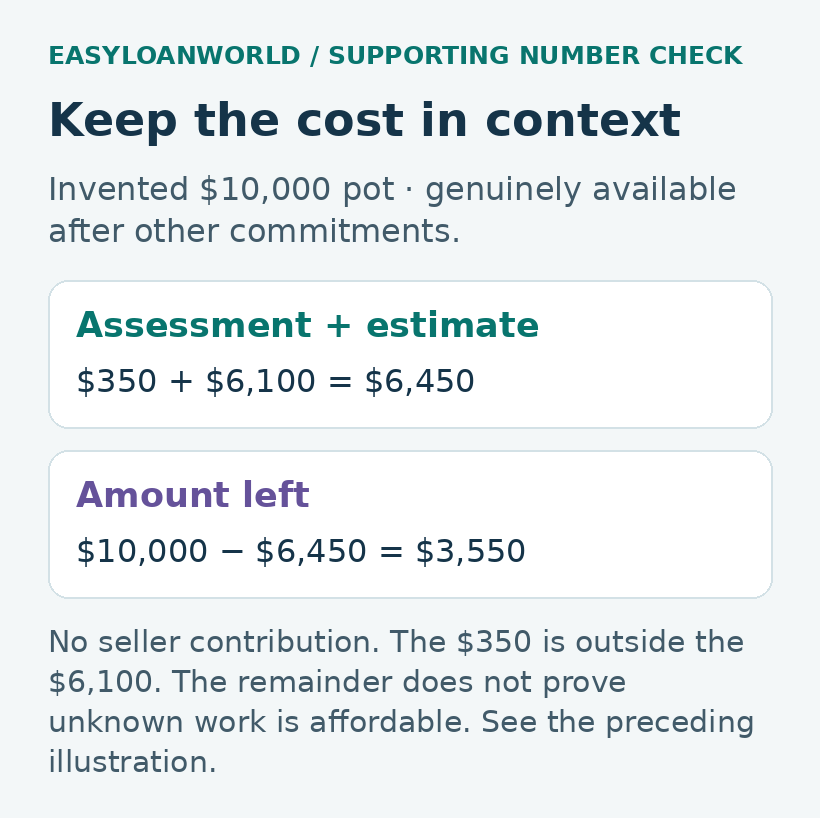
That remaining amount is only a planning result. It does not show that unknown work is affordable. If finding the repair money would consume funds already committed elsewhere, revisit the homebuying-budget guide before treating the estimate as manageable.
U.S. education, checked October 19, 2026; not individual financial, legal or technical advice.
Featured photo: Illustrative photograph. Zohair Mirza / Unsplash. Used under the Unsplash license.
Mortgage Charge Questions: Choose the Record That Answers Them
Match a questionable mortgage charge to account detail, service records or adjustments with a worked property-inspection example and a two-part index.

Partial Mortgage Payment: Track Money Held in Suspense
Follow a fictional $1,100 and $700 mortgage payment trail, compare dated records, and build a precise question about an unexplained entry.

Minnesota Contract for Deed: Check the Seller, Title and Balloon
Before signing a Minnesota contract for deed, organize seller, disclosure and title evidence, then test a fictional balloon-payment ledger.