California Supplemental Property Tax: Check the Bill, Payment and Cash
Organize one California supplemental property tax bill, its payment evidence and the cash earmarked for it. A fictional example shows why a funding gap is different from an unpaid balance.
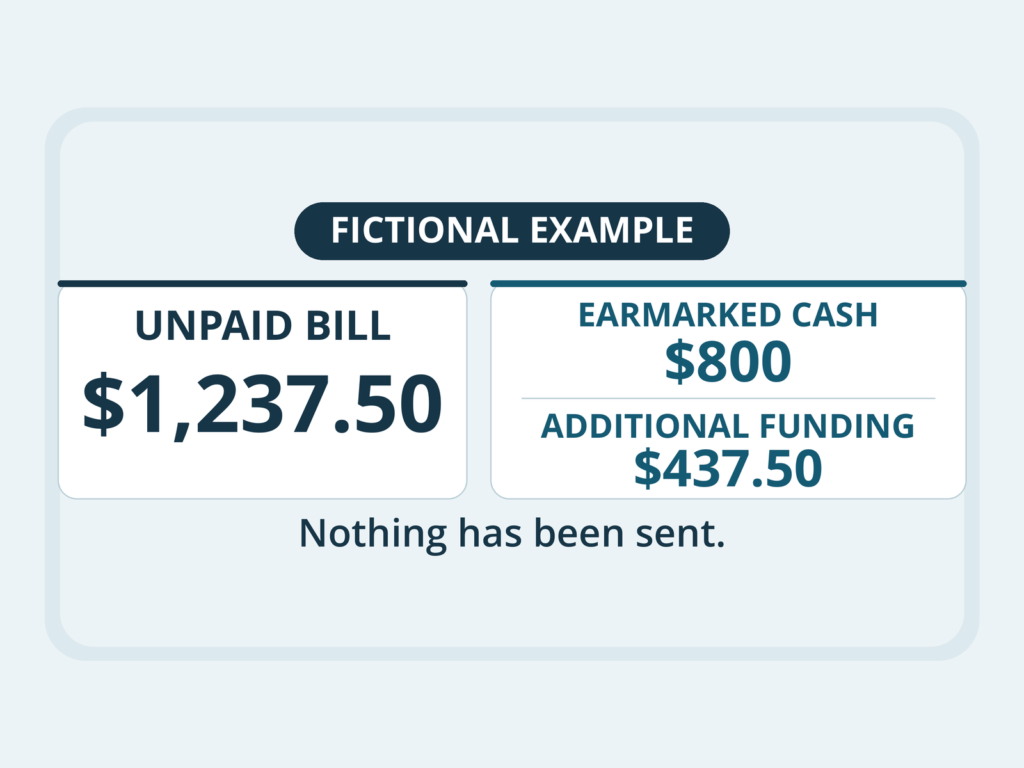
Money set aside for a tax bill and money paid toward that bill are two different entries. If you have a California supplemental property tax bill, start with three questions: Which bill is this? Has anyone actually paid it? How much accessible cash is ready if payment is still your responsibility?
This guide builds a private, bill-specific record around those questions. The worked example is fictional, for California residential secured property. It is not an assessment, a county bill, or individualized tax, legal or financial advice. Official guidance checked October 21, 2026.
1. Put each document in the right place
Los Angeles County says supplemental bills generally are not paid through impound accounts; check with the lender. Separate an assessment notice, annual bill, supplemental bill and payment evidence. A mortgage escrow balance or planned disbursement does not establish that this specific bill was paid.
Use the following questions to organize your paperwork. This is an editorial worksheet, not an official county form; document labels can differ.
| Record | Question to answer |
|---|---|
| Assessment notice | Which event, date and assessed figures are shown? |
| Regular annual bill | What reference and period identify this bill? |
| Supplemental bill | What amount, installments and payment instructions are shown? |
| Payment records | What was sent, by whom, and what has the county posted? |
A supplemental bill is separate from the regular annual bill.
Choose one supplemental bill for the exercise. Record its reference alongside the event and covered period. Do not match two documents only because their dollar amounts happen to agree. A repeated copy of one bill should not become a second bill in your worksheet.
If you have only an assessment notice, leave the bill amount, payment dates and bill reference unfilled until you obtain the corresponding billing record. “Not yet established” is more useful than an invented zero or a payment date guessed from the notice.
2. Follow one fictional calculation
California supplemental assessments follow qualifying ownership changes or completed new construction. The assessor determines the value difference and sends a notice. Tax uses that difference, the applicable rate and an event-month factor.
Assume one qualifying event on September 15, 2026, with the same owner throughout the covered period. For this exercise, the fictional assessor records show a new assessed value of $450,000 and a prior assessed value of $300,000. These are supplied assessment figures, not numbers inferred from a purchase price.
For the September 15 event, October 1, 2026, through June 30, 2027, covers nine months: factor 0.75.
Los Angeles County’s rate lookup requires a tax rate area and fiscal year. The example’s 1.10% aggregate rate is stipulated; it is not a California rate quote.
The assumed 1.10% is the entire value-based rate used in this exercise. Convert it to 0.011; do not add another 1%. We assume no separate charges, penalties, exemptions, exclusions, corrections or other assessment events.
| Step | Arithmetic |
|---|---|
| Assessed-value increase | $450,000 − $300,000 = $150,000 |
| Annualized increment, for this calculation only | $150,000 × 0.011 = $1,650 |
| Apply the period factor | $1,650 × 0.75 = $1,237.50 |
The result is a fictional $1,237.50 supplemental bill. The $1,650 intermediate figure is not the property’s total annual tax bill. This exercise also does not predict a future mortgage payment.
Exclusions, exemptions or multiple events can change the result.
Use your own assessment and bill for your own numbers. For questions about your assessed figures, contact the county assessor; do not force a different real case into this simplified example.
3. Calculate the cash gap without shrinking the unpaid bill
Now assume nobody has sent a payment. The household has $800 of separate, accessible cash earmarked for this bill. It is not a mortgage escrow balance, a tax credit, or money already remitted.
| Question | Answer in this example |
|---|---|
| How much of the bill is unpaid? | $1,237.50 |
| How much cash is earmarked? | $800 |
| How much additional funding is needed? | $1,237.50 − $800 = $437.50 |
| Does the funding add up? | $800 + $437.50 = $1,237.50 |
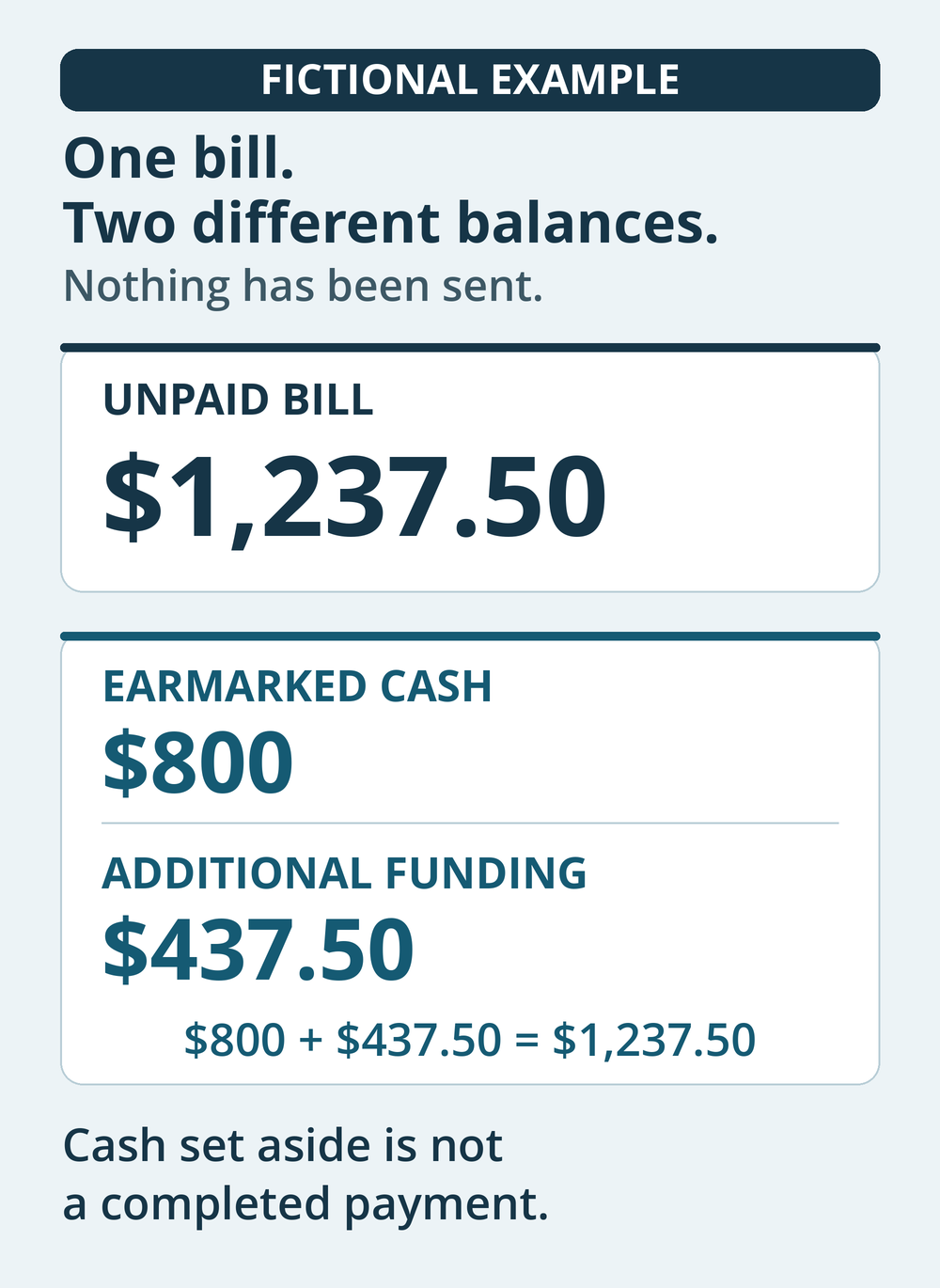
The $437.50 is a funding gap. The unpaid bill is still $1,237.50. Earmarking money changes your household plan; it does not record a tax payment. Sending only the funding gap would not pay the stipulated full bill.
Do not treat the $800 as a recommended reserve size or the $437.50 as an escrow shortage. They answer a narrow question about available cash for this selected bill. Neither figure establishes a borrowing need or an amount to subtract from a mortgage installment.
4. Give the payment an evidence-based status
Each scenario below starts over with the same fictional bill. These are alternatives, not four transactions to add together.
- Cash earmarked; nothing paid. No payment has been sent. The unpaid bill is $1,237.50; the household has $800 earmarked and needs another $437.50 to fund the full amount.
- Servicer payment planned; not sent. Assume the servicer has explicitly confirmed an unexecuted plan. The unpaid bill remains $1,237.50. Keep the $800 reserve and $437.50 funding gap visible while you establish who will pay and when.
- Owner payment confirmed. A full $1,237.50 payment, its receipt and the matching county posting are verified. The bill’s remaining balance is $0. In this alternative, the household used its $800 plus the additional $437.50, leaving $0 of that earmarked cash.
- Servicer payment confirmed. The servicer’s full $1,237.50 payment and the matching county posting are both verified. The bill’s remaining balance is $0. The separate $800 has not been used for this payment. Inspect the servicer’s account entries before deciding that cash is available for another purpose.
If payment was sent but has not posted
A completed disbursement awaiting county posting belongs in a separate status: sent, confirmation pending. It is different from the unexecuted promise above. Record the amount, date, recipient and transaction reference, then reconcile with the county and payer.
Missing posting alone does not prove that no payment was sent. Do not make a duplicate payment merely because an online balance has not updated. At the same time, do not mark the bill settled from a promise or unmatched transaction. If a deadline is close, contact both parties promptly for bill-specific instructions and resolution.
5. Write down the dates and the next unanswered question
Orange County explains that supplemental delinquency dates depend on the bill’s mailing date. Use the dates and payment instructions on your own bill; do not import an annual-bill calendar.
In your private record, keep due dates and delinquency dates in separate fields. Copy any installment amounts as well. This example supplies no payment deadline; do not calculate one from its September event.
When contacting the servicer, identify the exact bill through its appropriate private channel and ask:
- Will you pay this specific bill, and from which funds?
- Is that payment only planned, or has it been sent?
- If sent, what are its amount, date and transaction reference?
- If the county cannot match it, who is resolving that mismatch and what is the next step?
Retain the answer with the bill. Add a dated follow-up entry rather than overwriting an earlier promise. Do not wait past a bill deadline for an unanswered message, and do not reduce your scheduled mortgage payment yourself.
A compact private bill record
Use a notebook or an offline document with these fields:
- County and property identifier; assessment event and period
- Assessment reference; selected bill reference and amount
- Installment amounts; due dates; delinquency dates
- Proposed payer; payment status; amount and date sent
- Payment reference; county posting and any remaining balance
- Separate cash earmarked; additional funding needed
- Unresolved question; contact made; next action
Leave unknown fields marked “verify.” Keep names, addresses, parcel identifiers, mortgage-account numbers, banking details and tax documents out of public comments.
Finish when you can match the selected bill to its payment evidence and explain any remaining balance. If your separate question is about an ongoing monthly payment change, use the escrow-shortage and mortgage-payment guide. This bill record does not calculate that future payment.
Title Insurance Quotes: Compare Policies, Services and Payers
Compare fictional $2,150 and $2,275 title packages using matched coverage, complete service charges and a separate payer worksheet.

Flood Insurance Quote: Test Two Deductibles Against Your Cash Reserve
Test fictional flood quotes against a $6,000 reserve: $180 in annual savings comes with $3,000 more building deductible exposure.

Condo Special Assessment: Lump Sum or Payment Plan?
Compare a fictional condo assessment using cash after closing, monthly surplus and the unpaid balance. A planned reserve draw changes the result.