Before You Compare 401(k) Access: Three Document Checks
Use three situation-specific cards to organize documents and prepare questions before comparing 401(k) access.

Before comparing a 401(k) loan with hardship access, separate the question you are asking from an event that has already happened. This worksheet prepares documents for a comparison; it does not choose a route or cover every consequence.
Scope: U.S. private-sector, ERISA-covered 401(k) plans; tax explanations cover pre-tax funds only. Roth or after-tax funds, other plans and individual tax outcomes need separate plan and tax review. This is educational preparation, not a recommendation to access retirement savings.
Practice with three separate situations
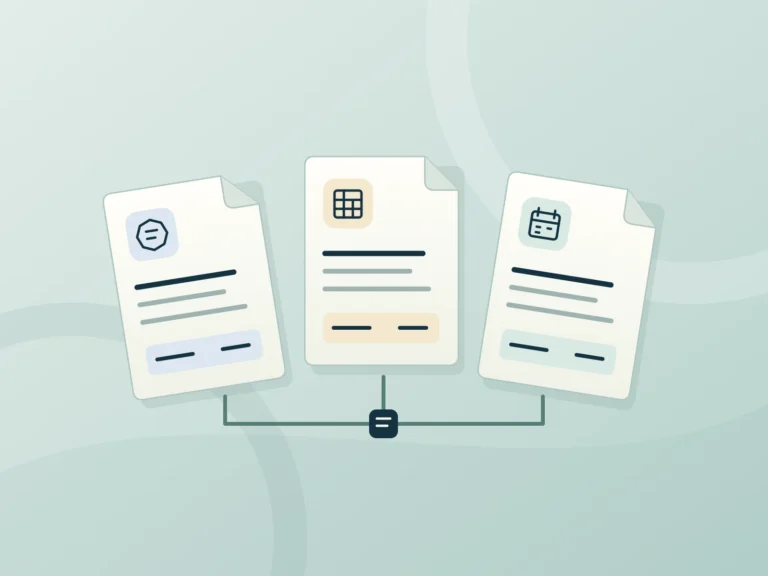
Imagine Jordan organizing paperwork on three different occasions: considering a request, checking an existing arrangement while still employed, and reviewing an employment change. These are fictional organizing tasks, not a sequence of approved transactions. No plan terms, amounts or eligibility results are invented.
Use only the card relevant to the situation. Repeat its five fields for each document. “Documented” means you have a record to discuss, not that an application or tax treatment is approved.
1. A proposed request
Record the employer, exact plan name, requested route and expense deadline. Ask the administrator which current documents are available for that request.
Start with the Summary Plan Description (SPD), current amendments and written plan terms. Ask the administrator about gaps; do not assume another employer’s plan works the same way.
- Document title/version
- ________
- Relevant date
- ________
- Exact question
- ________
- Status
- Documented / unclear / absent: ________
- Person to ask next
- ________
Put supplied terms side by side
Copy only information actually supplied. Leave a blank or mark “unclear” rather than borrowing an answer from the other column. This is a recording sheet, not an eligibility test.
| Loan route | Hardship route |
|---|---|
| Document/page: ________ | Document/page: ________ |
| Requested amount: ________ | Requested amount: ________ |
| Terms supplied: ________ | Terms supplied: ________ |
| Unanswered question: ________ | Unanswered question: ________ |
Hardship access is optional and plan-specific. For pre-tax funds, a hardship distribution is taxable, cannot be repaid to the plan and cannot be rolled over.
Hardship approval does not itself establish an exception to the 10% additional tax. Before age 59½, a separate exception must apply; 401(k) and IRA exceptions differ.
Hardship requires an immediate, heavy financial need and a necessary amount. A plan may require available plan loans first; it cannot require suspended employee contributions as a hardship condition. An expense label alone does not establish approval.
2. An existing arrangement, still employed
Place the signed agreement, repayment schedule and payment record together. Jordan’s task here is to compare the records, not turn a discrepancy into a tax conclusion.
Loans are optional; compliant loans avoid distribution treatment. Missed repayments can cause a taxable deemed distribution; check plan-specific cure terms. Do not assume the tax event ends your remaining plan obligations.
- Document title/version
- ________
- Relevant date
- ________
- Exact question
- ________
- Status
- Documented / unclear / absent: ________
- Person to ask next
- ________
On a blank timeline, write “scheduled action: ________” and “recorded action: ________,” with the supporting page beside each. Mark the next required action from the actual schedule. If the records disagree, identify the clause to ask the administrator about, including any missed-payment provision. Do not invent a grace-period date.
3. An employment change
Leaving a job may trigger full loan repayment under the plan’s terms; it does not establish that every plan accelerates repayment.
Keep these records on separate lines:
- Work record and last work date: ________
- Administrator notice and its date: ________
- Recorded account event and its date: ________
A deemed distribution cannot be rolled over.
An offset reduces your account: an actual distribution, unlike a deemed distribution. Eligible rollovers need replacement funds, not extended loan repayment. Promptly obtain professional review of classification, receiving-plan eligibility and deadlines.
- Document title/version
- ________
- Relevant date
- ________
- Exact question
- ________
- Status
- Documented / unclear / absent: ________
- Person to ask next
- ________
Ask the administrator to identify the recorded event and its date, then take the actual records for tax review. Do not classify the event yourself from the word “default,” or use the work date as a substitute for every other date.
Finish with a question list
Jordan’s completed exercise would contain document references and questions, with unanswered lines still visible. Yours can legitimately show that neither requested route is confirmed. Keep the records private; do not submit account statements, tax forms or completed worksheets to this site.
Before any personal decision, resolve the plan questions with the administrator and obtain qualified advice on your circumstances. This worksheet provides no tax calculation, deadline calculation or rollover instructions.

Auto Service Contract: Clause Exercise
Auto service contract practice: Seven cases. Two rule sets. One changed measurement. Work through an invented packet and check each answer.

College Aid Offers: A Two-Packet Practice Exercise
Try four prompts with fictional packets, then open the worked answers. Change one entry and test what an unreadable entry prevents you from concluding.
College Withdrawal Bill: Reconcile the School Account
Use three school records and a fictional $1,340 example to trace each adjustment, check a changed balance and organize questions for the right office.