
Business Expense vs. Personal Expense: How Self-Employed People Can Tell the Difference
When you work for yourself, the line between business spending and everyday personal spending can become surprisingly difficult to see. A laptop might be used to serve clients and watch movies. A car might take you to meetings and the grocery store. Your home internet may support your business and connect your family to everything else. The fact that something is useful to your business does not automatically make the entire cost a business expense.
For U.S. federal tax purposes, the basic test is whether an expense is ordinary and necessary for carrying on your trade or business. The IRS defines an ordinary expense as common and accepted in your field, while a necessary expense is helpful and appropriate for the business. Personal, living, and family expenses generally cannot be deducted as business expenses. Understanding that distinction can make bookkeeping easier and reduce the risk of treating personal purchases as business deductions.
The Question to Ask Before Calling Something a Business Expense
A useful starting question is not simply, “Did I use this for work?” Instead, ask, “What business purpose did this expense serve, and can I clearly explain that purpose?”
Suppose a freelance graphic designer buys specialized design software used to create client projects. The connection to the business is relatively straightforward. Now consider a streaming subscription used occasionally while working. The business connection is much less clear, particularly if the subscription is primarily for personal entertainment.
The distinction becomes even more important when an expense has both business and personal purposes. The IRS specifically states that when an expense is partly business and partly personal, the personal portion generally must be separated from the business portion. That means “I sometimes use it for work” is not necessarily enough to justify treating the entire purchase as a business expense.
A Business Expense Usually Has a Clear Connection to Your Work
Business expenses are costs incurred in carrying on a business. Depending on the type of business, these can include advertising, supplies, business insurance, professional services, certain utilities, qualifying vehicle expenses, and other operating costs. The appropriate treatment depends on the nature of the expense and the applicable tax rules.
For example, a freelance photographer might purchase memory cards and equipment used for client assignments. A consultant might pay for accounting services, business software, or professional liability insurance. An online seller might purchase packaging materials and inventory for resale. The important factor is the relationship between the expense and the income-producing activity.
A purchase does not have to feel exciting or obviously “business-like” to qualify. A mundane expense can be legitimate if it is an ordinary and necessary cost of operating the business. At the same time, an expensive purchase does not become deductible merely because a self-employed person believes it will make them more productive.
Personal Expenses Are Different Even When They Are Paid From a Business Account
One of the easiest mistakes self-employed people make is assuming that the account used for a payment determines how to treat the expense. It does not. If a sole proprietor uses a business bank account to pay a personal household bill, the fact that the payment came from the business account does not turn the bill into a business deduction. The IRS says that personal expenses shouldn’t be counted as business expenses and suggests keeping separate business and personal accounts to make recordkeeping easier.
This is why bookkeeping should classify a transaction based on what was purchased and why, rather than simply where the money came from. A personal grocery purchase remains personal, regardless of whether it was paid for with a business debit card, a personal credit card, cash, or another payment method. Keeping the accounts separate makes this distinction much easier to maintain throughout the year.
Mixed-Use Expenses Require More Care
Some of the most confusing expenses are neither completely business nor completely personal. Consider a vehicle. A self-employed consultant may drive to meet clients, visit suppliers, run personal errands, and take family trips in the same car. You cannot automatically treat the entire cost as a business expense simply because you sometimes use the vehicle for work.
The applicable rules require you to distinguish between the business and personal portions. IRS guidance explains that mixed business and personal vehicle expenses must be divided between the two uses. The same basic issue can arise with phones, internet service, computers, home expenses, and other resources. The key is to have a reasonable basis for identifying the business portion and to keep records that support the calculation.
For example, if a resource is used 60% for qualifying business activity and 40% personally, the relevant tax treatment may require separating those uses rather than simply claiming 100% of the expense. The exact calculation depends on the expense category and current tax rules.
A Home Office Does Not Mean Your Entire Home Becomes a Business Expense
Working from home creates another common source of confusion. A self-employed person may work at the kitchen table, use a spare bedroom as an office, or maintain a dedicated workspace. That does not mean all household expenses automatically become deductible business expenses. Home-business deductions have specific requirements. IRS guidance notes that the business-use-of-home rules can involve an exclusive-use requirement, with particular exceptions and rules applying to certain situations. This topic is an area where assumptions can be costly.
For example, a person who occasionally answers business emails from a living-room sofa should not automatically conclude that the living room qualifies as a deductible business workspace. Someone with a dedicated area that they use regularly and exclusively for qualifying business purposes may have a different situation. Because home-office rules can be detailed, self-employed individuals should check the current IRS requirements rather than relying on a simple percentage-of-rent rule found online.
Meals, Travel, and Client Meetings Need a Purpose
Business meals and travel are another category where the words “business” and “personal” can overlap. A meal with a client may have a legitimate business purpose, while dinner with friends is normally personal even if the business owner happens to discuss work during the evening. Likewise, traveling to a business destination can be different from taking a personal vacation and answering a few emails while away.
The IRS has specific rules governing business travel and meals, and it limits meal deductions. Current IRS guidance states that business meal expenses are generally subject to a 50% limitation, with applicable exceptions and requirements. For this reason, a receipt alone may not provide a complete picture.
A useful record should make it possible to understand who was involved, when the expense occurred, what was purchased, and why it was connected to the business.
A Business Credit Card Does Not Make Every Purchase a Business Expense
Using a dedicated business credit card can be an excellent bookkeeping practice, but it does not change the underlying nature of a purchase. Imagine a freelancer uses a business credit card to purchase a new television for the family living room. The card statement may categorize the transaction as a business-card purchase, but the purchase itself does not become a business expense simply because of the payment method.
The reverse is also possible. A legitimate business expense paid accidentally with a personal card does not automatically become a personal expense. The important issue is the underlying transaction. That is why reconciliation should involve more than matching transactions to bank statements. Each expense should be classified according to its actual business purpose and applicable tax treatment.
Keep Records That Explain the Expense
Good records make the business-versus-personal distinction much easier to defend and understand. The IRS says supporting documents for business expenses should show information such as the amount paid and that the payment was for a business expense. Examples of useful records include receipts, invoices, account statements, credit card records, and other documentation. For a mixed-use expense, the supporting records should also help explain how the business portion was determined.
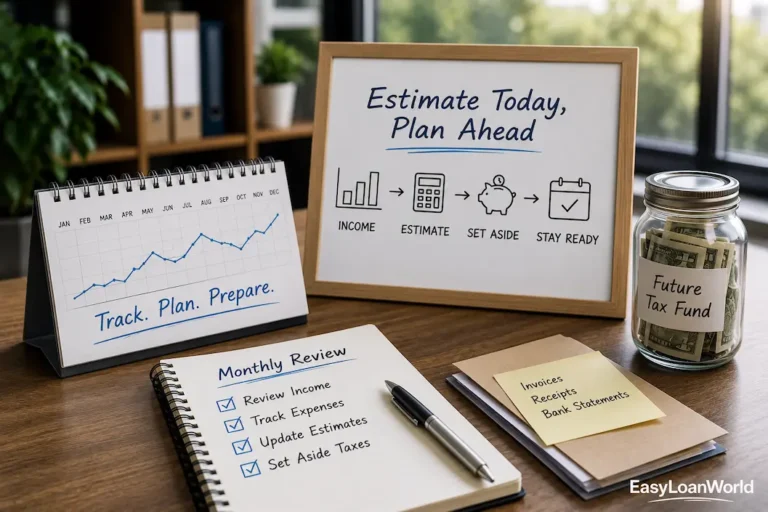
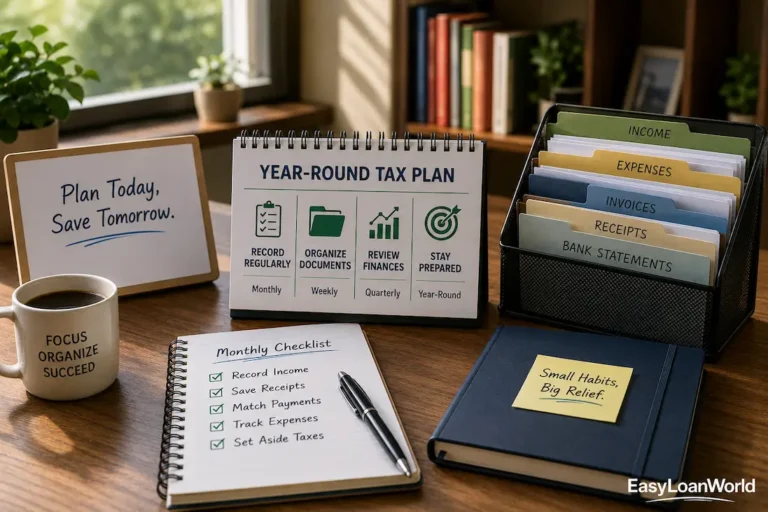
This does not mean keeping every receipt in a shoebox and hoping it will make sense later. A better system is to record expenses regularly while the reason for the purchase is still fresh. A simple bookkeeping note such as “client meeting—transportation” can be considerably more useful months later than a vague description such as “travel.” The goal is not paperwork for its own sake. The goal is being able to reconstruct the financial story of the business accurately.
Watch Out for Expenses That Feel Business-Related
Some purchases are particularly tempting to classify as business expenses because they can be only loosely connected to work. Clothing is a good example. A self-employed professional may feel that they purchased an expensive outfit specifically to look professional for meetings. That does not automatically mean the clothing qualifies as a deductible business expense.
Entertainment can create a similar problem. A business owner may believe that taking someone to an event could create networking opportunities, but entertainment expenses have specific federal tax rules and are not automatically deductible simply because business was discussed. The same principle applies to personal meals, vacations, household purchases, family expenses, and ordinary lifestyle costs.
A useful test is to remove the business label and look at the underlying purchase. If you would have made essentially the same purchase for personal reasons, examine it carefully before treating it as a business deduction.
When an Expense Has Both Purposes, Do Not Guess
Mixed-use spending is where a consistent process becomes valuable. Suppose a self-employed writer uses a laptop for client work during the day and personal activities at night. Instead of automatically treating the entire cost as business-related, the writer should determine whether the applicable tax rules allow a deduction and how business use should be established.
The same thinking applies to internet service, mobile phones, vehicles, and certain home expenses. There is no universal percentage that can safely be applied to every mixed-use purchase. Different categories have different rules, and some expenses may have additional requirements, limitations, depreciation rules, or capitalization considerations.
The safest approach is to identify the business purpose, separate personal use where required, maintain supporting records, and verify the current rules for that particular type of expense.
Keep Business and Personal Money Separate
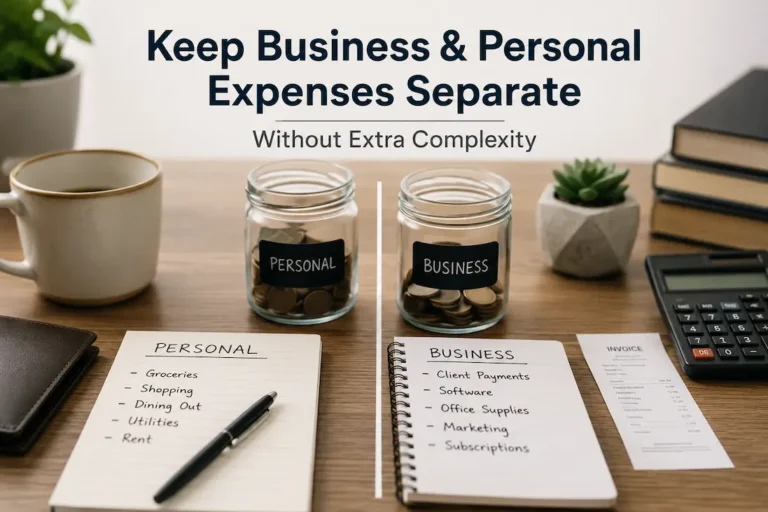
Separating finances is one of the simplest ways to make expense classification easier. A dedicated business checking account can be used for business income and operating expenses, while personal purchases can stay in personal accounts. A separate business credit card can also simplify transaction tracking. This does not eliminate every tax question, but it creates a cleaner paper trail.
The IRS itself recommends keeping business and personal accounts separate because doing so makes recordkeeping easier. If a personal purchase accidentally goes through the business account, it should be found and put in the right category instead of being left among business expenses.
Likewise, if a business expense is paid personally, it should be recorded appropriately in the bookkeeping system. The objective is clean records, not simply having a particular type of bank account.
The Difference Matters More Than the Size of the Purchase
It can be tempting to spend most of your bookkeeping attention on large purchases, but classification matters regardless of whether the transaction is $20 or $2,000. A small personal expense does not become deductible because it is inexpensive. A legitimate business expense does not become personal because it is small.
What matters is the nature of the expense and whether it meets the applicable requirements. For self-employed people, this distinction is particularly important because they make many transactions directly. There may be no employer accounting department separating business expenses from personal purchases. That responsibility falls on the owner. A simple habit of reviewing transactions regularly can prevent a large cleanup job at tax time.
A Simple Decision Framework for Everyday Purchases
When you are unsure how to classify a purchase, walk through the transaction in plain language. First, identify exactly what you bought. Then explain what business activity required or benefited from it. Next, determine whether there is a personal component. If there is, identify whether the applicable rules require the expense to be divided. Finally, keep documentation that supports the business purpose and the amount claimed.
For example, “new computer” is not enough information by itself. Computer purchased for client video editing and business administration” offers clearer justification; however, tax treatment depends on applicable rules, including depreciation or different treatment than a standard operating expense.
That distinction is important because some legitimate business purchases are not deducted immediately in full. The classification question and the timing question are related, but they are not always the same.
Conclusion
It’s not simply about where you work or which account you use to make a payment; it’s about distinguishing between business expenses and personal expenses. Generally, for U.S. federal tax purposes, a deductible business expense must be both regular and essential to the carrying on of a business. An expense that is personal, living, or familial in nature is generally not deductible. Mixed-use expenses are especially difficult because people usually do not combine the personal piece and the company half.
The best habit for a self-employed person to get into is to write down the business purpose of a cost rather than presuming that anything related to work is deductible. Keep company and personal accounts separate, retain receipts and supporting records, identify mixed-use spending, and review the specific requirements for categories such as vehicles, home offices, meals, travel, equipment, and technology.
If an expense is truly uncertain, it is often best to consult a trained tax professional or current IRS advice rather than making an aggressive guess. Tax rules change, and the right treatment can depend on factors a basic company vs. personal checklist can miss.
FAQs
1. What does “usual and necessary” mean?
Generally, an average expense is one that is normal and recognized in your trade or business. An expense is usually considered required if it is helpful and appropriate for your business. The IRS adds that a required expense does not have to be indispensable.
2. What if I use it for both professional and personal purposes?
Generally, you need to separate commercial use from your personal use. The IRS explicitly states this idea for mixed-use items like autos. How to do it depends on the type of spending and the tax regulations that apply.
3. Can I deduct my whole automobile expense if I use the car for work?
No, not without training. If you use a vehicle for both business and personal purposes, you usually need to separate the business and personal elements. You may utilize the vehicle-expense technique under the tax laws that apply to the circumstances.
4. Are you eligible to claim a home office deduction for working from home?
Just working from home does not automatically mean you are eligible for a home-office deduction. There are some requirements, including laws about qualifying business use of some part of the home. Review your situation according to current IRS instructions.
5. Do I need to retain receipts for business expenses?
You must maintain documents that show your business spending. Receipts, invoices, account statements, credit card information, and similar items are among the supporting evidence, the IRS states.
6. What if I’m not clear if a cost is personal or business?
Don’t automatically claim the deduction. Record what the spending was for, assess if there is a personal component, review the current laws on that expense category, and obtain professional tax counsel where the matter is big or complex.