
How to Prepare for Slow Income Months Without Falling Behind on Taxes
Last Updated: 11 Sept, 2026.
For a self-employed person, a slow month can create an uncomfortable mismatch between cash flow and tax obligations. Fewer client payments may arrive, but the tax connected to earlier profitable periods does not simply disappear because current income has dropped. This is especially important for freelancers and independent contractors who do not have an employer regularly withholding federal income tax and employment taxes from their earnings. The goal is not to predict every month perfectly. It is to build a system that keeps slow periods from turning into a tax problem later.
The first useful distinction is between having less cash available now and actually owing less tax for the year. A freelancer who earns $8,000 in one month and $2,000 in the next has experienced a major cash-flow change, but the second month does not erase the income from the first. Estimated tax is generally based on the broader tax-year picture, and the IRS allows taxpayers to revise their estimates when their expected income changes.
Think in Terms of the Whole Year
A slow month is easier to manage when it is viewed as one part of an uneven income pattern rather than as an isolated financial emergency. Look at year-to-date business income, deductible expenses, estimated taxable income, previous tax payments, and the cash currently reserved for taxes. This gives you a more useful picture than simply checking whether this month’s revenue is above or below last month’s number. It also helps separate a temporary slowdown from a genuine change in the year’s expected income.
For example, imagine a freelancer had several strong months early in the year and then expects very little work for the next two months. The business account may suddenly feel tight, but the freelancer may still have accumulated taxable income earlier in the year. Cutting aside money for taxes simply because the current month is weak can create a shortage when the next payment is due. A year-to-date view makes that risk visible before the deadline arrives.
Build a Tax Reserve Before the Slow Period Arrives
The easiest time to prepare for a slow month is while income is still arriving. Instead of treating all incoming money as available spending cash, create a separate reserve for taxes as part of the normal cash-flow routine. The exact amount depends on the person’s circumstances, deductions, other income, filing status, and applicable tax rules, so a universal percentage is not a reliable substitute for an actual estimate.
Make the Reserve a Separate Decision
A separate tax savings account can make the system easier to follow because money intended for taxes is less likely to become mixed with money available for operating expenses or personal spending. The account itself does not determine the tax liability, but it creates a practical barrier between money that can be spent and money that has already been mentally assigned to a future obligation. That distinction becomes particularly valuable when a freelancer has an unusually strong month.
Suppose a designer receives several large client payments in May after a quiet April. If the entire May balance is treated as disposable cash, the business may look healthier than it really is. Moving the planned tax reserve aside when the money arrives prevents the later slow period from forcing the freelancer to choose between paying a tax obligation and covering ordinary living or business costs.
Recalculate When Your Income Pattern Changes
Estimated taxes are not supposed to remain frozen simply because an earlier estimate was made. The IRS says self-employed individuals generally use Form 1040-ES to calculate estimated tax and can refigure their estimates when their expected income changes. If earnings are higher or lower than expected, updating the estimate for a later payment period can be more accurate than blindly repeating an old calculation.
Do Not Confuse a Lower Estimate With Skipping a Payment
A genuine decline in expected annual income may reduce the amount of estimated tax ultimately required, but that does not mean a freelancer should simply stop making payments without recalculating. The relevant question is what the updated tax-year estimate looks like after considering income, deductions, credits, withholding, and previous payments. A lower-income period is one input into that calculation rather than an automatic exemption from estimated tax.
This distinction matters because the federal income-tax system generally works on a pay-as-you-go basis. The IRS notes that insufficient withholding or estimated payments can result in an underpayment penalty, even when a taxpayer eventually expects a refund on the return.
Uneven Income Can Change How Estimated Payments Work
A freelancer with highly seasonal income may not have the same tax-payment pattern as someone who earns approximately the same amount every month. The IRS provides an annualized income installment method for taxpayers whose income is not received evenly throughout the year. Instead of assuming income arrived at a steady pace, this method looks at income, deductions, and related amounts accumulated during each period.
Why Annualizing Can Matter
Consider a consultant who earns most of the year’s income during the first half of the year and very little afterward. Dividing the expected annual tax into four identical installments may not reflect when the income actually occurred. Under the annualized method, the required installments can sometimes better correspond to the timing of income and may reduce or eliminate an underpayment that would otherwise result from treating uneven earnings as evenly distributed.
This is not a shortcut for paying less tax. It is a method for calculating required estimated installments when income is uneven. Taxpayers using the annualized income installment method generally need to complete the applicable annualized calculation and report it with Form 2210 when required. Because the calculations can become complicated, a tax professional can be useful when income is strongly seasonal or changes substantially during the year.
Protect the Money You Need for the Slow Months
Tax planning and cash-flow planning should work together. If a freelancer knows that September and October are usually quiet, for example, the goal should not be to arrive in September with a tax reserve but no money for ordinary business expenses. The stronger approach is to build two separate expectations: money needed for taxes and money needed to keep the business functioning during the expected slowdown.
Create a Slow-Month Floor
A useful cash-flow exercise is to identify the minimum monthly amount needed to keep the business operating. This might include software, insurance, professional services, internet, equipment payments, or other recurring business costs. Personal living expenses may need their own calculation rather than being mixed into the business figure. Once the minimum is known, a freelancer can see how many slow months the available cash could realistically support.
This also changes how strong months should be evaluated. A large invoice is not necessarily excess money simply because it exceeds the current month’s expenses. Some of it may belong to taxes, some may be needed for future operating costs, and some may represent actual available profit. Treating these categories separately makes an unusually profitable month less likely to create an artificially optimistic picture of financial capacity.
Watch Cash Flow and Profit Separately
A freelancer can have positive profit and still experience a difficult cash month. A client might pay late, an annual business expense might have been paid upfront, or several invoices might have been issued without being collected yet. Looking only at the bank balance can therefore create the wrong impression about the business’s tax position.
At the same time, accounting profit should not be treated as cash sitting in the bank. Tax calculations depend on the taxpayer’s accounting method and applicable rules, while cash-flow decisions depend on when money actually enters and leaves the business. The two views answer different questions. One helps understand tax and profitability; the other helps determine whether the business can meet its immediate obligations.
Keep an Eye on Unpaid Invoices
Slow income does not always mean slow sales. Sometimes the work has already been completed but the client has not paid yet. A freelancer should therefore keep an updated list of outstanding invoices and their expected payment dates rather than assuming that every issued invoice is immediately available cash. This becomes particularly important before a tax payment deadline.
For a cash-method taxpayer, the timing of actual or constructively received income can also matter when applying certain tax calculations. The IRS’s annualized-income instructions specifically address income and deductions according to the taxpayer’s accounting method.
Revisit Your Estimated Tax After a Strong or Weak Quarter
The end of a payment period is a natural time to compare what actually happened with what was expected. Review revenue, business expenses, estimated taxable income, and estimated payments already made. If the original forecast was clearly wrong, update the calculation instead of carrying the old assumption through the rest of the year.
A Simple Review Can Be Enough
The review does not need to become a complicated financial model. A freelancer can start with four numbers: income received so far, deductible business expenses recorded so far, estimated tax payments already made, and a reasonable updated expectation for the rest of the year. Those figures provide a much better starting point than guessing based on the current bank balance.
If the updated numbers show substantially less annual income than originally expected, the next estimated payment may need to be recalculated. If income has increased sharply, the opposite may be true. The IRS specifically allows estimated-tax calculations to be refigured when income, deductions, or credits change.
Know the Federal Estimated-Tax Schedule
For calendar-year individual taxpayers, the standard federal estimated-tax payment periods generally use April 15, June 15, September 15, and January 15 of the following year as the payment dates, subject to weekend and holiday adjustments. These dates matter even when a freelancer’s revenue does not follow a neat quarterly pattern.
The important point is that a slow month should trigger a review rather than a missed deadline. If income has changed materially, recalculate what is actually required. If the calculation still calls for a payment, the fact that the business had a weak month does not by itself remove the obligation. If the income pattern is highly uneven, annualized-income rules may be worth examining.
Avoid Using Tax Money to Cover a Temporary Shortfall
One of the most damaging reactions to a slow period is spending money that was already reserved for taxes simply because it is available in the account. That can solve this month’s problem while creating a larger problem at the next payment date. Before touching a tax reserve, determine whether the cash shortage is temporary, whether an invoice is expected soon, and whether discretionary business spending can be delayed.
Cut Timing Before Cutting Tax Reserves
If cash is tight, postponing a nonessential software upgrade or optional equipment purchase may be less damaging than using money reserved for an upcoming tax payment. The same principle applies to personal spending. A freelancer should distinguish between expenses that keep the business functioning and purchases that would simply be convenient during a stronger month.
This does not mean every expense should be eliminated during a slow period. A business may need to continue paying for tools, marketing, insurance, or services that support revenue generation. The better question is whether the expense is necessary now and whether its timing fits the actual cash position.
Keep Records Current During the Slow Period
A quiet month can actually be a good opportunity to catch up on bookkeeping. When fewer transactions are coming in, review bank and payment-platform records, match income to invoices, organize receipts, identify missing expenses, and check whether business and personal transactions have been mixed. Good records make later tax estimates more useful because the estimate is based on actual information rather than memory.
Use the Slow Month to Improve the Next Forecast
Look at what the previous busy period taught you. Were several clients paying later than expected? Did software costs increase? Were there large one-time purchases? Did a particular type of project produce more revenue than expected? These details can improve the next cash-flow forecast and may reveal why the business’s original annual estimate was too high or too low.
The IRS emphasizes keeping records that support income, expenses, and the information reported on a tax return. For a self-employed person, organized records are therefore not just a filing-season task. They can also support better decisions throughout the year.
Build the System Around Income Variability
There is no single monthly tax-saving percentage that works equally well for every freelancer. Someone with consistent revenue and predictable expenses has a different cash-flow problem from someone who earns most of the year’s income in a few large projects. A better system reflects the actual pattern of the business instead of forcing every month into the same formula.
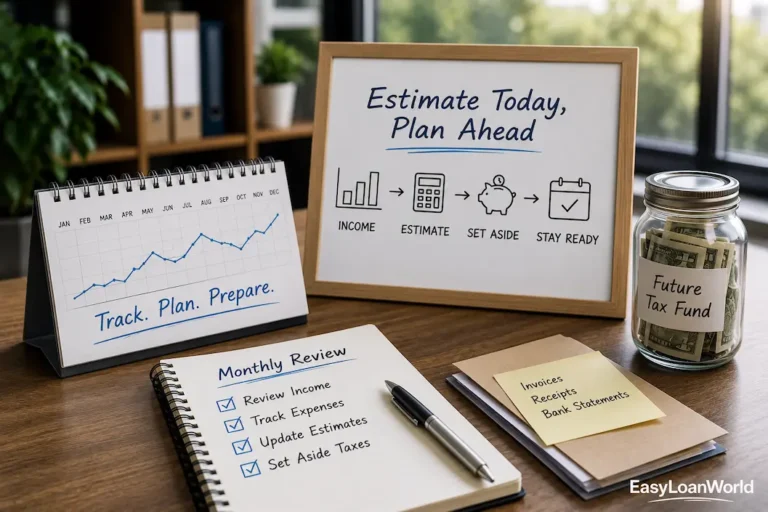
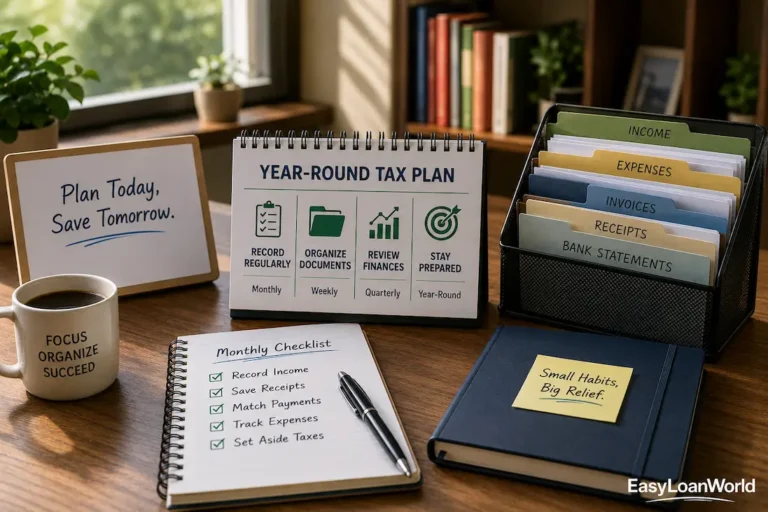
A practical routine might look like this: record income as it arrives, update business expenses regularly, move the planned tax reserve aside, maintain a separate operating reserve, review estimated tax after meaningful changes, and check upcoming payment obligations before spending unusually large amounts. None of these steps requires predicting the exact revenue of every future month. They simply reduce the chance that a temporary slowdown will become a financial surprise.
When the Numbers Stop Being Simple
Professional tax help becomes more valuable when income varies dramatically, the business has multiple income sources, there are significant changes in deductions, or the taxpayer is unsure how estimated payments should be calculated. Annualized-income calculations can also become difficult when several tax factors change at once. Paying for professional guidance can be worthwhile when the cost of an incorrect estimate or missed obligation is potentially much larger.
The goal is not to make every freelancer’s finances complicated. It is to recognize when a simple monthly rule has stopped matching reality. A tax professional can help determine whether the standard estimated-payment approach, annualized-income method, or another planning approach fits the taxpayer’s circumstances.
Conclusion
Slow income months are much easier to handle when taxes are treated as part of the year-round cash-flow system rather than as a bill that appears during filing season. Keep tax reserves separate, monitor year-to-date numbers, update estimates when income changes, and avoid assuming that a weak month automatically means no tax payment is required. For freelancers with strongly uneven income, the IRS annualized-income installment method can sometimes provide a more accurate way to match estimated payments with the timing of earnings.
The most useful habit is simple: do not wait for a slow month to discover that the business has been relying on money that was already committed elsewhere. A current cash-flow forecast, current records, and periodic estimated-tax review give a freelancer much more room to adjust before a temporary slowdown becomes a tax problem.
FAQs
Does a slow month mean I can skip my estimated tax payment?
Not automatically. A lower-income month may change your overall estimated tax calculation, but you should recalculate your expected tax rather than simply skipping a payment. If your income is uneven, the annualized-income installment method may also be relevant.
What if my income is much lower than I originally estimated?
You can generally refigure your estimated tax using updated income, deductions, and credits. The IRS specifically provides for changing estimated-tax calculations when your circumstances change.
Can freelancers make unequal estimated tax payments?
Potentially, yes. Taxpayers with uneven income may be able to use the annualized income installment method to determine required installments based on when income was actually earned or received, depending on their circumstances and accounting method.
What is the easiest way to prepare for slow months?
Start before the slowdown. Keep a separate tax reserve, maintain an operating cash buffer, track unpaid invoices, and review your expected annual income regularly. This makes it easier to distinguish a temporary cash shortage from a genuine reduction in annual taxable income.
What should I use to calculate estimated tax?
Self-employed individuals generally use Form 1040-ES and the associated IRS worksheets to estimate federal income and self-employment taxes. The calculation should reflect expected income, deductions, credits, withholding, and other relevant circumstances.
Official resources: IRS Estimated Taxes · IRS Publication 505 — Tax Withholding and Estimated Tax · IRS Form 1040-ES information