Equipment Loan Insurance: Check the Lender’s Actual Status
Match the financing requirement to the supporting insurance documents.
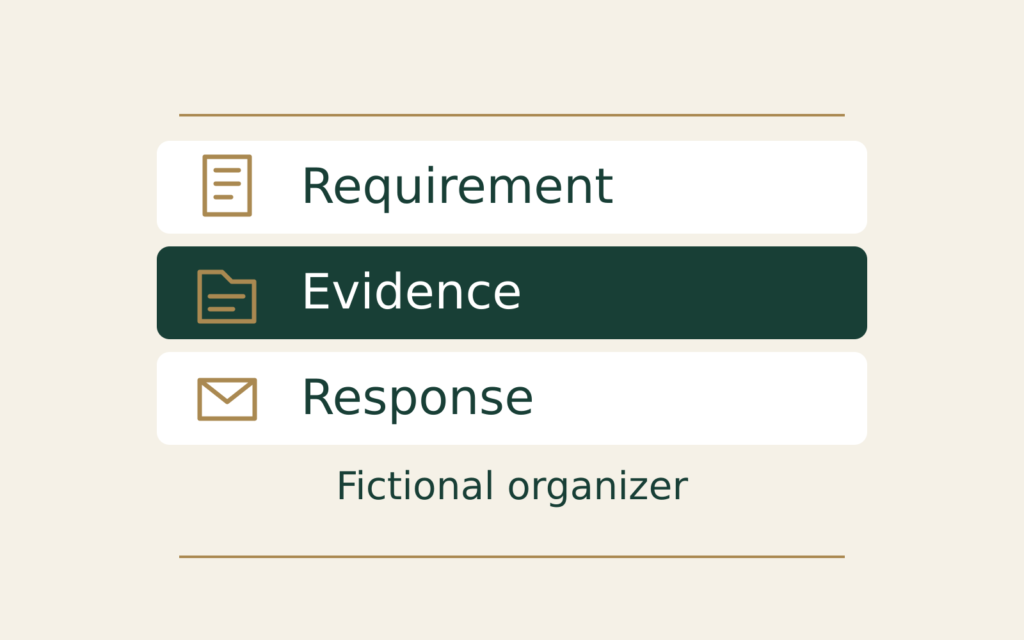
Estimated reading time: 5 minutes
A lender’s name on a certificate of insurance isn’t enough to establish every insurance protection your equipment-financing agreement requires. Check what role the name identifies, then locate the policy language supporting the required status.
This is a U.S. business-document review guide with a specifically labeled Washington rule example. It doesn’t interpret your coverage, select an endorsement or certify compliance with a financing contract. Ask your insurer or licensed agent about coverage and the lender about its requirements.
Start with the document’s job
Travelers explains that a certificate of insurance, or COI, summarizes policy information rather than replacing the insurance contract. The certificate-holder section identifies the recipient requesting proof. A COI doesn’t change coverage or guarantee payment of a particular claim; the underlying policy terms govern.
Identify the unresolved question before sending another copy of the same certificate. Is the lender asking for the document, a different designation, an asset reference or evidence that a requested policy change took effect? Those are different tasks.
Don’t substitute one designation for another
Progressive Commercial’s explanation distinguishes a loss payee’s financial interest in insured property from an additional insured’s liability protection. It discusses financed equipment as a reason a lender may require a loss-payee designation. These labels aren’t interchangeable, and the actual policy and endorsement determine their scope.
Don’t shorten a lender’s precise requirement to “put them on the insurance.” Send the complete requirement to the agent and ask which policy provision or endorsement addresses it. If the wording is “lender’s loss payable,” don’t assume any document containing “loss payee” is necessarily equivalent.
That’s a question for the insurer and lender, not a comparison this article can settle. A business may have multiple coverage requirements; resolving one label doesn’t establish that the entire insurance condition is satisfied.
A certificate and a notice right are separate questions
For risks located in Washington, WAC 284-30-355 says a certificate doesn’t confer rights beyond the referenced policy. Its current text shows an amendment effective October 18, 2026. The rule applies based on the risk’s location, regardless of where the certificate holder or other listed parties are located.
Under that rule, a certificate holder’s right to cancellation, nonrenewal or similar notice depends on being named in the policy or endorsement and on that document requiring notice. The policy governs the conditions and timing. Don’t infer a promised notice period merely from receiving a certificate.
This is a Washington example, not a nationwide statement of notice rights. If your financing contract requests particular notice protection, ask the insurer what the policy actually provides and ask the lender how it handles any difference.
Review a fictional equipment file
Imagine a small fabrication business financing a machine. Its lender’s written checklist requests property-insurance evidence with a specified lender designation. The business receives a certificate that lists the lender only as certificate holder. No relevant endorsement or policy provision has yet been identified in the file.
The correct file status is “supporting status evidence unresolved,” not “coverage absent” and not “requirement satisfied.” Missing evidence doesn’t establish what the insurer issued. Obtain the relevant documents and an explanation rather than making either assumption.
| File item | Unresolved check |
|---|---|
| Lender checklist | Preserve its exact requested designation. |
| Certificate received | Identify the role actually shown. |
| Supporting policy pages | Ask the agent to identify the relevant provision. |
| Lender response | Record whether this requirement was accepted. |
Resolve the mismatch without rewriting the certificate
In the fictional case, the business first sends the agent the lender’s requirement and asks: “Which issued document supports this designation for this equipment?” It sends the lender a separate question: “Which supporting evidence do you need to complete this insurance review?” These are suggested questions, not instructions to buy or change coverage.
Suppose an endorsement then arrives but references a different machine identifier. Preserve both versions and ask for clarification. A matching lender name doesn’t resolve the asset mismatch. Don’t silently edit the certificate or rename the attachment to make the inconsistency disappear.
If a correction is issued, retain its effective date and the insurer’s explanation of what changed. Ask about any period left unresolved; don’t assume the correction applies retroactively. Keep a pending request distinguishable from an issued change and from the lender’s acceptance of the evidence.
Keep acceptance and ongoing coverage separate
A reply acknowledging that a file was uploaded answers a delivery question. It may not answer the lender’s review question. Save the response that actually addresses the requirement, together with the version reviewed, rather than treating every confirmation message as clearance.
Travelers also emphasizes checking the listed policy dates and supporting endorsement information. A certificate describes a policy period; it isn’t a promise that coverage will continue unchanged indefinitely.
Set a private reminder to obtain current evidence before the recorded period ends. When equipment, insurer or financing information changes, keep the prior record and ask the parties what must be updated. Don’t infer a funding date, claim payment or release from loan obligations from this organizer.
For the separate acquisition-cash and readiness questions, see our equipment financing checklist.
Business financial education. Sources checked October 29, 2026. The case is invented. No coverage changes, submissions or insurance purchases are made through this article.


