Financial Aid SAP Notice: Which Review Failed?
Use your school's SAP policy to identify the financial-aid review that failed, locate the applicable appeal requirements, and distinguish a submitted appeal from an approved outcome.
Estimated reading time: 5 minutes
A satisfactory academic progress notice concerns financial-aid eligibility, not simply whether this semester’s grades look better. Federal Student Aid explains that each school has its own SAP policy for progress toward a degree or certificate. Find the policy applying to your program before interpreting the notice.
This U.S. guide uses current federal guidance and clearly labeled university examples. It doesn’t determine personal eligibility, recommend borrowing to replace lost aid, or prepare an appeal. Read the actual school decision rather than borrowing another student’s outcome.
Federal Student Aid dictionary.
Academic standing and aid review are different
The University of Illinois Urbana-Champaign explicitly describes its SAP review as independent of academic-department review. Its aid office reviews the registrar’s academic record, and its policy applies to enrollment periods even when the student did not receive aid.
A useful question is therefore not only “Can I remain enrolled?” but “Which office made this decision, and which eligibility review does it cover?” An adviser’s discussion of course choices shouldn’t be silently substituted for the aid office’s notice.
Illinois also directs students to contact financial aid when a grade change restores eligibility so their SAP status can be reevaluated. That’s Illinois’s instruction, not a guarantee that every correction produces an immediate payment at every school.
Identify the failed measure and the right route
Florida State’s policy distinguishes GPA, credit-hour limits and the percentage of attempted credits completed. It also distinguishes requirements for undergraduate, graduate, medical and law students. One favorable number doesn’t answer all those questions.
FSU publishes separate appeal routes for circumstances and for hours. Its hours route addresses matters such as high transfer hours or a second degree; the circumstances route addresses documented circumstances affecting academic performance. Follow the route your school identifies rather than assuming every notice calls for the same explanation.
For a focused conversation, ask which measure triggered the notice, which enrollment record supplied the inputs, and which program’s rules were applied. Request clarification of an unfamiliar course or grade entry instead of inventing a corrected total. These are questions, not grounds that automatically require approval.
Warning isn’t the same as probation
The 2026–27 federal handbook allows financial-aid warning only at schools evaluating SAP each payment period, for students meeting SAP in their prior enrolled payment period or in their first payment period. Warning is optional and lasts one payment period without requiring an appeal. It isn’t a universal extra semester.
Financial-aid probation follows a successful appeal. Eligibility may be reinstated for one payment period; a longer recovery path can require an academic plan and continued review. The school determines appeal procedures and documentation.
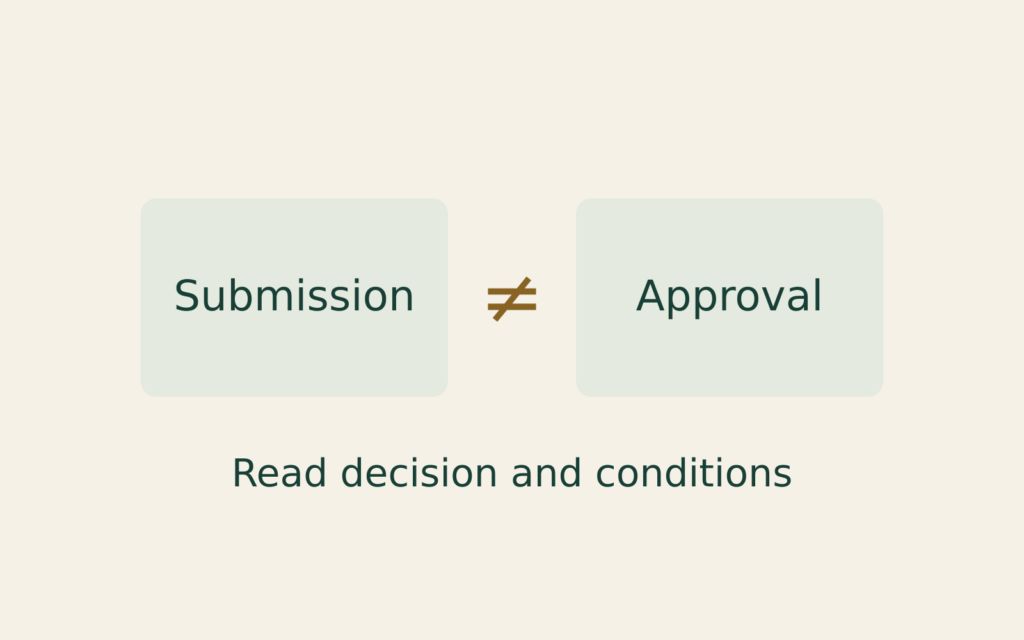
“I submitted an appeal” doesn’t mean “I am on probation.” Ask for the decision and any plan conditions rather than treating a submission confirmation as the outcome.
2026–27 Federal Student Aid Handbook.
A school-specific example of appeal evidence
The University of Iowa currently requires an appeal statement explaining circumstances and steps for future success, plus a Plan of Study reviewed with the academic adviser. Its page says supporting documentation for extenuating circumstances isn’t required as part of that appeal. Don’t turn another school’s document checklist into an Iowa requirement.
Iowa sets its own appeal deadlines and communicates decisions by university email. Use the current term’s instructions; this guide supplies no nationwide submission date or predicted turnaround.
Before sharing sensitive evidence, identify the instruction requesting it and ask which private delivery method the office accepts. Don’t send a full medical or family history merely because a different school’s example mentions documentation.
University of Iowa SAP policy.
Keep the bill question separate
Iowa’s receiving-aid guide assigns eligibility decisions to financial aid and disbursement (except Work-Study) and billing to the University Billing Office. It distinguishes anticipated aid, amounts applied to the university bill and processed refunds. These are different account statuses, not three names for money already available.
That office division gives a practical model for questions elsewhere: ask financial aid about the eligibility decision and ask the billing office which funds are actually posted. Confirm your own school’s responsibilities. A pending review isn’t evidence that the bill has been paid.
Turn an unclear notice into specific questions
A fictional acknowledgment says “received.” That establishes receipt, not an appeal outcome; request the actual decision.
| Unclear point | Focused question |
|---|---|
| Missing attachment | Which file or page is missing? |
| Conflicting dates | What event does each date describe? |
| Unclear reply | Which earlier question does this answer? |
Use your school’s verified private contact route. Keep student identifiers and sensitive circumstances out of public comments. If a deadline is approaching, contact the office promptly with the available records instead of waiting to create a perfect folder. This organizer supplies no extension or assurance of a favorable decision.
Roth Conversion and Account Clocks
Separate five-year tests.
ABLE Distributions Across Month-End
Separate retained purposes.