Manufactured-Home Financing Records
Quick answer: Identify what secures the proposed loan, then match the home’s identifiers with the ownership and lien records.
Estimated reading time: 6 minutes
Quick answer: Identify what secures the proposed loan, then match the home’s identifiers with the ownership and lien records. Ask the lender which disclosures and property conditions apply. Keep delivery, installation, site work and any recurring land charges visible beside the home price.
Start with what secures the loan
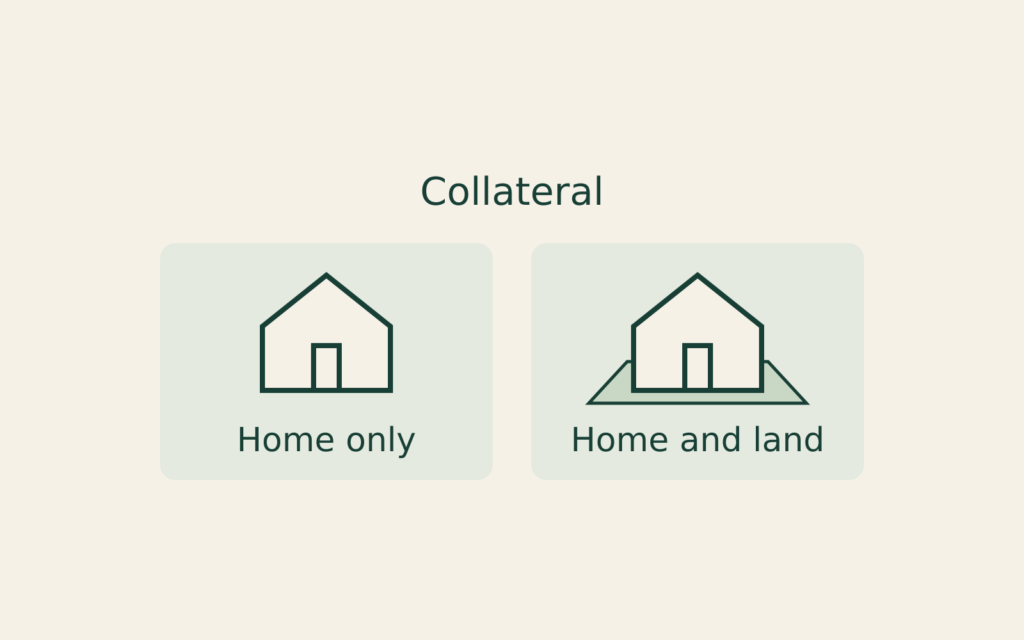
A HUD-funded financing comparison distinguishes a home-only, or chattel, loan secured by the manufactured home from a real-property mortgage secured by home and land. Identify actual collateral rather than inferring it from appearance.
Identify the structure, not just its address
HUD’s label guidance distinguishes the exterior metal certification label from the interior paper data plate. The data plate identifies the manufacturer, model, serial number, manufacture date and design zones. These are different records, not interchangeable names for one certificate.
For a multi-section home, HUD says label numbers need not run consecutively. Don’t classify a missing consecutive number as proof that a section is undocumented. Match the actual identifiers instead.
Missing paperwork has different routes: HUD doesn’t reissue certification labels, although historical information may support label verification through IBTS. For a missing data plate, the manufacturer or in-plant inspection agency may help. A verification request isn’t a promise that the historical information exists or that a lender will accept the property.
Read ownership evidence under the relevant state system
Texas supplies a concrete example, not a nationwide titling rule. The Texas housing department explains that its Statement of Ownership confirms ownership and liens recorded with that department. Changes to the owner, location, lien information, property election or use can require a revised statement.
For conversion to real property, the department says issuing the statement isn’t the final step: a certified copy must be recorded in the appropriate county’s real-property records. Land ownership or a qualifying long-term lease, and existing liens, also matter. This isn’t a do-it-yourself conversion checklist.
Ask the lender and closing professional to identify the required current record and any unfinished conversion work. A seller’s old certificate can’t by itself establish that every later change was completed.
Mortgage program
Freddie Mac’s lender guidance illustrates why “manufactured” isn’t a complete eligibility answer. Its definition concerns homes built under the HUD Code on or after June 15, 1976. It distinguishes earlier mobile homes and modular homes built under state or local codes. Modular homes are generally treated as site-built homes for its financing purposes.
Occupancy also matters: the page lists primary-residence use for single-wide homes, and primary-residence or second-home use for multi-wide homes. Investment-property mortgages secured by manufactured homes are ineligible for sale to Freddie Mac.
Freddie Mac’s Seller/Servicer Guide controls; these rules don’t establish approval.
Don’t demand the wrong disclosure form
The CFPB explains that a manufactured-housing or mobile-home loan not secured by real estate doesn’t use a Loan Estimate or Closing Disclosure; Truth-in-Lending disclosures apply instead. The absence of those mortgage forms alone therefore doesn’t establish that the lender failed to provide the applicable disclosure.
Conversely, receiving a Loan Estimate isn’t an approval. The CFPB says it describes terms the lender expects to offer if the borrower proceeds.
Before comparing two packets, ask each lender to identify the disclosure applicable to that particular transaction. Preserve the distinction between a quoted borrowing arrangement and a decision that the borrower and property satisfy its conditions. Don’t rename one form to make the folders look alike.
Separate insurance evidence from the loan amount
The Texas Department of Insurance describes mobile-home insurance as covering the home, personal property, additional living expenses and liability. The actual policy still matters: coverages vary, and a declarations page summarizes limits, deductibles and coverages rather than replacing the full terms.
Read the loss valuation method. Replacement-cost coverage and actual-cash-value coverage differ because the latter subtracts depreciation. A smaller premium doesn’t explain that difference, nor does the outstanding loan balance identify the policy’s payment basis.
Keep the property-insurance quote alongside the financing request, but ask the insurer to explain the coverage and the lender to identify its requirements. Don’t infer that insuring the debt amount guarantees enough money to replace the home after a covered loss.
Know which document addresses a defect
HUD’s dispute-resolution explanation separates that process from a warranty. The program addresses responsibility among manufacturers, retailers and installers for correcting defects; it isn’t a warranty program and doesn’t replace one.
State administration matters. HUD describes a federal process where there’s no state dispute-resolution program, rather than one identical national intake route. Its explanation ties covered reports to the first year after installation and includes other eligibility conditions. Don’t calculate a personal deadline or assume eligibility from this summary.
Retain the actual warranty and consumer manual, and identify the applicable state or federal contact before a problem arises. If defects are alleged, a dated written report and its delivery evidence can help establish what was reported and when. Urgent safety concerns shouldn’t wait for routine paperwork review.

One Mortgage Form, Two Borrowers
Match each person’s share.