Rental Deposit Alternatives
Quick answer: Compare three separate amounts: cash needed at move-in, fees you won’t get back, and charges you may still owe later.
Estimated reading time: 6 minutes
Quick answer: Compare three separate amounts: cash needed at move-in, fees you won’t get back, and charges you may still owe later. A landlord-protection product may reduce the initial cash payment without eliminating your liability. Ask what the actual plan covers and how cancellation, renewal and claims work.
Ask what the payment buys
Jetty describes Jetty Deposit as a surety-bond alternative to a traditional cash deposit. Its property-facing explanation says the landlord can submit an outstanding-balance claim after the resident fails to settle the move-out account; Jetty then seeks recovery from the resident.
The provider describes monthly or one-time payment options and pricing that varies with required protection and applicant credit. Its advertised starting price isn’t your quote.
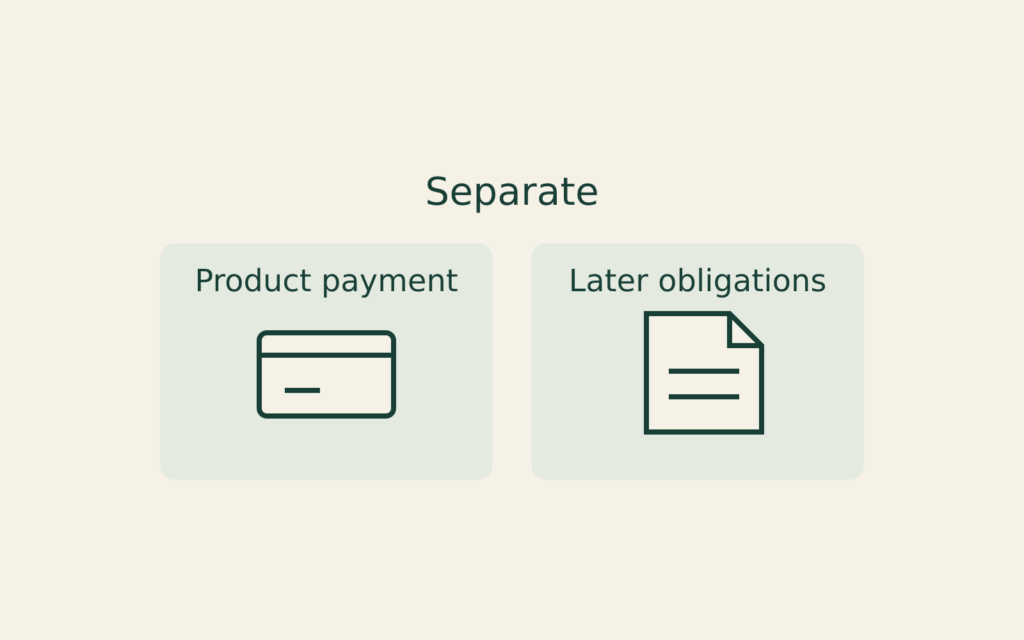
Keep the purchase payment separate from the coverage amount and any later balance demanded.
Read the exit process before the move
Jetty’s cancellation guidance distinguishes moving out from never signing a lease, paying a cash deposit instead, or never moving in. For a move-out request, it asks for the final day of access and seeks confirmation from the property.
For the other listed situations, property confirmation is needed to close the account and refund processed payments. Jetty says applicable refunds follow confirmation that the bond can be cancelled. Don’t turn this conditional process into a universal promise that fees return at the end of every tenancy.
Keep the event, request and completed cancellation separate. A submitted request doesn’t prove that coverage ended or that a refund was authorized. Ask which confirmation is still missing if the process remains open.
Separate rent guarantees from deposit coverage
TheGuarantors’ renter explanation identifies the landlord as beneficiary of its Lease Guarantee. Rent Coverage and optional Deposit Coverage are different components; the landlord determines which are included. Its Deposit Coverage requires a non-refundable fee.
The provider also says that, if its Rent Coverage reimburses the landlord for unpaid rent, the renter remains liable to TheGuarantors for those payments.
Read the component names in the actual quote. Don’t assume an apartment’s request for a guarantor automatically replaces its cash-deposit requirement. Ask which requirement each component satisfies and whether anything remains payable separately. The provider notes that actual policy terms, exclusions and state availability control.
A billing authorization is another structure
Obligo’s tenant terms, updated September 8, 2026, distinguish No-Deposit, Reduced Deposit, Full Deposit and Installments plans. Depending on the plan, there can be service fees, an Obligo Deposit, or both. “Deposit alternative” therefore doesn’t always mean no cash is held.
The terms authorize collection of permitted charges through linked payment methods or the Obligo Deposit. They also distinguish the Billing Authorization Value from service fees. Read what can be collected, not only the initial price.
Plan availability depends on qualification and the property. Don’t assume all four choices will be offered. Identify the proposed plan and its payment obligations before comparing it with a bond or a conventional deposit.
Check the local choice rule
Texas Property Code §92.111 requires a landlord offering its fee-in-lieu option to offer a security deposit too. That choice can’t determine occupancy approval. Written notice must explain the choices and charges, including switching later to the deposit then offered to new tenants for substantially similar housing.
This isn’t a finding that every named product fits that section. Other jurisdictions differ; ask qualified local housing counsel about the actual agreement.
Keep renters insurance on its own line
The Texas Department of Insurance describes renters insurance as typically including personal-property, additional-living-expense and personal-liability coverage. The landlord’s insurance doesn’t cover the renter’s belongings. Some landlords require a renters policy even though Texas law doesn’t generally require one.
Coverage has limits and exclusions. TDI explains that most renters policies cover specified causes such as fire or theft, but not floods. A policy limit is the most the insurer will pay, not a guarantee that every loss qualifies.
Ask the insurance agent about the actual policy’s covered property, limits and conditions. Keep that evidence distinct from a landlord-protection product. TDI describes additional living expenses as extra food, rental and other costs when covered damage temporarily displaces the renter. Check that trigger before treating a policy as ordinary rent assistance.
If borrowing is the alternative, compare the debt too
The CFPB’s installment-loan guidance explains that interest and fees can add to borrowing cost. Examples include origination, documentation and late fees; credit or disability insurance is generally optional. The lender’s disclosures identify the applicable charges. Ask whether quoted costs include optional insurance you did not request; don’t treat every quoted add-on as mandatory.
If considering borrowing to fund a cash deposit, obtain the repayment schedule and fee disclosures separately from the lease. A possible deposit return later isn’t a scheduled loan payment arriving today. Don’t count an uncertain refund as money already available to meet installments.
Compare the required cash dates, total borrowing charges and remaining repayment obligation, rather than matching one loan installment with one alternative-product fee. This is a comparison method, not a recommendation to borrow.


Roth Conversion and Account Clocks
Separate five-year tests.

ABLE Distributions Across Month-End
Separate retained purposes.