Jewelry Purchase Documents
Understand what a jewelry seller’s description, laboratory report, appraisal and credit agreement can tell you before borrowing.
Estimated reading time: 5 minutes
If you plan to borrow for jewelry, start with what the paperwork tells you. A seller’s description, laboratory report, appraisal and credit agreement each answer a different question.
Get the stone description into the sale record
The FTC’s gemstone buying guide says sales paperwork should include the seller’s statements about origin, weight or size, treatments and special care requirements. Product photographs and names don’t replace those descriptions.
The guide distinguishes natural, laboratory-created and imitation gemstones. Laboratory-created and imitation descriptions should be clear; appearance alone doesn’t establish origin. This guide neither identifies photographed stones nor recommends a type.
Treatments can affect appearance, durability or value, and some effects may change over time. The FTC says sellers should disclose treatments that aren’t permanent, create special care requirements or significantly affect value. Ask for that disclosure before treating two similarly described items as equivalent purchases. A care instruction concerns the item being sold, not a promise about future resale proceeds.
A GIA report isn’t an appraisal
GIA’s FAQ says its laboratory report confirms quality characteristics, but GIA doesn’t perform appraisals. Don’t turn the report’s existence into an appraisal supplied by that organization.
GIA’s appraiser-selection guidance, published in 2014 and still available, distinguishes gemological training from appraisal training. It warns that “GIA certified” isn’t how GIA describes its graduates. A Graduate Gemologist qualification concerns identifying and grading gemstones; ask separately about appraisal education and experience.
The guidance also suggests asking whether the appraiser is independent or employed by the seller, has experience with the needed appraisal type, and has insurance while holding the jewelry.
Read the insurer’s documentation requirement
Jewelers Mutual’s appraisal explanation describes a written record containing the item’s description, photographs and estimated current retail replacement value. It asks for business letterhead so the appraiser can be contacted.
The insurer says most customers can begin coverage without an appraisal, but exceptions exist. A claim requires an appraisal or other adequate documentation. Beginning coverage without submitting that document therefore doesn’t mean documentation will never be needed.
For inherited or heirloom pieces, it notes that older or unique items may receive additional underwriting review. This is the insurer’s published process, not a coverage decision, policy purchase or determination that a particular claim will be paid.
One purchase can create more than one credit plan
The Comenity Capital Bank KAY card agreement defines a credit plan as a balance subject to particular financing terms. It says a transaction with multiple shipments may create separate plans, each subject to a separate minimum purchase requirement. Qualifying transactions posting on one day may instead be combined under its stated conditions.
Keep the order’s shipment records beside the statement’s plan entries rather than assuming one checkout always means one promotional balance. Plan availability can differ by location or online purchase, and offer terms can change.
The agreement also warns that required minimum payments don’t necessarily clear a promotional balance before its promotional period ends. Identify the plan actually assigned, not a promotion remembered from an advertisement. This guide supplies no current rate quote, payment calculation, application or recommendation to use store credit.
Keep the guarantee and trade-in conditions together
KAY’s published guarantee covers specified diamonds, emeralds, rubies and sapphires that chip, break or leave their original setting during normal wear. It requires documented inspections every six months by an authorized KAY representative and necessary repairs by its representatives. The replacement includes the labor and materials for setting it. Lab-grown or lab-created stones are replaced with their corresponding lab-grown or lab-created type.
The same page gives a separate twelve-month mounting guarantee from purchase for material or workmanship defects. “Lifetime” in one heading doesn’t make every component’s coverage identical.
Its diamond trade-in policy uses original purchase price excluding charges such as tax and shipping, with a replacement diamond at least twice the trade-in value. Colored gemstone items are excluded, and lab-grown diamonds can trade only toward lab-grown diamonds. These are conditional merchant benefits, not a valuation of any jewelry offered elsewhere.
Read the metal description as carefully as the stone
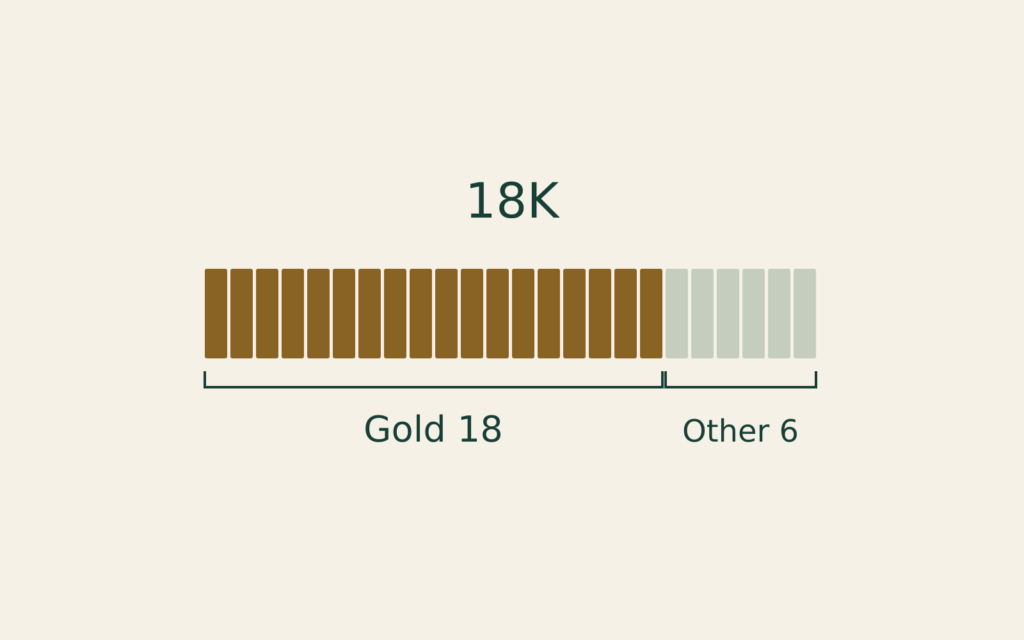
The FTC’s separate metals guide explains that a gold karat mark describes purity. Eighteen-karat gold contains eighteen parts gold and six parts other metal; fourteen-karat gold contains fourteen parts gold and ten parts other metal. The total is twenty-four parts, not a statement of the item’s weight.
“Solid gold” means the item isn’t hollow, rather than automatically meaning pure gold. Gold-plated products have a surface layer that can wear away. Vermeil describes a gold-plated product whose base is sterling silver. Those descriptions shouldn’t be collapsed into a single “gold” entry when reviewing the price.
The guide also identifies sterling silver as 92.5% pure silver, sometimes marked 925. Record the actual metal description alongside the stone description. This doesn’t authenticate a hallmark, assay the item, calculate scrap value or predict an investment return.


Roth Conversion and Account Clocks
Separate five-year tests.

ABLE Distributions Across Month-End
Separate retained purposes.