Piano Purchase Documents
Check the lender, technician, dealer and movers’ separate commitments before treating a piano’s price as the full purchase arrangement.
Estimated reading time: 5 minutes
When a piano purchase involves a lender, technician, dealer and several movers, check what each has agreed to provide. An attractive instrument price is only part of that arrangement.
Identify the piano lender and repayment terms
Piano Credit Company’s consumer page identifies the business as a division of United Midwest Savings Bank. It describes fixed installment financing and says monthly payments depend on the amount financed and term.
The page also says its loans have no early-payoff fee and that payments exceeding the regular monthly amount go directly to principal. Those are the lender’s published features, not a calculation of a particular buyer’s payoff amount.
The lender also describes online bill payment that supports one-time payments and scheduled monthly payments. Those are payment-channel options, not evidence that a buyer has applied, been approved or made a payment.
Buy a condition assessment, not reassurance
The Piano Technicians Guild’s buying guidance recommends having a Registered Piano Technician evaluate a prospective used piano’s condition and value. Its warning is especially relevant to a free or cheap instrument that could require extensive rebuilding.
A service visit should address structural condition, not merely whether someone can demonstrate a tune. PTG explains that apparently small symptoms can reflect substantial problems and that restoration work can change the economics of the purchase. Technical findings belong with the technician; this article doesn’t diagnose a sound, specify a repair or estimate what a particular piano is worth.
Check the market for which it was built
In a September 2017 explanation still published by Yamaha, the manufacturer describes gray-market pianos imported from Asian markets into the United States for resale. It says these instruments have no Yamaha factory warranty and that some models or styles can present replacement-parts difficulties.
The article also warns that an instrument advertised as new may have been independently reconditioned. Yamaha points readers to a serial-number lookup for checking whether a Yamaha piano was built for the U.S. market. That question concerns origin, not a finding about the condition of every imported piano. Don’t treat a seller’s refurbishment description as a Yamaha factory commitment.
Ask which certified program issued the documents
M. Steinert & Sons’ warranty page distinguishes its Certified Piano Program from its ordinary used-piano warranty. Its certified program lists Steinway instruments thirty years old or younger, and Steinway-designed Boston and Essex instruments ten years old or younger.
The program uses a qualified technician’s eighty-eight-point inspection and specifies genuine Steinway parts for necessary repairs or replacements. Certified instruments come with a signed inspection report and a three-year Steinert limited-warranty certificate. The separate used-piano entry states a ninety-day Steinert limited warranty.
This comparison concerns Steinert’s named program and certificates. Match the offered instrument to its actual program and certificate rather than applying the longest duration appearing anywhere on the page.
Trace all three legs of the delivery
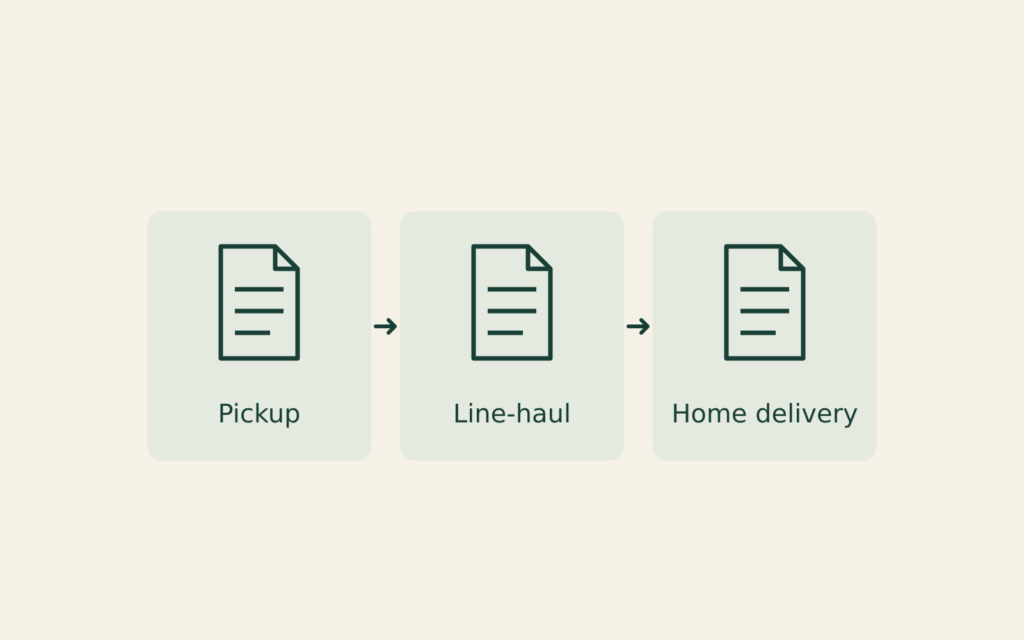
Keyboard Carriage’s published shipping snapshot describes a distribution model serving commercial locations. An individual customer hires a local piano dealer or mover, for a separate fee, to collect the instrument from the residence. Keyboard Carriage then collects it from that commercial location.
At the destination, another local dealer or mover accepts the instrument and delivers it to the home, again for a separate fee. That creates three service legs: local collection, transport between commercial locations and local home delivery.
For this specific shipping model, identify the local business accepting each handoff. The carrier’s commercial delivery point isn’t the customer’s home.
Resolve building access before relying on a delivery date
PianoPiano’s FAQ says it can also arrange moves for instruments customers already own, not only its rental stock. Its delivery discussion identifies walk-ups, elevators, tight hallways and other building-access conditions as planning information.
If a building requires a certificate of insurance, the company says it can provide one without an additional charge. It also notes that the delivery situation can affect which piano is practical for that location. This is a named provider’s service description, not permission to move an instrument through a particular building.
Give the professional the building’s actual access requirements. Don’t substitute a room’s intended use for an assessment of the route into it, or attempt piano handling from this document guide.
Separate instrument coverage from the moving arrangement
Anderson Group’s published piano program describes agreed stated-value coverage, including professional or paid-performance use and diminished-value coverage after damage. It also lists performance-interruption protection subject to its stated limit and actual-loss condition.
Those descriptions concern different consequences: damage to the instrument, a loss in market value after damage, and interrupted performance. They shouldn’t be compressed into one assumption that every financial consequence of a damaged piano is reimbursed.
The program says appraisals are required when necessary and that software coverage involves an additional premium. These are advertised program features, not an issued policy, premium quote or coverage decision for a particular move. The actual policy and underwriting determine the insured arrangement.
Roth Conversion and Account Clocks
Separate five-year tests.
ABLE Distributions Across Month-End
Separate retained purposes.