Section 179 and Employee Wages
Reconcile deduction capacity.
Estimated reading time: 1 minute
Section 179’s business-income limit can include employee wages, not just the equipment-using business’s profit.
In a fictional 2025 case, a single U.S. sole proprietor buys a new freestanding manufacturing machine from an unrelated seller for $40,000 cash. They own it, place it in service that year and use it exclusively in their actively operated U.S. business. It is their only property acquisition; they validly elect section 179 for its entire cost.
Verified income before section 179 and the self-employment-tax deduction is $10,000 from that business plus $20,000 ordinary employee wages. There are no other businesses, losses, carryovers, special adjustments or competing deduction limits.
IRS Publication 946 includes employee pay in this income limit. The $40,000 election is below the 2025 dollar and acquisition-phaseout thresholds, but income capacity is $10,000+$20,000=$30,000.
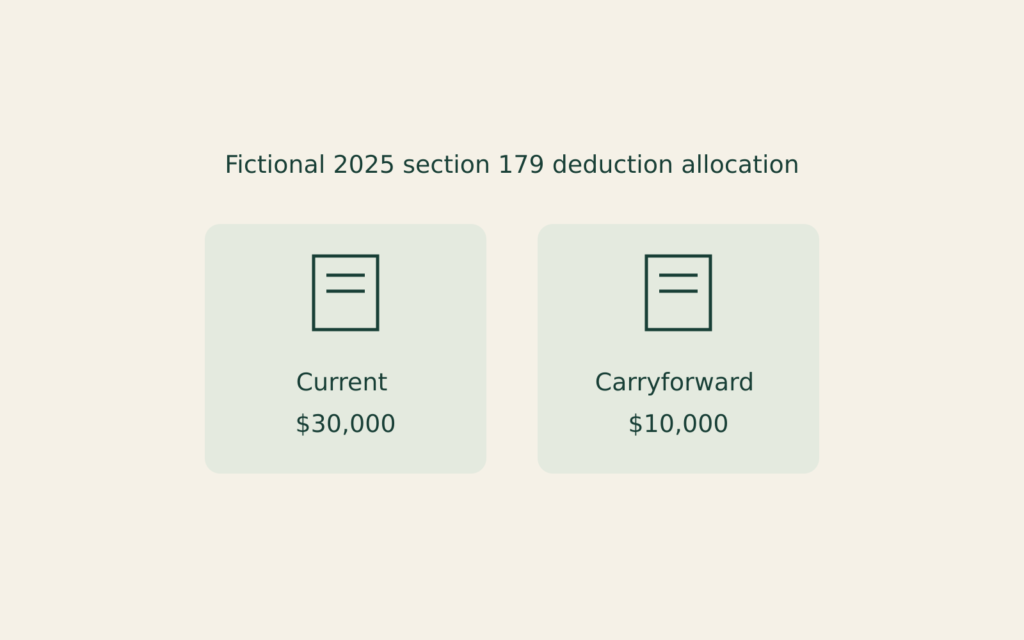
Thus the current section 179 deduction is $30,000, not $10,000 or $40,000. The remaining $10,000 carries forward subject to future limits. These are deductions, not tax savings or a recommendation to make an election.


Roth Conversion and Account Clocks
Separate five-year tests.

ABLE Distributions Across Month-End
Separate retained purposes.