Nonbusiness Debt: Loss Timing
Distinguish partial and total worthlessness.
Estimated reading time: 1 minute
Partial nonbusiness-debt worthlessness does not establish a deductible loss.
In 2022, a fictional cash-method U.S. individual lent an unrelated adult $10,000 cash under a valid, enforceable repayment obligation. Both intended repayment; this was neither a gift nor connected with the lender’s business. The lender is not in the lending business.
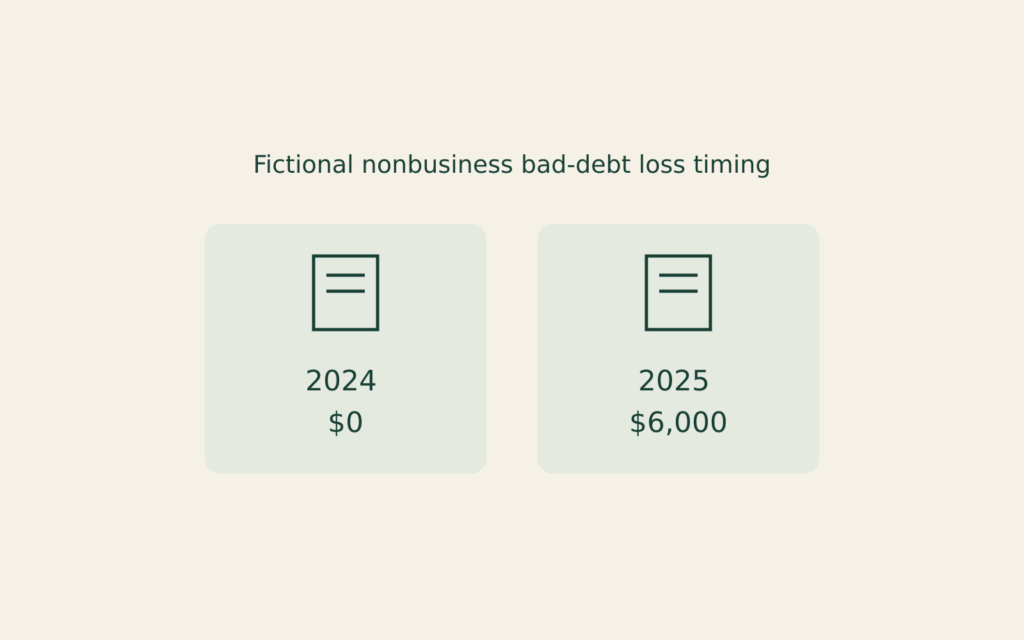
By December 2024, $4,000 principal had been repaid. Records supported possible further recovery, although some of the remaining $6,000 was uncollectible. No nonbusiness bad-debt loss arose merely from that partial worthlessness.
In 2025, documented reasonable collection efforts and the debtor’s financial circumstances establish no chance of recovering any remaining amount. The entire $6,000 becomes worthless that year. There are no guarantees, other recoveries, unpaid-interest basis or adjustments.
Publication 550 requires genuine debt, basis and total worthlessness. The remaining cash basis is $10,000−$4,000=$6,000: a 2025 short-term capital loss, despite the loan’s age—not a $10,000 loss or a 2024 partial deduction. This does not determine net deductible losses, tax savings or the borrower’s tax treatment.


Roth Conversion and Account Clocks
Separate five-year tests.

ABLE Distributions Across Month-End
Separate retained purposes.