Retirement Earnings: Monthly Rule
Compare earnings and work hours.
Estimated reading time: 1 minute
First-year retirement earnings can require a monthly test, not just an annual total.
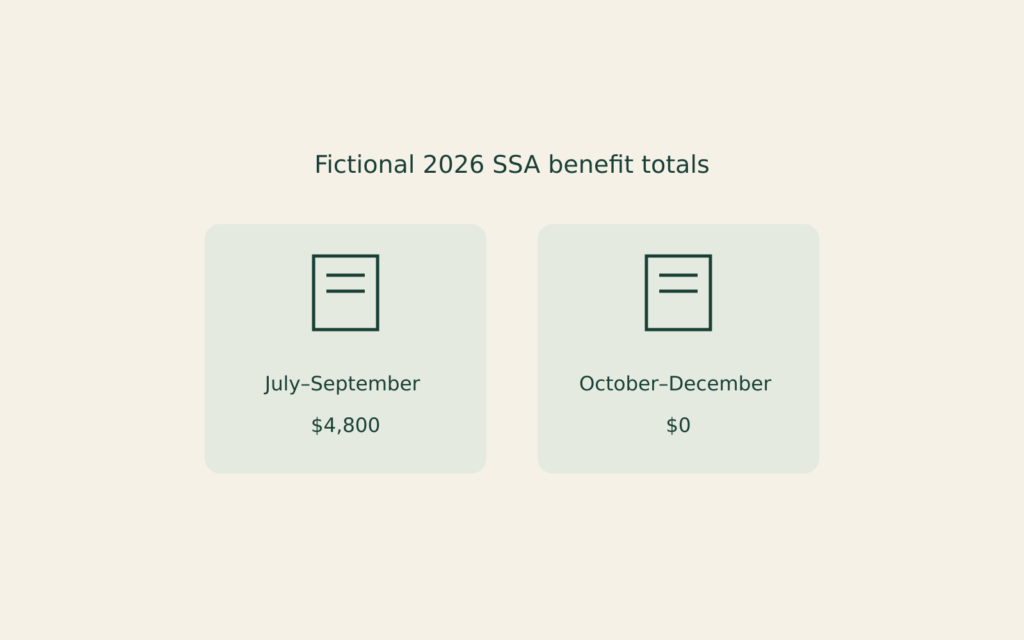
A fictional U.S. worker, age 62, stops employment June 30, 2026 after earning $37,000. SSA confirms first retirement entitlement in July and an otherwise payable $1,600 monthly benefit. They remain below full retirement age all year; the special first-year rule applies. No other benefit adjustments apply.
July–September have no work or earnings. October–December each have $1,000 net self-employment earnings and 60 hours of business work, all in the United States. Annual earnings are $40,000, above the $24,480 annual limit.
SSA’s 2026 monthly rule requires earnings no higher than $2,040 and no substantial self-employment services. More than 45 hours monthly is substantial.
July–September meet both conditions: three full benefits total $4,800. October–December fail the services condition despite earnings below $2,040, so no benefits are payable for those months under this test.
Keep monthly earnings and work hours beside the annual record. This does not calculate payment dates, taxes or recommend retirement.
Roth Conversion and Account Clocks
Separate five-year tests.
ABLE Distributions Across Month-End
Separate retained purposes.