Put Assignment and Cash
Separate premium receipts.
Estimated reading time: 1 minute
The SEC’s options bulletin explains that an assigned put seller must buy the underlying shares at the strike price. Receiving a premium does not remove that obligation.
Follow assignment cash
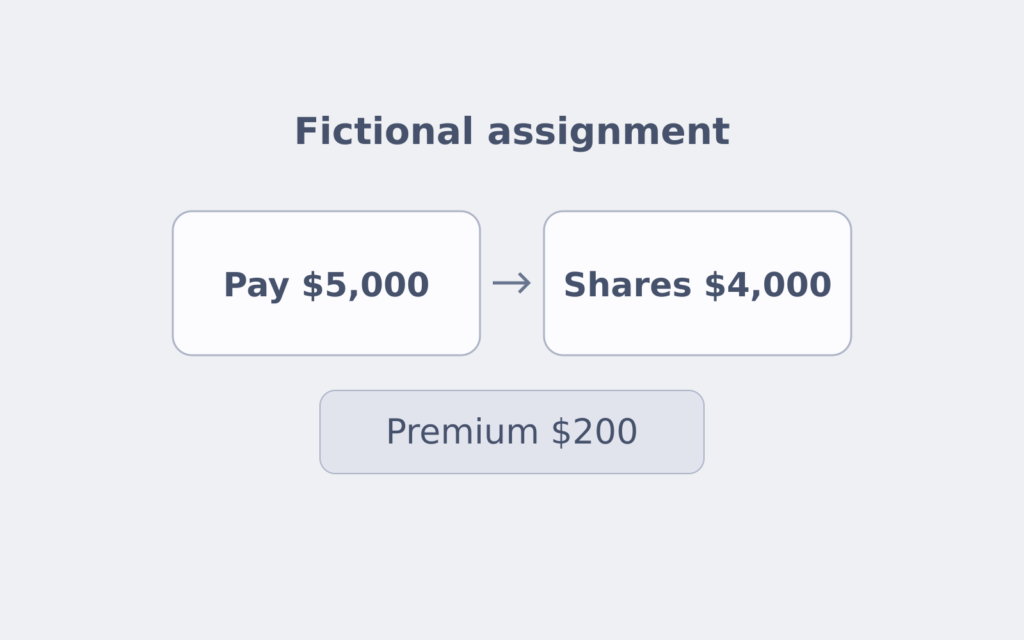
Assume one fictional stock put covers 100 shares at a $50 strike. The seller receives a $2-per-share premium: $200. They set aside $5,000 and retain the premium separately. Ignore fees, taxes, interest and other positions.
If assigned when shares trade at $40, the seller pays 100 × $50 = $5,000 and receives shares worth $4,000. With the retained $200, remaining value totals $4,200 versus the original $5,000: an $800 economic loss.
The $200 receipt is not a $200 profit. Nor does assignment require merely handing back that premium.
Cash backing is not loss protection
If those shares subsequently become worthless, the combined loss reaches $4,800. Keeping assignment cash available does not prevent stock losses. Check contract size, settlement terms and broker requirements. This illustration neither recommends selling options nor calculates tax results.
Roth Conversion and Account Clocks
Separate five-year tests.
ABLE Distributions Across Month-End
Separate retained purposes.