ADU Project Records
For a San Diego ADU project, distinguish the financing question from the commitments and records supporting construction and ownership.
Estimated reading time: 5 minutes
Planning an accessory dwelling unit (ADU) involves more than the financing question. This San Diego-focused guide looks at the different commitments and the records supporting construction and ownership.
Describe the property before counting rent
Freddie Mac’s ADU overview describes financing options. Its financing policies aren’t limited to affordable mortgage offerings. Its CHOICERenovation option can support adding or renovating an ADU when purchasing or refinancing, subject to requirements. Its ADU Reference Tool separately summarizes property and rental-income requirements; a general product overview isn’t that complete review.
The overview also distinguishes using rent toward mortgage payments from using rental income to qualify. It identifies potential qualifying-income treatment for an ADU on a subject one-unit primary residence or a non-subject investment property, with Guide requirements applying.
Give the lender the actual property configuration and intended use. Don’t replace the lender’s assessment with an online rent estimate or assume a product description approves your project.
A preapproved design still needs a project permit
The City of San Diego’s January 2026 bulletin requires a building permit to create an ADU. Its preapproved-plan process still involves a permit application and compliance with municipal development regulations. Applicants must ask the plan provider about the cost to license a design; “preapproved” doesn’t mean the drawing is free.
The bulletin separately identifies school fees, the General Plan Maintenance Fee and development-impact requirements, with applicability details in its referenced materials. It also warns that some regulations have different effective status within the Coastal Overlay Zone. This article doesn’t determine a parcel’s zoning or calculate its fees.
The published preapproved-plan route describes a 30-day review, not automatic permission to build. Applicants can also seek preapproval of their designs for others through the city’s master-plan process.
Utility scheduling has its own prerequisites
SDG&E’s construction-service process says an ADU needs an address established through the municipality before the utility application. It distinguishes changes to existing service from new construction without a meter.
Its requested material includes plans and the assessor’s parcel map. A qualified electrician or plumber supplies calculations for existing and new appliance loads; this isn’t a calculation to improvise from the construction price. For a change to existing service, the utility requests information about all existing electric and gas appliances.
After receiving the required information, SDG&E assigns a planner. Subsequent steps can include a field visit, discussion of options, a service work order and scheduling its portion of the work. A submitted application isn’t that completed sequence. Ask which utility milestone supports the proposed project schedule; this guide provides no installation instructions.
Construction can affect assessment before completion
The San Diego County assessor distinguishes ordinary repair or maintenance from new construction. For an addition, the added market value enters the assessment without reassessing the existing property merely because of that construction. Construction cost and added value can differ.
Unfinished new construction is appraised on January 1. The county says this value appears on the next regular tax bill; that unfinished-construction assessment doesn’t itself generate a supplemental bill. A supplemental assessment follows completion.
The unfinished valuation primarily uses construction costs, including architectural expenses, financing, permits and related costs. The office sends a Notification of Value letter showing the property’s assessed value, including the unfinished construction. Thus, a project that hasn’t reached completion can still produce a tax record requiring attention. Ask the assessor about the assessment rather than using a contractor’s headline price as a final tax calculation.
Don’t subtract an unavailable grant
CalHFA’s program index, checked October 30, 2026, says all ADU Grant Program funds were fully reserved as of December 28, 2023. It keeps information available for borrowers and lenders processing existing pipeline grants. A page remaining online therefore doesn’t establish a new funding allocation for your project.
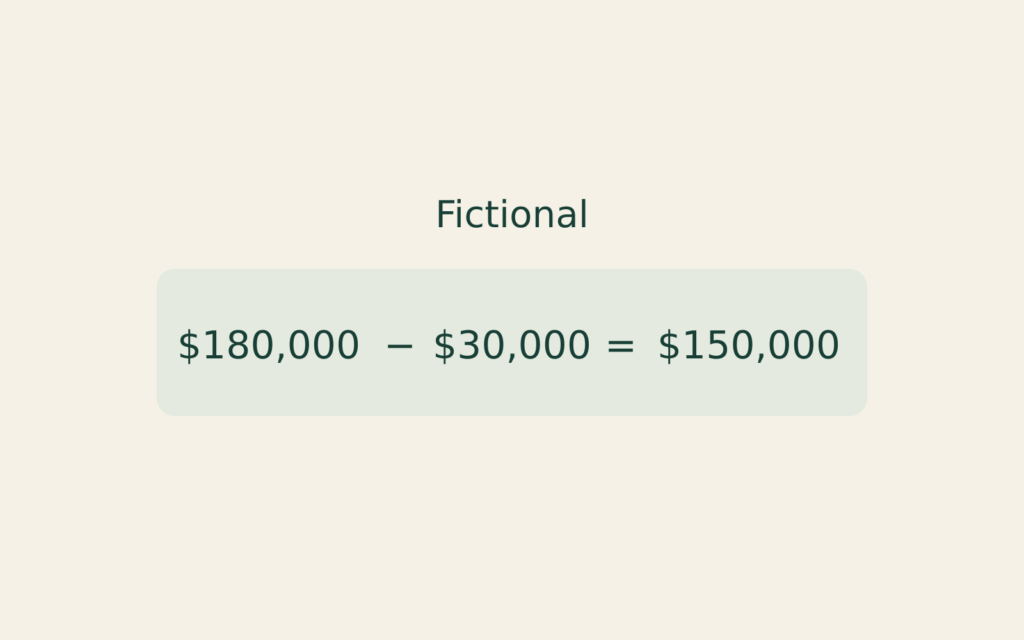
Consider a fictional planning budget of $180,000 with $30,000 of confirmed cash allocated to it. Assume no other funding or adjustments. The amount not covered by that cash is $150,000: $180,000 minus $30,000. This is an unresolved funding requirement, not an approved loan amount.
Don’t reduce that figure using an advertised grant without an actual applicable award. If the budget changes, update the cost side independently instead of silently changing the assumed assistance.
Match the contractor’s role to the work
CSLB’s residential ADU guide, revised November 2025, distinguishes contractor classifications. General Building contractors can build or install ADUs and coordinate multiple trades. C-47 contractors can install manufactured homes built off-site and transported to the location. Other specialty contractors generally can’t manage an entire ADU build, although they can perform their specialty as subcontractors.
The guide identifies written-contract details including scope, timeline, payment schedule, materials, finishes, license number and cancellation-right notices. It also advises verifying licenses, checking references and obtaining multiple bids.
A license classification doesn’t identify the selected finishes in your contract.

One Mortgage Form, Two Borrowers
Match each person’s share.