Aircraft Purchase Records
Read aircraft valuation, ownership, inspection, insurance and continuing charges as separate records. These provider examples aren’t a combined offer.
Estimated reading time: 5 minutes
Financing an aircraft involves different records for valuation, ownership, examinations, insurance and continuing charges. These examples aren’t a combined offer.
Read the financing provider’s valuation requirements
AOPA Aviation Finance’s FAQ says an aircraft description, avionics, special equipment, and engine and airframe time usually supply the valuation information it needs. It specifies a pre-buy inspection copy for loans over $250,000, while full appraisals are typically requested for aircraft over $1 million. The thresholds refer to different measures: loan amount in the first statement, aircraft value in the second.
The provider also says sales tax and fees can’t be financed through its described arrangement. A Cape Town-eligible purchase can involve an additional unfinanced fee and a lender requirement to use escrow. No treaty applicability or fee amount is determined here.
Its FAQ separately describes financing engine or avionics upgrades, potentially through refinancing existing debt. Commercial-use financing is available only on a limited basis. These published categories aren’t approval for a particular aircraft, use or borrower.
Distinguish the registration record from disputed ownership
The FAA registration page, updated December 2023 and currently available, says registration is in the owner’s legal name. Its listed records include an application and evidence of ownership, such as bills of sale. An application is therefore not the only document described.
49 U.S.C. 44103(c) distinguishes the certificate’s nationality function from ownership evidence: it isn’t evidence of ownership in a proceeding where ownership is or may be at issue. That limited statement doesn’t decide anyone’s title or invalidate a registration.
The FAA page also distinguishes a mailing location from the owner’s physical address when a post-office box or mail drop is used. It calls for each signer’s name and appropriate capacity, such as co-owner, managing member or corporate officer. Those fields identify the applicant and signing role; this guide doesn’t determine authority to sign.
Separate preliminary review from managed examination services
Savvy Aviation’s buyer-assistance page offers a free preliminary logbook review of up to three aircraft. Its managed prebuy examinations are a different service, available to SavvyMx subscribers. The published plan includes one managed prebuy and one managed annual inspection per subscription year; additional managed examinations or inspections can require supplementary fees.
The description concerns management. It shouldn’t be rewritten as a promise that every independent shop charge is included. Obtain the actual service quotation for that separate cost question.
Before managing a prebuy, Savvy requires a written conditional purchase agreement permitting examination by the buyer’s chosen shop or mechanic within a reasonable distance. Its described work includes contacting shops, supplying an aircraft-specific checklist and reviewing findings. These are service-scope facts, not an inspection procedure, a recommendation to sign a particular contract or a certification that an aircraft is safe.
Read the insurer’s approved-pilot provisions
Avemco’s September 2021 explanation, still publicly available, expressly limits its discussion to its own policy. It locates approved-pilot information on the policy data page or an endorsement. An Open Pilot Warranty, when provided, specifies minimum experience for someone not individually approved.
The description distinguishes that route from naming an Approved Pilot. It says the Avemco premium is based on the least-experienced pilot named to fly the airplane, and a pilot-history form is requested before adding another pilot. The page also describes possible aircraft-specific instruction requirements before coverage applies.
This is a reason to have the insurer explain the actual pilot provisions and resulting quotation. It isn’t a flight-clearance test or a conclusion that satisfying one experience figure establishes coverage. The policy description doesn’t establish another insurer’s conditions or the cost of adding a particular person.
Locate the engine warranty’s actual starting clock
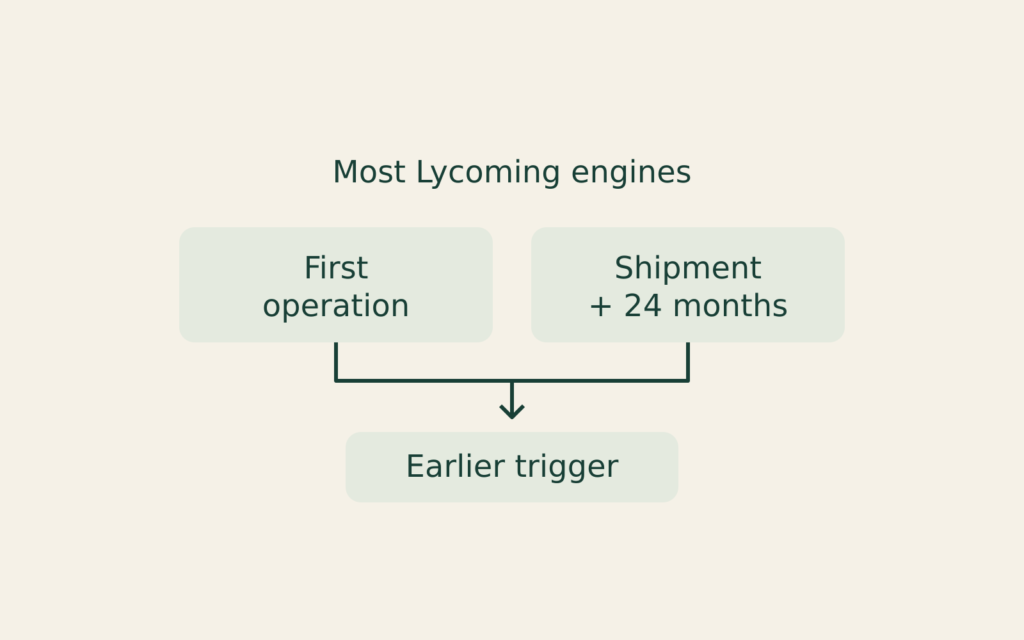
Lycoming’s warranty page says that, for most engines, coverage starts on first operation or twenty-four months after shipment from Lycoming, whichever comes first. The relevant dates aren’t simply the date a buyer acquires the aircraft.
The page distinguishes new or rebuilt certified engines, overhauled engines, replacement parts and cylinder kits. Their described periods and applicable operating-time limitations differ. Identify the actual product category and warranty terms rather than transferring a period from a different item.
For approved claims, Lycoming describes reimbursement through the authorized distributor that handled the claim. Its published potential reimbursement categories include parts, labor and freight, with labor governed by its allowance terms. Approval and the applicable warranty conditions still matter. This describes the financial document trail, not instructions to diagnose, remove, repair or return an engine component, and not a promised reimbursement for a used-aircraft purchase.
Check the annual aircraft property-assessment date
Marin County’s aircraft page, updated January 14, 2026, describes annual assessment at full market value as of January 1. It identifies purchase price, aircraft valuation guides and comparable sales among its valuation methods. Assessment occurs where the aircraft is usually stored when not in use.
The county says the January 1 owner is responsible for the full upcoming tax-year bill, even after selling soon afterward. Its examples contrast a January 2 seller with a December 30 buyer. The ownership date, rather than the number of subsequent months personally using the aircraft, controls those stated examples.
The page also identifies an aircraft property statement required when requested, and annually without a request for aircraft costing $100,000 or more. These are the county’s published assessment and reporting conditions, not a calculated bill, exemption decision or instruction to file a particular owner’s return.

Parent Pays Student Loan Interest: Who Deducts?
Separate payment and obligation.

Returned Loan Debit: Two Fees?
Trace the payment and fees.

Rehabilitation Payment Too High?
Check an alternative request.