Before Financing Funeral Costs
Quick answer: Begin with the itemized services you selected, then identify prepaid items and confirmed payments that actually cover that bill.
Estimated reading time: 6 minutes
Quick answer: Begin with the itemized services you selected, then identify prepaid items and confirmed payments that actually cover that bill. Keep pending insurance searches and benefit applications separate. Compare new borrowing only for the remaining gap, using both cash received and total repayment.
Start with the selected services
The FTC pricing guide distinguishes basic services, other goods and services, and cash advances. Here, cash advances mean outside purchases arranged by the funeral home, not a credit-card withdrawal. The provider supplies an itemized total; unknown outside-item costs require a written good-faith estimate.
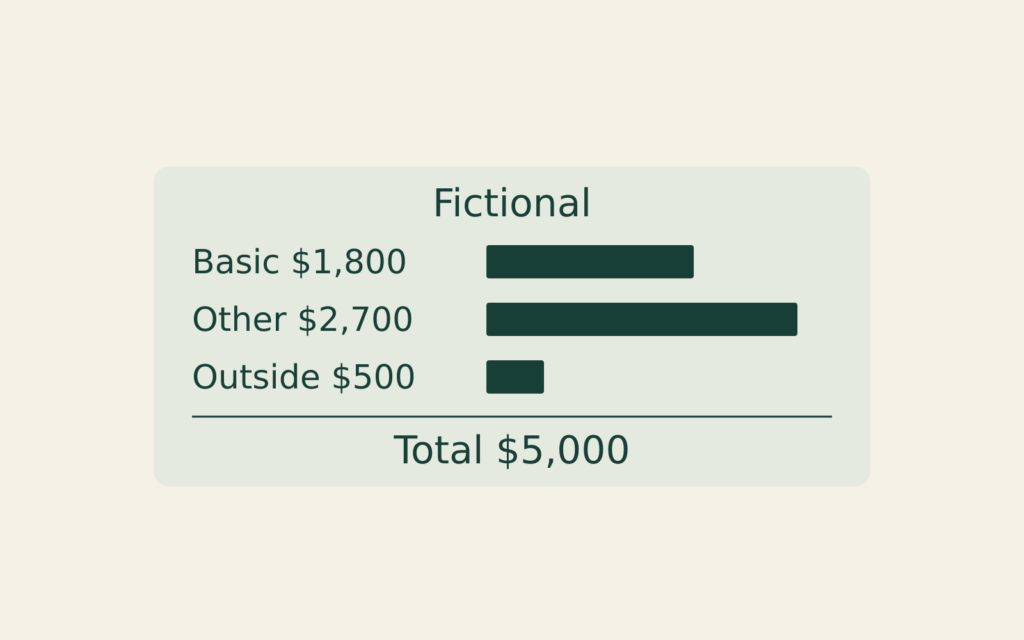
Consider this fictional selection, with no additional charges assumed. These are invented prices, not market averages or a complete planning checklist.
| Component | Amount |
|---|---|
| Basic services | $1,800 |
| Other goods/services | $2,700 |
| Outside items | $500 |
| Total | $5,000 |
The sum is $1,800 + $2,700 + $500 = $5,000. It identifies the selected expense, not a financing quote. Replace estimates when actual outside charges become known.
Check an existing prepaid contract
A prepaid arrangement needs its own review. The Texas Department of Banking’s FAQ distinguishes trust-funded and insurance-funded contracts. For a fully paid trust-funded contract, the provider must deliver the guaranteed goods and services without additional cost. If payments are current but a balance remains, that balance must be paid before the service for that guarantee to apply.
Insurance-funded arrangements depend on the policy type and payment status; limited-benefit policies can provide reduced benefits during their early period. Locate the actual funding policy rather than assuming the word “prepaid” means every expense is settled.
These are Texas examples, not nationwide contract rules. Compare the specified guaranteed items with the proposed arrangements, and ask the original provider to explain any remaining balance or uncovered selection.
A policy search isn’t a payment
If insurance records are missing, the NAIC’s September 2026 explanation describes its free Life Insurance Policy Locator. Participating insurers search for life policies and annuity contracts. A confirmation email acknowledges a request; if a match is found and the requester is identified as beneficiary, the insurer contacts them directly.
Searches can take 90 business days or more. No response can mean no match, no beneficiary status, or insufficient legal authority to receive information. Silence therefore doesn’t establish that no policy existed.
Keep a possible policy separate from confirmed proceeds when discussing how to fund an immediate bill. The locator is a search route, not a funeral-payment guarantee. Questions about insurance can go to the appropriate state insurance department.
Understand a proposed insurance assignment
Texas Life Insurance Company’s claims FAQ illustrates a different question: where a claim payment goes. It describes a funeral-home assignment as a binding agreement between beneficiary and funeral home. Under its process, an assignment received before claim settlement can direct all or part of the proceeds to the funeral home.
That’s one insurer’s procedure, not a recommendation to sign or a universal assignment rule. Ask what amount would be directed, which charges it covers, and what happens if the claim pays less than expected. Obtain explanations from both parties before treating an assignment proposal as a settled bill. This article doesn’t determine anyone’s beneficiary rights or contractual liability.
Identify the particular VA benefit
VA burial allowances can help eligible people with some funeral, burial and plot costs; transportation reimbursement is another component. Eligibility involves the person paying, their relationship or role, the Veteran’s discharge and circumstances of death. Military service alone doesn’t establish that every expense will be paid.
For transportation costs paid directly, VA describes reimbursement supported by a receipt in the payer’s name. Keep that evidence distinct from an estimate or unpaid invoice. Allowance categories and amounts also depend on the applicable circumstances and dates; don’t substitute a headline maximum for a determination.
Use VA’s current eligibility explanation for the specific situation. This guide supplies neither a benefit calculation nor a promised reimbursement date.
Don’t mistake Social Security for full funding
Social Security’s lump-sum death payment is $255, potentially payable to a qualifying spouse or, when there’s no spouse, certain children. It isn’t a general payment to everyone who pays funeral expenses.
SSA says an application must be made within two years of the family member’s death. Review its relationship and eligibility conditions rather than assuming that arranging the funeral qualifies someone. Keep this separate from any other survivor-benefit question; the small one-time payment doesn’t establish that the full bill is covered.
Price any new borrowing separately
The CFPB’s installment-loan guidance explains that repayment uses periodic fixed amounts and that fees add to interest costs. Disclosures may include origination, documentation and late fees; credit and disability insurance are generally optional.
Compare written offers using the amount actually available for the expense and the full repayment schedule. A manageable-looking installment isn’t the same measurement as total borrowing cost. Ask which charges are required, when they are paid, and whether an optional product has been included.
Compare the loan documents separately; this article doesn’t select a loan or establish affordability.


Roth Conversion and Account Clocks
Separate five-year tests.

ABLE Distributions Across Month-End
Separate retained purposes.