Estimated Tax: Prepayments Versus Balance
Separate required payments from liability.
Estimated reading time: 1 minute
Required estimated-tax prepayments and final annual tax are different amounts. A remaining balance does not itself establish an installment shortfall.
In a fictional example, a U.S. citizen files single, calendar-year federal returns for both 2024 and 2025. The full-year 2024 return shows $200,000 AGI and $10,000 tax; verified 2025 tax is $20,000. These are the correctly computed tax amounts for Form 2210, with no credits or additional taxes affecting this comparison. There is no withholding, farming/fishing income, annualized-income method, special relief or other adjustment.
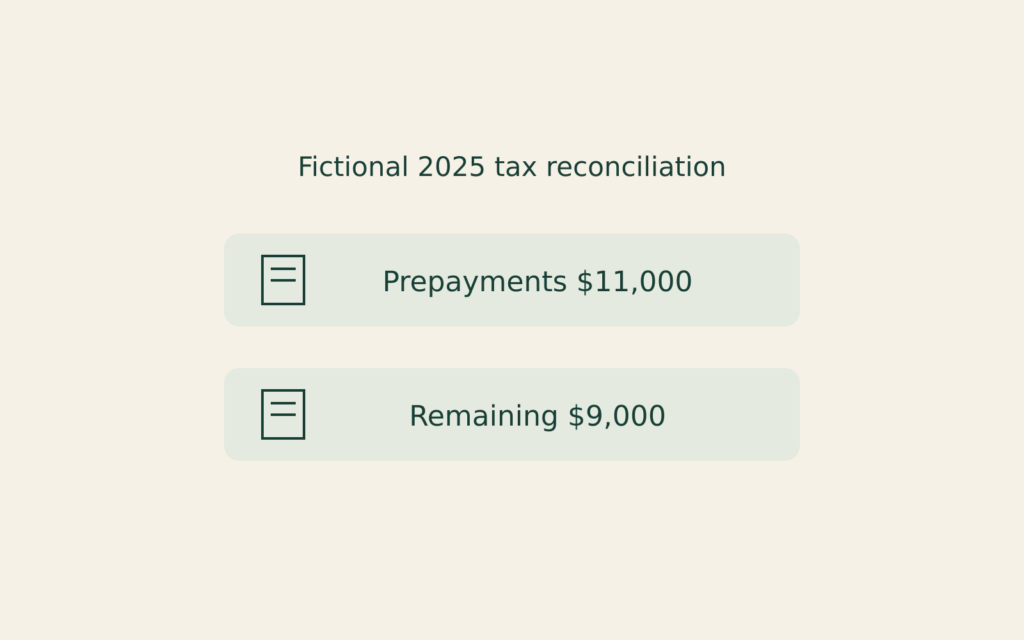
The 2025 instructions require the smaller of 90% of current tax ($18,000) and 110% of prior tax ($11,000), because prior AGI exceeds $150,000. Required annual payment: $11,000; each regular installment: $2,750.
Records confirm $2,750 timely paid for each of the four installments, with no other payments. Each requirement is met, yet $20,000−$11,000=$9,000 remains payable with the return. This case has no estimated-tax installment shortfall; it does not waive the remaining tax or determine later failure-to-pay charges.


Roth Conversion and Account Clocks
Separate five-year tests.

ABLE Distributions Across Month-End
Separate retained purposes.