Student Loan Disability Discharge: Check the Route
Separate evidence and approval.
Estimated reading time: 5 minutes
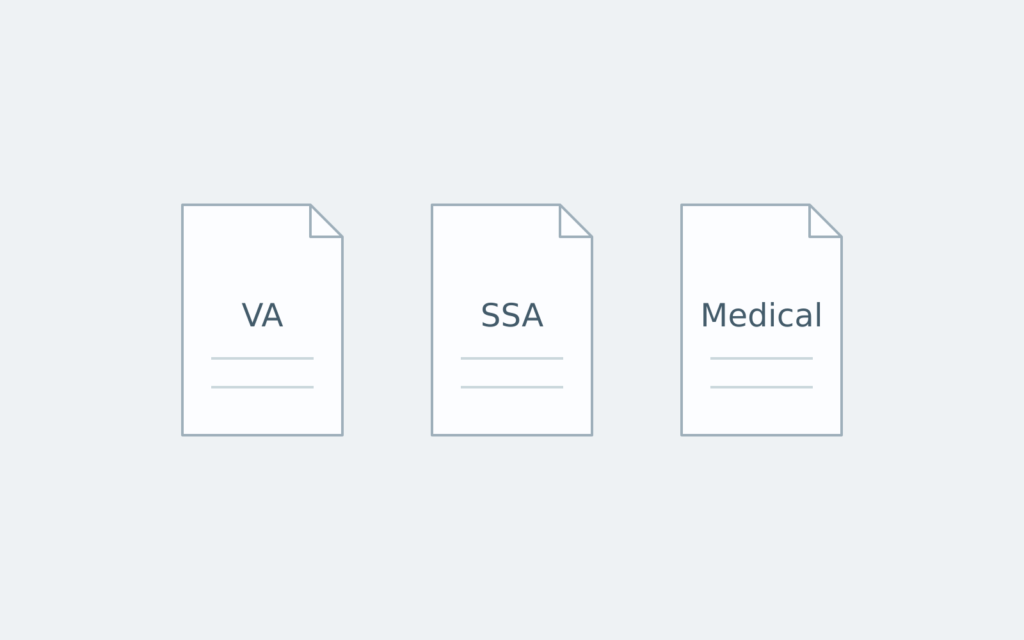
Total and permanent disability (TPD) discharge has distinct evidence routes. A benefit payment, diagnosis or medical appointment by itself is not the same as a completed discharge decision. Identify the route that fits your records before requesting documents or asking a clinician to complete paperwork.
Reviewed November 4, 2026. This guide concerns federal Direct, FFEL and Perkins loans and TEACH Grant service obligations. Private-loan policies are separate. It does not determine whether anyone has a disability or qualifies for discharge.
VA: check the determination, not just the benefit deposit
Federal Student Aid’s explanation identifies qualifying VA determinations: service-connected disability rated 100% disabling, or total disability based on an individual unemployability rating. Provide documentation showing when the determination was awarded if applying through this route.
Look for the actual decision document rather than relying on a bank statement showing a VA payment. The amount deposited does not explain the legal basis of the award. If a letter has several pages, keep them together so the rating and effective-date information can be read in context.
FSA uses VA and SSA information to identify eligible borrowers and sends notices. Not receiving a notice does not prevent you from applying if you believe the applicable requirements are met. Read any notice you receive before submitting duplicate paperwork.
SSA: identify the qualifying criterion
The Direct Loan rule, §685.213(b)(2)(iii), accepts a Benefits Planning Query, notice of award or other documentation Education finds acceptable. For disability-based SSDI or SSI, qualifying alternatives include:
- A continuing disability review scheduled at three years or between five and seven years.
- An established onset date at least five years before applying, or receipt of disability-based benefits for at least five years before applying.
- Qualification based on a compassionate allowance.
Current SSA retirement recipients can qualify through documentation that they met one of those conditions before qualifying for retirement benefits.
Make a note of which criterion your record actually supports. A letter proving that benefits exist may leave a different question unanswered, such as the review schedule. If a date or description is unclear, request clarification rather than estimating it from memory.
For example, someone may have an older disability-onset date but a more recent first deposit. Record those dates separately. Do not replace one with the other simply because the payment date is easier to find. This example is about reading records, not deciding eligibility.
Medical certification: check the professional and the standard
The current federal application permits certification by a state-authorized MD or DO, state-licensed nurse practitioner or physician assistant, or independent-practice-level certified psychologist licensed in the United States.
The certification must establish inability to engage in any substantial gainful activity because of a medically determinable physical or mental impairment expected to cause death, continuously lasting at least 60 months, or expected to last continuously at least 60 months. This is not simply inability to perform a former job. Submit a medically certified application within 90 days of the professional’s signature.
Bring the actual form to the office and ask who will handle it. Explain that you need a professional assessment under the form’s criteria, not a signature on a conclusion you have already written. Allow time for questions and missing information before scheduling submission.
For a planning illustration, if 70 days have elapsed since the signature, only 20 days remain in a 90-day window. That arithmetic is a reminder to check the actual dates and submission instructions, not a recommended waiting period. Retain proof of submission.
Organize the route before collecting more sensitive records
Create a checklist with four columns: the requested item, who supplies it, whether you have it, and what remains unclear. A concise list helps avoid requesting the same document from multiple offices or sending a large medical file without understanding what is needed.
Use clear filenames such as “SSA-award-complete” or “medical-certification-signed,” and keep an unchanged copy of every submitted document. Check that scans include the full page and that signatures, dates and identifying details are legible. Share sensitive documents only through the verified application channel or with someone you have authorized to help.
The application says qualifying VA or SSA documentation does not require the medical-certification section. FSA also allows a designated representative to assist and describes online status tracking in StudentAid.gov’s “My Activity.” A helper should follow that authorization process rather than impersonating you or borrowing your login.
Track review separately from approval
For SSA/medical-route Direct Loan applicants, notice claiming total and permanent disability before applying can suspend collection for up to 120 days; collection resumes without an application by then. After receipt, Education notifies these applicants that payments are not due during eligibility review.
Check the notices and account status instead of assuming that downloading a form started a pause. Keep a dated record of the application receipt, any request for missing information and your response. If two loan accounts display different instructions, identify each account when requesting clarification.
Keep the approval conditions with the decision
SSA or medical-based discharge carries three-year post-discharge monitoring conditions. Before seeking new federal aid, review those conditions with the school’s financial aid office.
Keep the decision and a list of the obligations it addresses. Compare later servicing records against that list, noting any unresolved balance rather than assuming that an application status message explains every account. If the decision is unfavorable, read its reasons and instructions promptly before deciding what additional evidence to seek.
General financial education, not medical, tax or individualized eligibility advice.

Parent Pays Student Loan Interest: Who Deducts?
Separate payment and obligation.

Returned Loan Debit: Two Fees?
Trace the payment and fees.

Rehabilitation Payment Too High?
Check an alternative request.