Home C.L.U.E.: Read the Claims Record
Review a home's C.L.U.E. claim history by property, date, claim, and payment details. Identify records to question without assuming the report itself establishes future coverage.
Estimated reading time: 5 minutes
A homeowners C.L.U.E. report records insurance history. Read its fields before treating it as a coverage decision.
Identify the specialty report
The CFPB’s company listing describes C.L.U.E. as a claims-information exchange supporting insurance pricing and underwriting. It includes home and personal-property claims history covering up to seven years. This guide concerns homeowners records, not auto telematics or commercial insurance.
The listing identifies a free report available on request every twelve months and explains that requesting your own consumer reports doesn’t hurt your credit scores. It also identifies the right to dispute inaccurate or incomplete information with the reporting company and information provider. A dispute calls for investigation; it doesn’t promise the outcome you want. Use the official reporting-company details rather than an unsolicited message requesting identification.
Zero paid doesn’t mean no claim
The Connecticut Insurance Department’s FAQ distinguishes coverage inquiries from actual losses. Claims can appear without payment, including losses below the deductible or outside coverage.
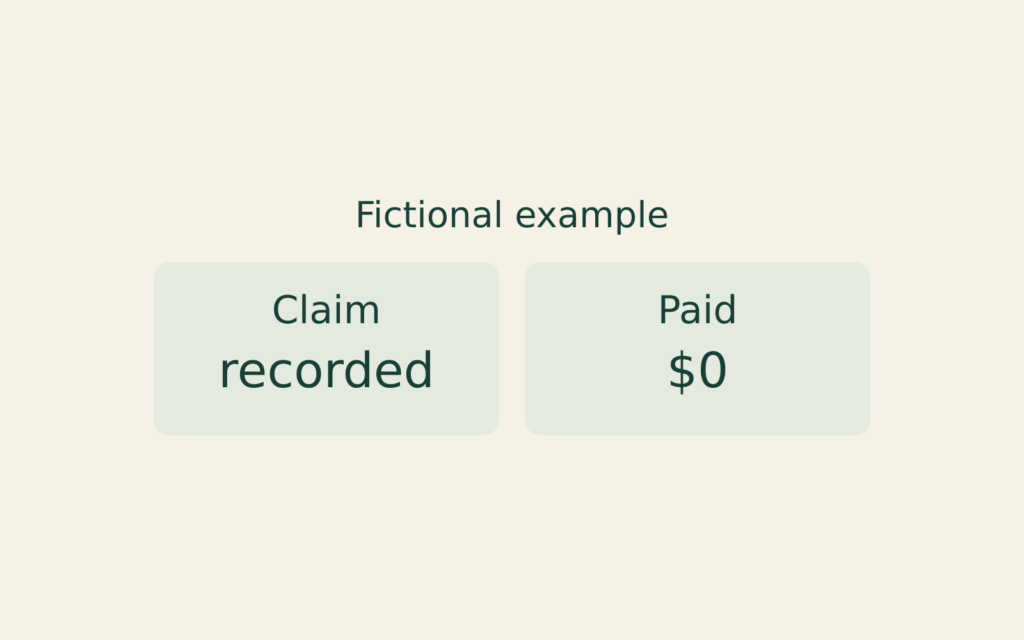
In a fictional entry, “claim recorded” accompanies “amount paid: $0.” Those fields aren’t necessarily contradictory: zero describes payment, not whether a claim exists. It doesn’t explain why payment was absent.
Check the underlying claim record. Don’t conclude that every conversation creates a claim or that every unpaid entry is erroneous.
Don’t invent a damage assessment
LexisNexis’s C.L.U.E. Property description identifies dates, causes of loss and amounts paid. It cautions that source data can contain errors, its aggregation isn’t comprehensive and information needs independent verification.
Preserve the field label: “amount paid” shouldn’t become “total repair cost.” Match the date and loss description to underlying documents.
Historical information isn’t a new property inspection. Likewise, an absent entry isn’t a complete building-condition assessment. Identify what the available evidence can’t answer.
The insurer still has an underwriting question
The Texas Department of Insurance’s underwriting guide describes company-specific decisions using several factors, including a home’s condition, replacement cost, construction and occupancy. A loss-history document isn’t the entire insurance evaluation.
For example, the Texas guide identifies occupancy as relevant and says insurers may limit policy types for vacant, leased, seasonal or other specified uses. A familiar street address doesn’t answer how a property is used. A historical claims entry and today’s occupancy description answer different questions.
Ask the insurer what information actually affected its decision and which requirements apply. Finding an entry doesn’t, by itself, prove that the company used it or establish the outcome of another application.
Separate a loss record from a score
LexisNexis’s data-use explanation distinguishes credit-based insurance scores from financial credit scores. The former predict insurance-loss risk; the latter concern creditworthiness or repayment. Similar underlying credit information doesn’t make the models interchangeable.
Its explanation also describes reason codes identifying factors influencing a credit-based insurance score. A score-related reason code shouldn’t automatically be treated as the identifier of a particular property claim. First identify which product and notice the explanation concerns.
If correspondence mentions an insurance score, keep that question separate from whether a loss-history field is accurate. Correctly reading one document doesn’t establish the contents of another. This guide doesn’t calculate a score or predict a premium reduction.
Distinguish access correspondence from the disclosure
The LexisNexis consumer portal describes a process in which an online report request is followed by a mailed letter explaining online access. Such access correspondence isn’t itself the complete report.
The portal separately addresses adverse-action letters and the information related to them. If an insurer supplies a reference number, that reference helps connect the request to the relevant action. An ordinary confirmation message shouldn’t be mistaken for the insurer’s reason or a completed investigation.
Read the document heading and what it actually contains before marking it reviewed. Keep authentication details private and use the verified official process for any real request. No report or personal information should be sent to EasyLoanWorld.
Read the seller’s supplied record
The Texas insurance department’s consumer column says a prospective home buyer can ask the current owner for the report. It separately describes obtaining a report on property you own.
Don’t assume that interest in purchasing a house gives you the same report access as its owner. Identify what a seller shared: a complete dated report, selected pages or a verbal summary. Those differ. Check page numbering for omissions.
A seller’s phrase such as “nothing important” isn’t a substitute for reading the document offered. Ask what record supports the statement without requesting unrelated personal identifiers. This reading exercise neither orders someone else’s report nor decides whether to purchase or insure the property.
| Field | Question |
|---|---|
| Claim | What was recorded? |
| Payment | What was paid? |
Sources checked October 29, 2026. General U.S. financial education; no insurance eligibility, claim validity, purchase decision or legal conclusion is determined here.


Roth Conversion and Account Clocks
Separate five-year tests.

ABLE Distributions Across Month-End
Separate retained purposes.