HSA Last-Month Testing Period
Reconcile contributions and later eligibility failure.
Estimated reading time: 1 minute
An HSA contribution allowed by the last-month rule can create later income if eligibility ends during testing.
Reconcile two tax years
A fictional unmarried 40-year-old calendar-year taxpayer first becomes HSA-eligible on October 1, 2025, with self-only qualifying coverage through January 2026. Eligibility is independently verified. In December, they contribute $4,300 for 2025 using the last-month rule, with no employer contributions, Archer MSA, IRA funding distribution or other adjustments.
They become ineligible on February 1, 2026, for a reason other than death or disability.
Publication 969 (2025) sets this testing period at December 1, 2025–December 31, 2026. The 2025 Form 8889 instructions provide the monthly calculation without the last-month rule.
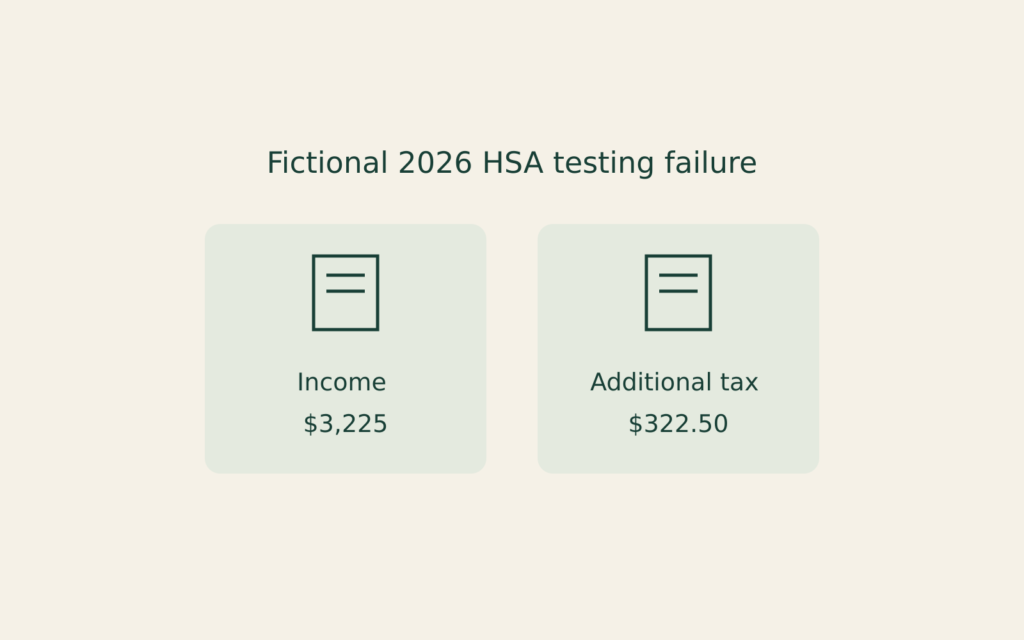
Three eligible months yield $4,300 × 3 ÷ 12 = $1,075. The additional $3,225 ($4,300 − $1,075) is included in 2026 income and subject to a separate 10% additional tax: $322.50 before return rounding.
This is testing-period failure, not a cash withdrawal or the total tax owed. Preserve eligibility and contribution-year records separately.


Roth Conversion and Account Clocks
Separate five-year tests.

ABLE Distributions Across Month-End
Separate retained purposes.