HVAC Replacement Before Borrowing
Check the HVAC system, installation scope and funding terms, then read technical ratings, warranty periods and utility programs for their separate purposes.
Estimated reading time: 5 minutes
Before you borrow for heating or cooling equipment, check which system you’re buying, what installation includes and the actual funding terms. Technical ratings, warranty periods and utility programs each answer a different question.
A refrigerant transition isn’t automatically a replacement order
EPA’s HFC phasedown FAQ says its 2023 Technology Transitions Rule allows continued use and repair of existing systems. Repairs can include major components, although refrigerant and component availability may decline over time. That’s different from saying every older air conditioner must immediately be replaced.
For residential split air conditioners, EPA distinguishes replacing a faulty component from replacing both the condensing unit and indoor coil. Keeping old refrigerant lines doesn’t, by itself, stop the latter from being a new system. Have the contractor identify the proposed work and applicable requirements. This guide doesn’t diagnose equipment or authorize refrigerant substitutions, installation or repairs.
Match the indoor and outdoor equipment records
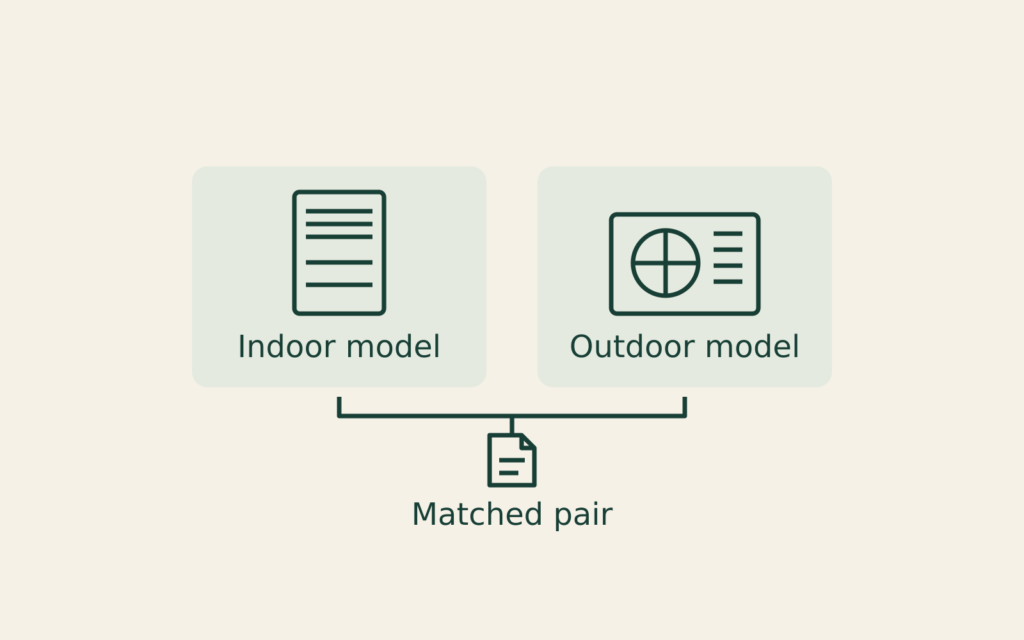
AHRI’s homeowner guidance explains that a split system’s certified performance depends on the indoor and outdoor units being a matched combination. Ask for its reference number or performance certificate, not merely a picture of a certification mark on one component.
AHRI identifies the manufacturer, model name and model number for both units as the information needed to locate a combination without its reference number. Those details can appear on the invoice, warranty and equipment. Compare the proposed pair with the certificate before treating a headline efficiency claim as the rating for that particular installation.
Ask how the heating and cooling load was determined
ENERGY STAR’s buying guidance recommends a professional Manual J load calculation, rather than inferring required capacity from an equipment name.
The guidance also distinguishes ducted heat pumps from ductless mini-splits and discusses dual-fuel arrangements combining a heat pump with an existing gas or oil furnace. In cold climates, the contractor should consider appropriate equipment and integration with backup heat. Ask whether the proposal serves the whole home or selected rooms, and which existing heating equipment stays. Those are different project descriptions, even when both proposals use the words “heat pump.”
Don’t turn an energy label into a promised payment source
The FTC’s EnergyGuide explanation distinguishes the yellow comparison label from the ENERGY STAR efficiency designation. Heat pumps and central air conditioners are among the covered product types. If the label is missing, the FTC suggests checking the seller’s or manufacturer’s website.
Where an estimated annual operating cost is shown, it uses typical consumption and a national average energy price. Actual cost depends on usage and local prices. Don’t silently insert that estimate into a loan budget as guaranteed savings available each month. Keep the equipment comparison separate from the household’s actual bills and the loan’s required payments; a label doesn’t calculate that household’s net cash improvement.
Compare the warranty’s parts and labor periods
Carrier’s Consumer Choice Warranty illustrates why “long warranty” is incomplete. For eligible equipment in existing residential applications, timely registration offers either ten-year parts-only coverage or five-year parts plus three-year labor coverage. The labor option requires a participating dealer; new residential construction is excluded from this program.
Selection normally occurs within 90 days after installation. Carrier separately addresses jurisdictions where benefits can’t depend on registration. Its grouped-registration rule applies the selected option to all eligible products registered together; different options require separate registrations. Read the applicable certificate and program conditions rather than assuming the longest parts period also includes labor for that entire period. These are Carrier-specific terms, not an industry-wide warranty.
An on-bill option still has an approval process
PSE&G’s published HVAC Instant Rebates program description describes interest-free on-bill repayment through equal installments added to the energy bill. The participating contractor applies before the project starts. PSE&G then tells the contractor whether the customer is approved; the program doesn’t make a contractor’s initial discussion an approval.
The published eligibility description requires twelve months of continuous, on-time utility payments. A newer customer may be able to provide a previous utility’s qualifying letter of credit for service within the past 24 months. The agreement is with the eligible customer, and the account holder at the property must sign. Confirm current eligibility and eligible equipment costs with the program. This named utility example isn’t available automatically to customers elsewhere, and no application is made here.
Remove an outdated federal credit from a new-project assumption
The IRS’s 2025 Form 5695 instructions say the energy efficient home improvement credit can’t be claimed for expenditures or property placed in service after December 31, 2025. An older webpage’s longer eligibility window shouldn’t be treated as funding for a new 2026 installation.
The instructions also distinguish completed installation from simply paying an invoice: costs generally count as paid when original installation finishes, with separate reconstruction rules. Keep a historical 2025 project question separate from a current replacement proposal. This doesn’t determine an individual tax claim or calculate a refund. No federal credit is assumed available to repay borrowing in this guide.
Roth Conversion and Account Clocks
Separate five-year tests.
ABLE Distributions Across Month-End
Separate retained purposes.