Investment Adviser Packet: Beyond the Summary
Review an investment adviser's summary, brochure, fees, and registration information as separate disclosures. Prepare questions about services, costs, conflicts, and the agreement.
Estimated reading time: 5 minutes
Before relying on an adviser packet, distinguish its document types and the questions each answers.
Use the summary as a starting point
Investor.gov’s Form CRS guide describes a relationship summary covering services, costs, conflicts, conduct standards and reportable disciplinary history. Similar headings help readers compare firms.
Start by identifying the service being described, rather than relying on a familiar name. This guide concerns reading U.S. disclosure documents; it doesn’t recommend a firm, account, investment or transaction.
Distinguish the firm brochure from the supplement
The SEC’s Form ADV bulletin separates the narrative firm brochure from information about particular advisory personnel. These labels aren’t interchangeable:
| Document | Focus |
|---|---|
| Part 2A brochure | Firm practices and disclosures |
| Part 2B supplement | Specific advisory personnel |
The brochure addresses subjects including compensation, investment methods, risks and conflicts. The supplement supplies an individual’s educational background, other business activities and supervision. A supplement may be separate or incorporated into the firm brochure.
A firm description doesn’t answer every question about the adviser. Locate the relevant individual’s information rather than assuming the firm’s general narrative is their personal record. Ask which supplement covers each listed adviser.
Read the agreement and the fee period
The SEC’s subscription-fee bulletin distinguishes general disclosures from the advisory agreement’s specific fees and services. An online agreement can sit behind an “I agree” checkbox; incorporated terms also deserve attention.
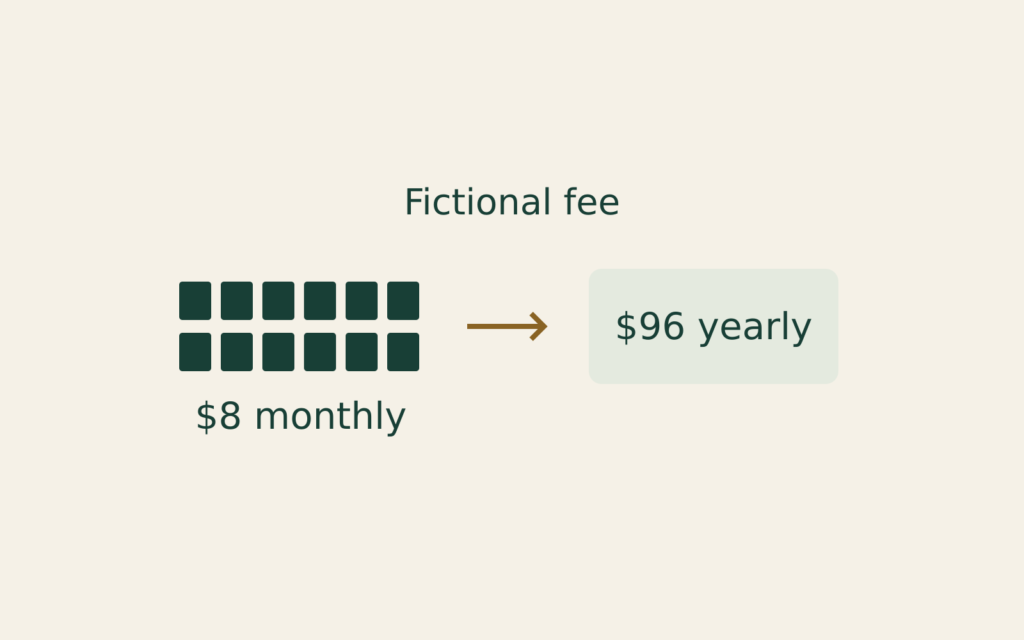
For a fictional arithmetic exercise, assume a flat $8 monthly advisory fee remains unchanged for twelve months. It totals $96, not $8 for the year. This is only the stipulated advisory charge, not an actual quote, complete investment cost or return estimate.
Read what the agreement says about the service provided for that payment and how the arrangement ends. A small monthly figure isn’t enough information to evaluate an annual commitment. This exercise neither selects a fee structure nor predicts account performance.
Identify the capacity and document version
The SEC’s Form CRS compliance guide explains that a firm registered as both broker-dealer and investment adviser may use a combined summary or separate summaries. Affiliated firms may also present their services together or separately.
Check which entity and service each passage describes. A combined document doesn’t mean every description applies identically to every relationship.
The guide also explains that material inaccuracies require updates and that changes can be communicated through an amended summary or another delivered disclosure. When packet versions differ, ask for the current document and the explanation of changes. Don’t select the more appealing wording or assume an older copy remains current.
Don’t translate “wrap” into “nothing extra”
The SEC’s wrap-fee bulletin explains bundled advisory and brokerage services, but warns that coverage varies. A wrap program’s brochure describes additional charges and the circumstances that can produce them.
For example, fund expenses can remain outside the bundle. Using a broker outside the program to execute a trade, sometimes called trading away, can also create a separate brokerage charge. These are possibilities to investigate, not claims about a particular account.
Read the program brochure for the included services and exclusions. If another adviser participates, identify that adviser’s role and relevant firm brochure too. A fee comparison should reflect the actual bundle; the word “wrap” alone doesn’t establish the complete cost or make one arrangement preferable.
Match the public record to the right identity
The SEC’s search-tool bulletin distinguishes firm searches from individual searches. Results can include alternate names, employers or locations. Those identifiers matter when two people or businesses have similar names.
Use the matching record, not merely the first familiar-looking result. The tool can lead to registration and disclosure information, with separate detail routes for brokerage and advisory records. Read the relevant details rather than treating a summary flag as the entire explanation.
If a name isn’t found, clarify the identity and registration question with the firm or securities regulator. A failed search is a reason to investigate, not enough evidence by itself to declare fraud. Preserve the exact name you checked so a later clarification addresses the same person or entity.
Keep private credentials separate from registration
The 2025 joint investor bulletin on professional designations distinguishes privately awarded credentials from regulatory registration or licensing. The SEC, state regulators and FINRA don’t grant, approve or endorse these professional designations.
Letters after a person’s name therefore answer a different question from their registration record. Requirements vary: a designation may involve examinations, experience and continuing education, or much less. The absence of a designation doesn’t automatically establish inferior qualifications or ethics.
Ask which organization awarded the credential, what it required and whether the organization can verify the person’s status. Read any explanation in the packet rather than supplying a meaning from memory. Credentials should be understood on their own terms, not substituted for the underlying disclosures.


Roth Conversion and Account Clocks
Separate five-year tests.

ABLE Distributions Across Month-End
Separate retained purposes.