Massachusetts Septic Repair Documents
Check Massachusetts septic inspection results, financing terms, tax records and the named program’s payment route before budgeting repairs.
Estimated reading time: 5 minutes
Before budgeting septic repairs in Massachusetts, check how the program routes payments. Read the inspection result, financing agreement and tax record for the different questions each answers.
Read the exact inspection outcome
MassDEP’s property-transfer guidance explains that some component problems can receive a conditional pass. Passing then depends on completing the specified repair or replacement and obtaining Board of Health approval. Soil absorption systems and cesspools aren’t repairable under that conditional-pass category.
The guidance requires the approved inspection-report format; MassDEP and local boards don’t accept other formats as valid. The acquiring buyer must receive a copy. A contractor’s proposal is therefore a different document from the system inspector’s report.
The inspector assesses compliance as of the inspection date. The guidance also says abandoning a planned sale after a failed inspection doesn’t remove the owner’s repair obligation. These points explain the records, not whether a particular system passes or what engineering remedy it needs. Ask the responsible inspector or Board of Health about the actual finding.
Separate MassHousing’s lender from its servicer
The MassHousing Septic Repair Loan Program describes loans made through participating community lenders and serviced by MassHousing. That distinction identifies who originates the loan and who subsequently services it; the program name alone doesn’t identify the community lender.
Its published eligibility includes owner-occupants of one- to four-family homes, including condominiums, and income limits. It lists separate income ceilings for deferred and amortized loans. Don’t copy one category’s limit into the other or infer eligibility merely from needing septic work.
The page says no appraisal is required, closing costs may be included in the loan, and the project must be completed within six months of closing. Those features concern this program. Clarify the applicable loan category, included closing costs and completion requirement with its participating lender rather than assuming a contractor’s estimated finish date changes the program’s deadline.
Understand the homeowner-community betterment agreement
MassDEP’s betterment guide describes a financial agreement between a homeowner and the community. It allocates rights and responsibilities for repairing, replacing or upgrading an on-site system. The guide includes conventional and innovative/alternative systems, and connection to an existing sewer where available.
In the arrangement described there, the community establishes an account repaid over time as an additional line on the homeowner’s real-estate tax bill. The homeowner is responsible for direct and indirect expenses the Board of Health incurs in connection with the work.
The guide directs homeowners to their local Board of Health for information. For a Board of Health expense, ask which direct or indirect charge it represents and which work or service generated it.
Keep the tax credit and interest subsidy distinct
The Massachusetts Department of Revenue’s residential-credit guidance identifies owner-occupied principal-residence and nondependent requirements for the septic credit. It describes an expansion, effective for tax years beginning in 2024, to specified repairs, replacements, upgrades or sewer connections required by Title 5 or a MassDEP watershed permit.
The same guidance addresses below-market financing. The interest subsidy is the difference between interest under the applicable nonsubsidized state rate and interest actually paid under the subsidized rate. That subsidy must be deducted from the septic credit.
This is a reason to provide financing records as well as expense records when obtaining qualified tax review. A low-interest loan and a credit aren’t two unrestricted amounts to subtract from an estimate without checking their interaction. This guide doesn’t calculate a credit, identify every qualifying expense or determine anyone’s tax eligibility.
Check AquiFund’s direct contractor-payment route
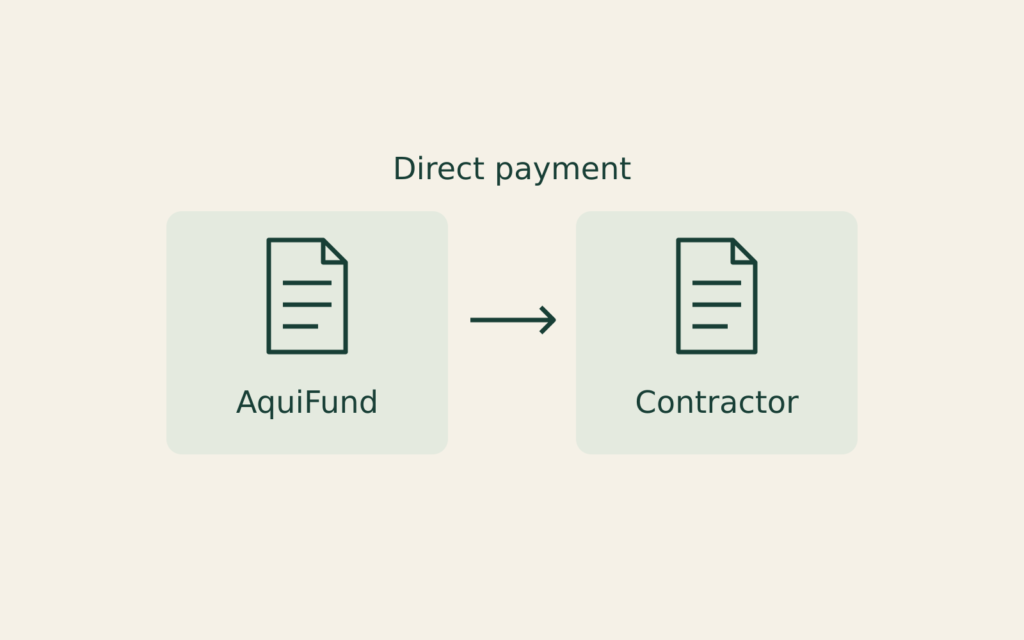
Barnstable County’s Cape Cod AquiFund FAQ describes a specific payment arrangement: the county pays contractors directly, the homeowner receives no funds, and the program doesn’t reimburse homeowner payments to contractors.
A signed, accepted engineering or installation bid is required before funding can be fully approved, though an accepted bid isn’t required when applying.
The county also distinguishes septic projects from sewer connections: sewer applications can’t be approved until the town’s Notice to Connect has been issued. For repayment, its FAQ describes monthly billing directly by AquiFund.
Include the continuing service record
EPA’s maintenance guidance explains why a service contract matters for alternative systems with mechanized components. It also says service providers should document repairs completed and the tank’s condition, and homeowners should retain maintenance records.
The financial question is what the proposed service agreement actually includes: scheduled professional visits, reporting, separately priced repairs and the period covered. Ask the provider to distinguish the recurring service charge from work that would require another quote. Don’t invent a maintenance allowance from the replacement price alone.
EPA identifies household size, wastewater volume, solids and tank size as factors affecting pumping frequency. This article supplies no inspection interval for your system and no operating or repair instructions. Have the appropriate professional explain the applicable service plan and price; an installation invoice doesn’t describe every future maintenance visit or repair.

Parent Pays Student Loan Interest: Who Deducts?
Separate payment and obligation.

Returned Loan Debit: Two Fees?
Trace the payment and fees.

Rehabilitation Payment Too High?
Check an alternative request.