Mortgage Form 1098: Check Your 2025 Interest Records
Keep payment totals, reported interest and tax treatment separate.
Estimated reading time: 5 minutes
Your mortgage bank withdrawals, annual interest statement and principal balance answer different questions. Comparing them without their labels can make a correct record look wrong—or hide an actual discrepancy.
This U.S. guide uses a fictional review of 2025 records. It doesn’t calculate a tax deduction or recommend what to enter on a return. Use guidance for the actual tax year and qualified tax help for eligibility questions.
Identify the year, loan and amount
On the IRS Form 1098 borrower instructions, box 1 describes mortgage interest received by the lender during the calendar year. It excludes points. Box 2 is outstanding principal, normally at January 1—not the year-end balance. For a loan originated or acquired during the year, the relevant origination or acquisition date applies instead.
Start with the calendar year printed on the statement. Then match the lender, borrower and loan reference to your private records. The year in a form’s revision date isn’t a substitute for the calendar-year field.
The IRS reporting overview describes the $600 mortgage-interest threshold for a trade or business receiving interest from an individual, including a sole proprietor. That’s a reporting requirement, not a rule that makes the first $600 nondeductible or guarantees that everything above it’s deductible.
Separate the payment components
IRS Publication 530 for 2025 separates principal, interest and escrow. Escrow deposits can differ from payments to a taxing authority. Don’t label the entire bank debit as interest or deposits as tax disbursements.
Assume fictional annual payments of $24,000: $18,000 interest, $3,000 principal and $3,000 escrow deposits. These are the only components; all payments were applied, with no points, refunds, subsidies or timing adjustments.
These components total $24,000. A matching $18,000 interest figure doesn’t establish $6,000 of missing interest: principal and escrow explain that difference. This reconciles documents; it doesn’t calculate a deduction.
Use the record that answers the question
| Question | Record to inspect |
|---|---|
| What left the bank? | Bank transaction history |
| How was each payment applied? | Servicer’s payment-allocation history |
| What interest was reported? | Form 1098, box 1, for the matching year and loan |
| What was paid from escrow? | Escrow disbursement record, not deposits alone |
If the payment history itself is incomplete, identify the missing period before comparing its subtotal with a whole-year statement. Twelve bank withdrawals don’t supply the allocation details that are absent from the loan record.
Don’t overlook a second issuer
A servicing transfer can divide the reporting record. In Chase’s transfer-out explanation, borrowers receive one year-end statement from Chase covering the period up to transfer and another from the new servicer for the remainder. Check the actual providers and covered records for your mortgage rather than assuming the newest portal contains everything.
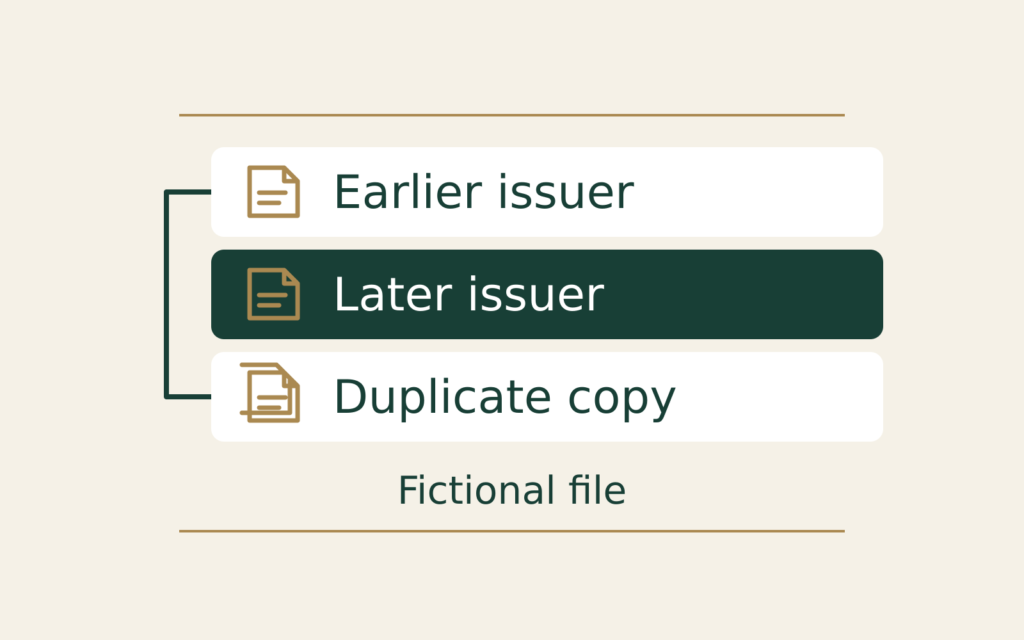
In a separate fictional file, Lee finds one earlier-servicer statement and one later-servicer statement for the same loan and year. Lee also downloads another copy of the earlier statement. There are three files, but only two distinct statements unless comparison shows otherwise.
Label copies, corrections and separate issuers differently. Don’t add a duplicate download as another payment, and don’t treat a corrected statement as an extra independent loan. Preserve the prior version so any changed field can be traced.
Reported interest isn’t automatically deductible interest
Publication 936 for 2025 explains deduction limits and special cases. For example, certain prepaid interest for January 2026 may appear in a 2025 box 1 but isn’t deductible for 2025. It also addresses situations where another borrower receives the statement. A name on the form isn’t permission for multiple borrowers each to claim the entire amount.
Keep the reporting check separate from the tax decision. A figure can accurately describe the issuer’s reporting while additional facts determine its treatment on a particular return. This article supplies no deduction allocation, points calculation or mortgage-insurance conclusion.
Ask a specific correction question
Contact the issuer through an established channel if the records disagree. Identify the year, account, box and supporting entry. Ask whether the figure reflects a different reporting period, an adjustment or an error, and whether a corrected statement is needed.
Keep the reply and any replacement together. Verify that the replacement addresses the questioned field; a changed address doesn’t explain an unresolved interest amount. Don’t alter the issuer’s statement yourself or let a pending inquiry replace timely tax advice.
In a private inquiry index, record the question date, disputed field, reply reference and missing evidence. Leave unanswered items open; never invent a response.
Keep tax documents and full account identifiers private. A question shared publicly should describe the disputed field without exposing the household’s financial records.
Sources checked October 29, 2026. Form 1098 revision: April 2025. Tax publications cited: 2025 editions; this guide doesn’t establish deduction rules for later years.

One Mortgage Form, Two Borrowers
Match each person’s share.