2026 Overtime: Pay Versus Qualified Premium
For tax year 2026, IRS guidance distinguishes overtime wages from qualified overtime compensation under the Fair Labor Standards Act (FLSA).
Estimated reading time: 1 minute
For tax year 2026, IRS guidance distinguishes overtime wages from qualified overtime compensation under the Fair Labor Standards Act (FLSA). The employer reports the annual qualified total in Form W-2 box 12, code TT—not necessarily the entire overtime paycheck.
Separate the premium from regular pay
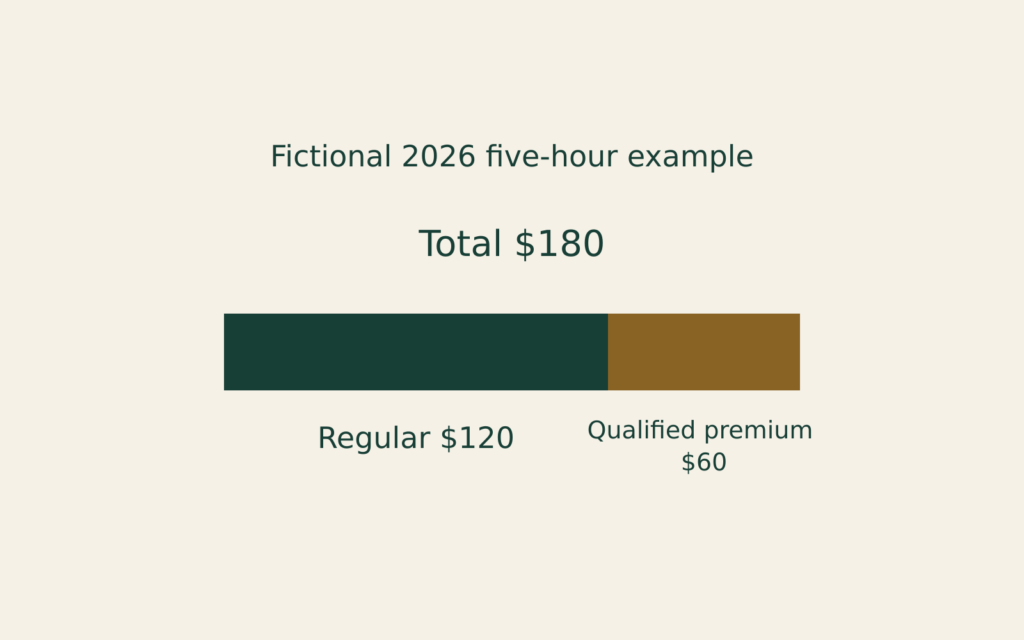
Fictional private-sector employee: assume FLSA coverage, no overtime exemption, the general forty-hour workweek rule, and a verified $24 regular hourly rate. Five hours worked beyond forty are paid at $36 per hour, with no other remuneration or creditable premiums.
Payment for those five hours is $180: 5 × $36. It includes $120 of regular pay and $60 of required premium: 5 × $12. The qualified component is $60, not $180.
That $60 alone establishes neither the deduction nor tax saved. Deduction limits and personal eligibility still matter. Qualified overtime remains subject to federal income-tax withholding; this example does not authorize a withholding change. Confirm the payroll components rather than treating an “overtime” label as proof of qualification.
Roth Conversion and Account Clocks
Separate five-year tests.
ABLE Distributions Across Month-End
Separate retained purposes.