Perkins Enforcement: Check the Unit
Look beyond the department name.
Estimated reading time: 5 minutes
For Perkins law-enforcement cancellation, do not stop at the name of the large agency on your employment records.
Check mission and position
The rule requires a publicly funded local, state or federal law-enforcement or corrections agency whose principal activities concern crime prevention, control, reduction or criminal-law enforcement. Agencies primarily enforcing civil, regulatory or administrative laws are excluded.
The borrower must be a sworn law-enforcement or corrections officer, or have principal responsibilities unique to criminal justice. The service must be essential to the eligible agency’s primary mission.
This discussion concerns Perkins Loans made on or after November 29, 1990. Earlier loans have a separate provision; do not treat that date alone as a denial.
Identify the actual unit
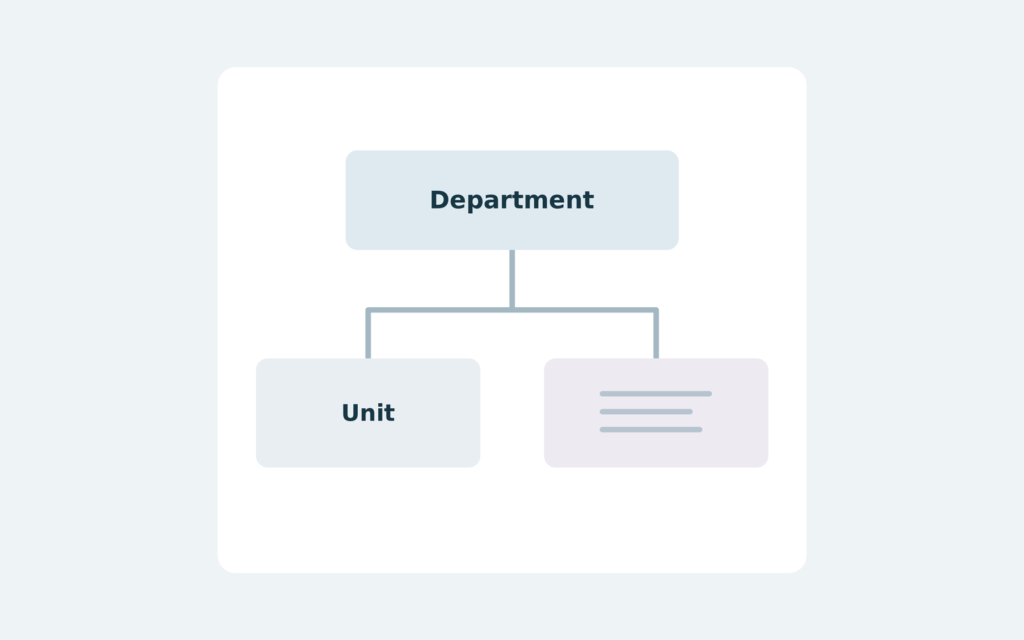
The Federal Student Aid handbook says a subunit within a larger non-law-enforcement agency may qualify when its work meets the criminal-law mission requirement.
Suppose your department contains a civil licensing office and a separate criminal-investigation unit. The department’s name does not establish which unit qualifies. Document the actual unit’s mission and your responsibilities; this hypothetical does not approve either job.
General support functions, such as accounting or filing, do not qualify under this category merely because they occur in a qualifying agency. The normal requirement is full-time service for 12 consecutive months.
For a school-held Perkins Loan, ask the lending school’s loan office or billing service for the cancellation form, deadline and evidence requirements. Include the organizational relationship and documented functions with the request. The school must assess agency eligibility and the position; neither a promising unit name nor public employment guarantees cancellation.
Source: Federal Student Aid handbook.
Use the form your loan office actually accepts
An application is not just a description of a job title. For example, Heartland ECSI’s Perkins request form asks for employment dates, employer certification and an employer-certified description of duties. It distinguishes deferment while anticipating a completed service year from cancellation after that year. Its instructions tell borrowers to continue timely payments until notified that deferment or cancellation has posted.
This is an example of a servicer’s paperwork, not a universal form or a promise about your account. Obtain the correct version and submission instructions from your own school or servicer. Confirm your billing status rather than treating a submitted request as approval.
Build an evidence packet that answers distinct questions
Organize your preparation into three folders: the employer and unit, your actual work, and the dates being claimed. Keep a one-page index explaining what each document supports. That makes it easier to see a missing fact than sending a large, unlabeled collection of attachments.
For the organizational folder, identify the chain from department to division to unit. For the work folder, collect the current job description and note whether it accurately describes the period under review. For the dates folder, record assignment changes and the beginning and end of the period you want reviewed. These are preparation suggestions; the school’s requirements determine what you must submit.
If a document is missing, write down who can provide it and what you need clarified. Do not fill the gap by guessing or editing an official description yourself. A supervisor may be able to explain an old assignment, while human resources may hold the appointment dates. Ask the loan office which certification it needs before requesting unnecessary records.
A practical example: the same title, a changed assignment
Imagine a borrower whose personnel title stayed unchanged while the office reorganized. One document lists the former unit; a newer organizational chart lists a different reporting line. The useful next step is not to choose whichever name sounds more eligible. It is to explain the timeline and obtain accurate supporting information.
The borrower could ask: “My title remained the same, but my assignment changed during the period I am asking you to review. Which dates and employer records do you need to evaluate each part?” That question avoids presenting the entire period as one uniform assignment without evidence.
Likewise, avoid changing ordinary descriptions into impressive-sounding legal labels. If two records seem inconsistent, explain the difference plainly and let the authorized employer official confirm the facts. A stronger application is clearer, not more embellished.
Track the decision, not just the submission
Save a complete copy of what you sent and any submission confirmation. Track separate statuses for “received,” “additional information requested” and “decision issued.” If the office asks for clarification, answer the specific question and identify the corresponding document rather than resending everything without explanation.
When a decision arrives, check the service dates it covers and whether it matches the request you submitted. If it does not, ask for the reason and the available review process. Keep any response with the original records. Do not assume a coworker’s outcome determines yours.
Sources checked November 4, 2026. This is general information about Perkins cancellation review, not an individual eligibility decision or a direction to stop payments.

Parent Pays Student Loan Interest: Who Deducts?
Separate payment and obligation.

Returned Loan Debit: Two Fees?
Trace the payment and fees.

Rehabilitation Payment Too High?
Check an alternative request.