Reinvested Dividends and New-Share Basis
A completed dividend reinvestment has both an income record and a share-purchase record. Assume an individual owns ordinary common stock in a taxable account.

Estimated reading time: 1 minute
A completed dividend reinvestment has both an income record and a share-purchase record.
Follow the same $200
Assume an individual owns ordinary common stock in a taxable account. Records confirm a $200 ordinary cash dividend and its completed reinvestment into four additional shares of that stock at $50 each, equal to fair market value. There are no discounts, commissions, service charges, withholding or other basis adjustments. No money goes to the owner’s bank account.
The IRS reporting guidance includes dividends reinvested at fair market value in income. Reinvestment does not erase this $200 dividend.
The IRS basis guidance uses the purchased shares’ cost plus adjustments. Here, the four new shares have $200 total basis, or $50 each—not zero because no outside deposit funded them.
Match the dividend credit to the purchase confirmation. This is not a stock split or an additional $200 bank payment. The example selects no sale-basis method and calculates neither tax owed nor a later gain.
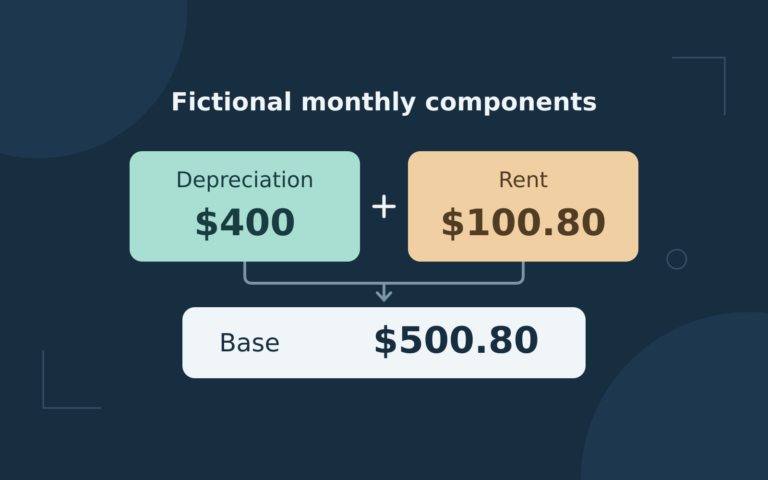
Lease Payment Components
Separate depreciation and rent calculations.
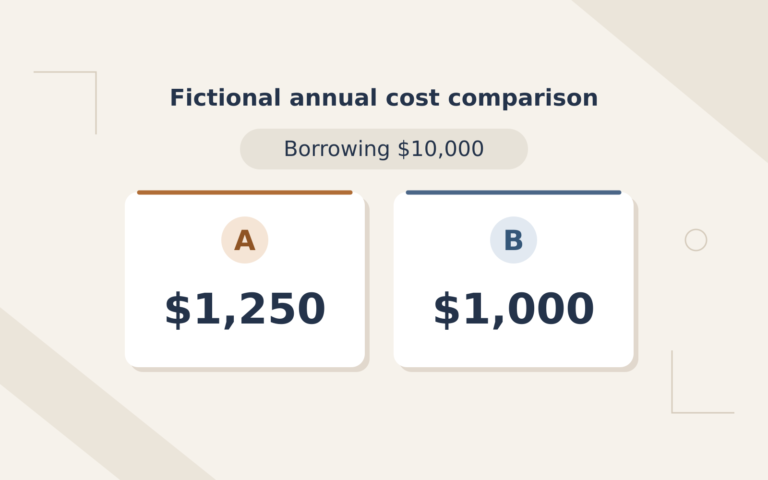
Unused Credit Fees and Utilization
Compare drawn and undrawn costs.
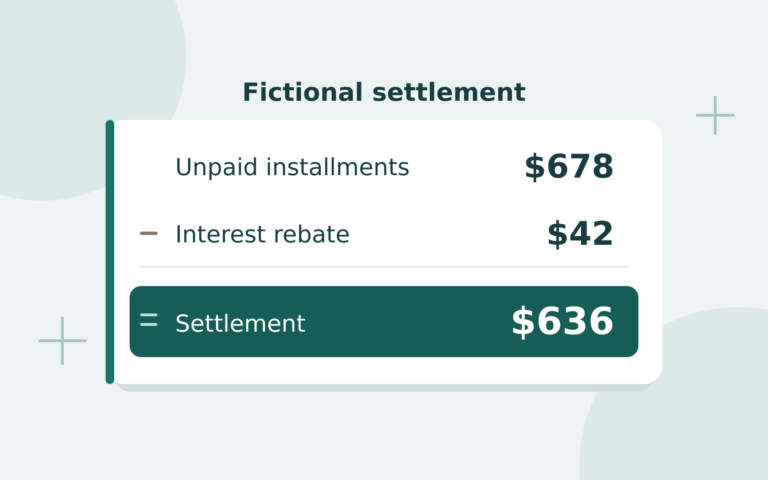
Sum-of-Digits Loan Settlement
Separate remaining installments and rebate.