Self-Employed SEP Contribution Base
Reconcile the contribution base.
Estimated reading time: 1 minute
A sole proprietor’s 25% SEP formula does not simply apply to profit before their own contribution.
Reconcile the contribution base
A fictional single individual operates one ordinary U.S. consulting sole proprietorship in 2025, personally earning its income. They have no employees, related businesses, other retirement plans, elective deferrals, carryovers or special adjustments. Their valid traditional SEP specifies a 25% contribution rate.
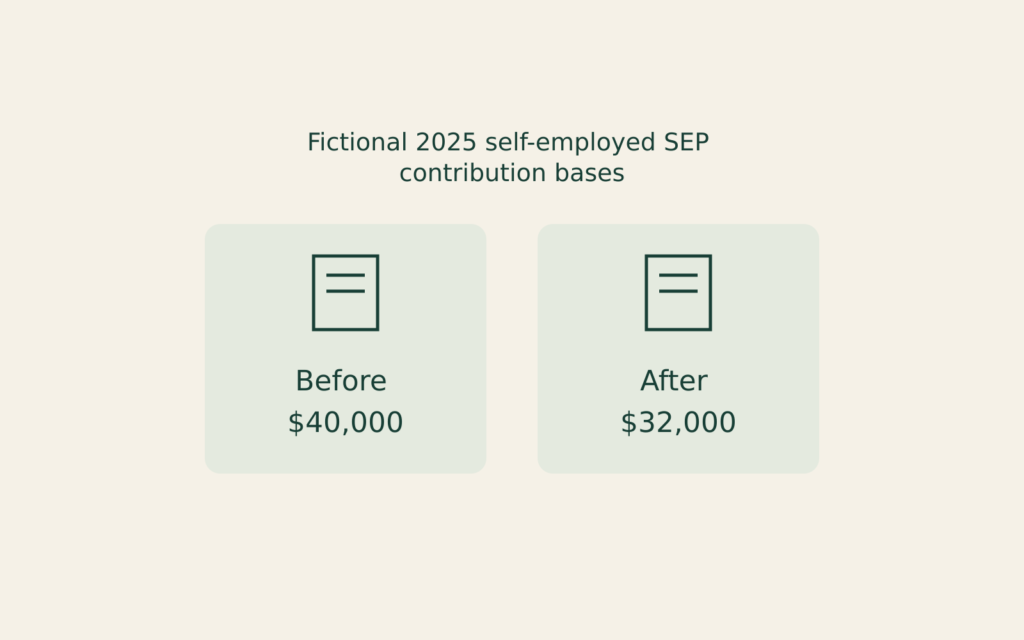
Verified net earnings after the applicable self-employment-tax deduction, but before their own SEP contribution, are $40,000. This is not gross receipts or unadjusted Schedule C profit.
Publication 560 (2025) reduces the self-employed rate because compensation also subtracts the owner’s contribution. Its table converts 25% to 20%: $40,000 × 20% = $8,000. The applicable compensation and $70,000 contribution ceilings do not reduce that result.
Check the resulting base: $40,000 − $8,000 = $32,000; 25% × $32,000 = $8,000—not $10,000. This computes the maximum deductible contribution, not an actual deposit, deduction claimed or tax saving. Actual contributions and deduction requirements remain separate.


Roth Conversion and Account Clocks
Separate five-year tests.

ABLE Distributions Across Month-End
Separate retained purposes.