Short-Sale Price Gains and Costs
Include borrowing obligations.
Estimated reading time: 1 minute
The SEC’s short-sales bulletin explains that borrowing charges and dividend payments to the share lender can reduce a short seller’s result. A falling stock price does not guarantee a net profit.
Reconcile the completed position
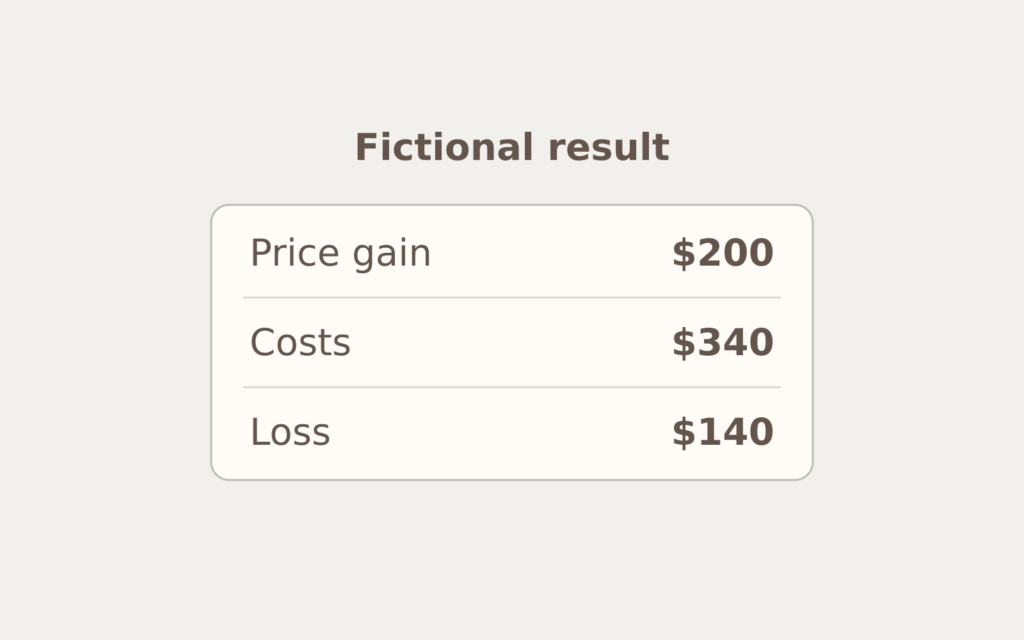
Fictional records: 100 borrowed shares are sold for $50 each, producing $5,000. Later, 100 shares are purchased at $48 and returned to the lender. Repurchase costs $4,800, leaving a $200 price gain before other costs.
While the shares were borrowed, a $3-per-share dividend required a $300 payment to the lender. Total borrowing charges were $40. Assume no other fees, taxes, rebates or transactions.
Net result: $5,000 − $4,800 − $300 − $40 = −$140. The price moved downward, but costs exceeded the price gain.
Keep risk separate
Reconcile execution records, dividend obligations and borrowing charges; the sale proceeds are not themselves profit. This completed example does not measure interim margin needs. Short selling can involve unlimited losses if prices rise and is not recommended by this illustration.
Roth Conversion and Account Clocks
Separate five-year tests.
ABLE Distributions Across Month-End
Separate retained purposes.