Social Security Statement: Read the Assumptions
Before relying on a Social Security document in a financial conversation, identify what you have and what question you need answered.
Estimated reading time: 5 minutes
Before relying on a Social Security document in a financial conversation, identify what you have and what question you need answered. This guide separates the reading tasks without recommending a retirement election, changing an account or determining anyone’s eligibility. Use your own complete document, not another person’s sample.
Start with the document’s job
SSA’s Social Security Statement presents earnings history and personalized retirement benefit estimates. Its redesigned chart shows estimates at nine starting ages. SSA cautions that an individual Statement may contain different language from its public sample, and recommends reviewing it annually.
Read the heading beside a number before copying it elsewhere. An earnings-history entry and a retirement estimate are different kinds of information on the same document. Preserve the chart’s age labels rather than describing the largest bar as “my payment.” This guide concerns reading the record, not deciding when to claim benefits.
Find the future-earnings assumption
SSA’s April 2025 sample Statement says its retirement estimates use earnings to date and assume continued annual earnings until benefits start. The sample also says estimates are based on current law, which Congress may change.
A reader planning to stop work earlier should therefore notice whether the displayed assumption matches that plan. The sample’s personal details and dollar amounts are illustrations, not estimates for anyone reading this article.
Separate work earnings from other income
SSA’s estimate page explains that benefits are based on work earnings and that only earnings up to an annual limit count. Income such as pensions and investments doesn’t count in that calculation. The annual limit isn’t a cap on the household’s total income or a suggested retirement budget.
This distinction matters when someone informally adds every income source into a future-earnings assumption. A pension projection doesn’t become wages simply because both may support retirement spending. Keep the income types labeled. This article uses no current dollar limit and calculates no benefit, tax, eligibility result or effect of a specific pension.
Credits and benefit amounts are different checks
SSA’s eligibility fact sheet distinguishes becoming fully insured for retirement benefits from calculating the amount. Retirement eligibility generally requires forty credits, while the benefit calculation uses the highest thirty-five years of earnings. Years without earnings count as zero when there are fewer than thirty-five years.
Thus, a statement about sufficient credits shouldn’t be read as a promise of a particular monthly amount. Nor does reaching the credit requirement make the earnings history irrelevant. The fact sheet also explains that earnings are indexed before the formula is applied. Simply adding raw annual earnings and dividing by thirty-five doesn’t reproduce a personalized benefit calculation.
Investigate the specific year, not a general suspicion
SSA’s March 2026 earnings-correction publication says recently missing earnings may not yet have been recorded. It suggests checking in August for the preceding year. For an older missing entry, supporting evidence can include a W-2, tax return, pay slip or other work records.
If documents are unavailable, SSA asks for details such as the employer, work location, dates and earnings, then works with the person on correction. The process can take time and may require employer contact. A suspected omission isn’t proof of misconduct. Identify the year and evidence rather than assuming a blank entry has one inevitable explanation or inventing a replacement figure.
Use a verification letter for its actual status
SSA says a benefit verification letter can establish receipt of Social Security, SSI or Medicare; never having received benefits or SSI; or having applied for benefits. It’s sometimes called a budget letter or proof-of-income letter. Read which situation the actual letter describes instead of treating its familiar name as proof of a current payment.
SSA provides online and telephone request routes. Accessing another person’s letter online is restricted, with an exception for an active representative payee for that beneficiary. Don’t assume a spouse’s or child’s records are automatically available through your account. This guide makes no request and supplies no substitute verification.
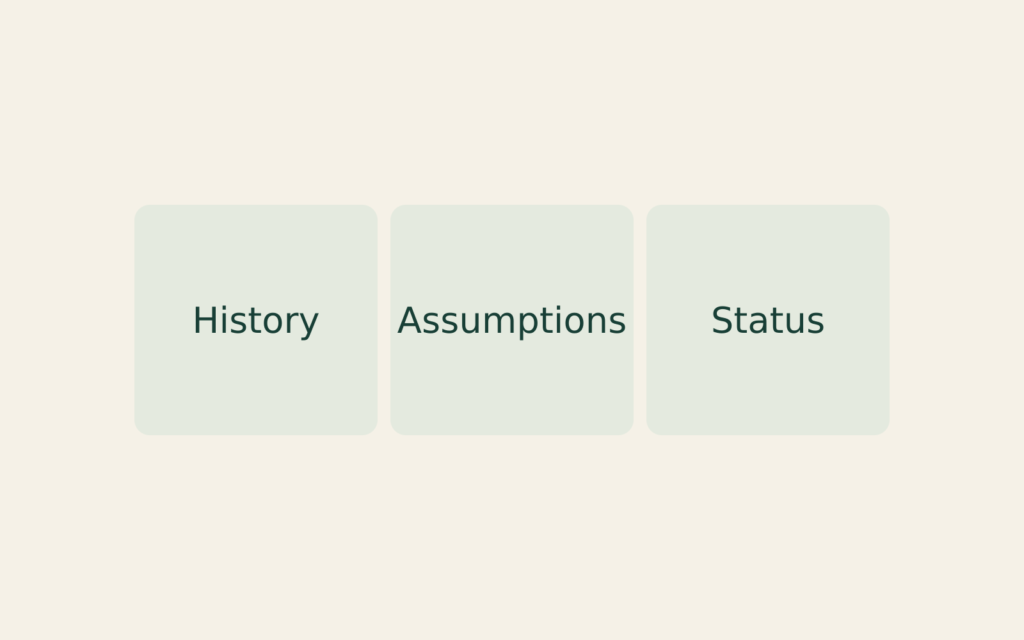
| Read | Keep distinct |
|---|---|
| Earnings | History |
| Estimate | Assumptions |
| Verification | Status |
Keep your interpretation separate
Try this private annotation exercise with a blank sheet rather than altering the original PDF. Draw three boxes titled “Copied wording,” “My assumption” and “Question.” In the first, record a short phrase and its page reference. In the second, explain what you were about to infer. In the third, state what still needs explanation. Don’t place your inference inside quotation marks as though SSA wrote it.
For example, a note saying “I expected this page to answer my question” records your expectation; it doesn’t establish that the page actually does so. If a later explanation resolves the question, keep the original wording and the explanation side by side. Use a private file, omit unnecessary identifiers and retain the unaltered source document. This exercise is about faithful reading, not preparing an official submission.


Roth Conversion and Account Clocks
Separate five-year tests.

ABLE Distributions Across Month-End
Separate retained purposes.