Stock Lots: Identification Versus FIFO
Track sold and remaining lots.
Estimated reading time: 1 minute
A completed stock sale needs a sold-lot record and a remaining-lot record.
Two alternative histories
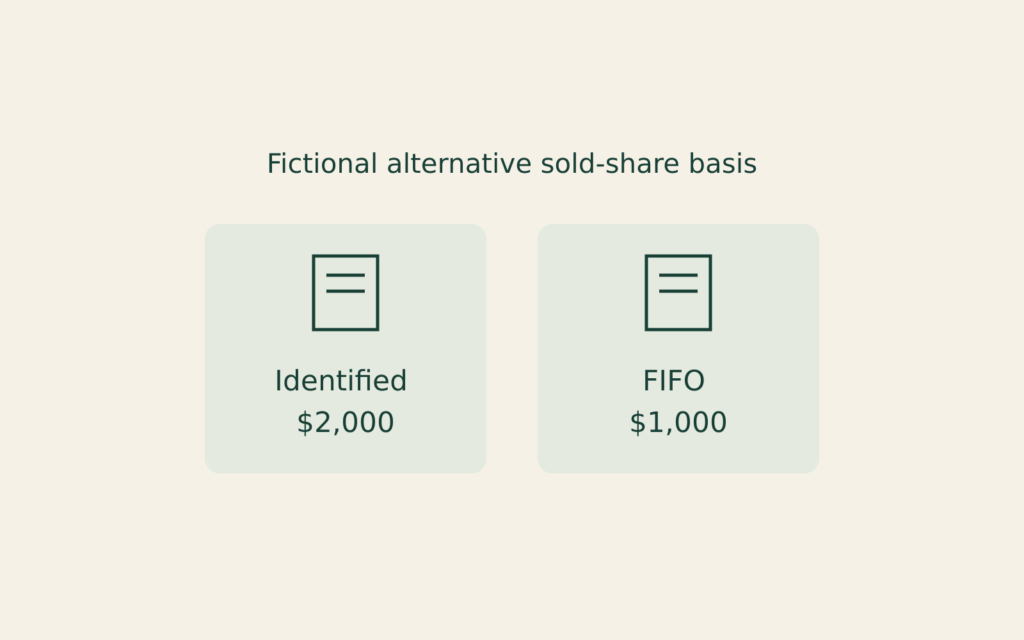
Consider a fictional 2025 individual investor’s ordinary corporate stock held by a broker in a taxable account, outside dividend-reinvestment plans. An earlier purchase acquired 100 shares for $1,000; a later purchase acquired 100 identical shares for $2,000. These are the only lots, with no fees, basis adjustments or other transactions. The investor sells 100 shares.
A: At sale, the investor specifies the later lot and receives the broker’s written confirmation within a reasonable time. Sold-share basis is $2,000; the remaining earlier lot retains $1,000 basis.
B: The sold shares cannot be adequately identified. First-acquired shares supply $1,000 sold-share basis; the later lot retains $2,000.
IRS Publication 550 (2025) supplies these identification rules. Both histories preserve $3,000 total basis; they do not permit retroactive selection. Compare purchase records, instructions and confirmation—not merely the number sold. This does not calculate gain, tax or validate an actual return.


Roth Conversion and Account Clocks
Separate five-year tests.

ABLE Distributions Across Month-End
Separate retained purposes.