Washington Total-Loss Report: Check the Vehicle Evidence
A disappointing insurance offer can leave several questions mixed together. This Washington guide focuses on reading the vehicle evidence before drawing a…
Estimated reading time: 5 minutes
A disappointing insurance offer can leave several questions mixed together. This Washington guide focuses on reading the vehicle evidence before drawing a conclusion. It doesn’t value your car, decide coverage, calculate a legal deadline or recommend accepting a settlement.
The state provisions below were checked October 29, 2026, including rules effective October 18, 2026. Don’t apply this overview automatically to another state or an earlier claim. Ask a qualified professional which version and procedure govern a particular dispute. Keep policy numbers, vehicle identifiers and personal documents out of public comments.
Identify what is being valued
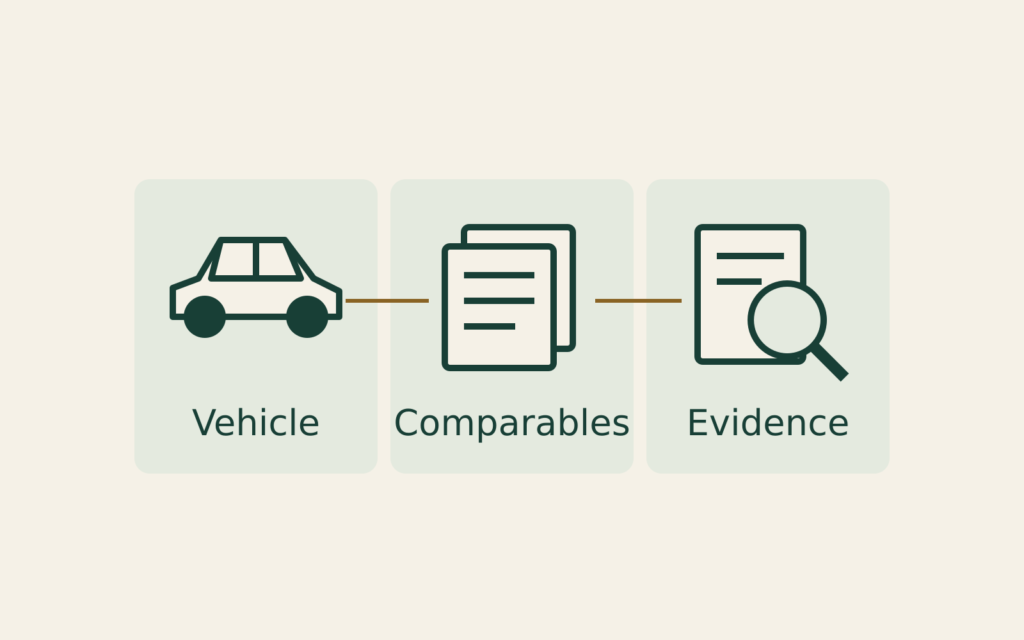
Washington’s definitions describe actual cash value as the vehicle’s fair market value immediately before the loss. A comparable vehicle has the same make and model, the same or newer model year, and similar body style, options, mileage and overall condition. Appropriate, itemized dollar adjustments can establish comparability.
The definition of current data uses a window around the loss date, rather than whatever listing happens to appear today. Also distinguish first-party claims under your own coverage from claims against someone insured by another company. That distinction matters when reading the separate appraisal provision discussed below.
Read the report behind the amount
WAC 284-30-392 requires the report to include inspection information and the information used to determine value. Comparable listings identify sources, dates, seller contacts or vehicle identifiers, asking prices, available sold prices, and location or contact information.
For computerized-source valuations, weighting must be explained and supplemental information labeled separately. The current rule also addresses supporting photographs and documentation for condition deductions: evidence about a comparable’s condition used to reduce payment is provided upon request; evidence supporting a deduction for the loss vehicle’s condition must be provided. Keep those two conditions distinct rather than assuming they are identical requests.
| Report | Base trim |
|---|---|
| Purchase document | Premium trim |
Ask which equipment description was used and what supports it. This mismatch alone supplies no dollar correction.
Ask how the conclusion was reached
Washington’s settlement-method rule allows several methods, including comparable vehicles, dealer quotations, advertised data and qualifying computerized sources.
Offers must use itemized, verifiable dollar amounts, with appropriate adjustments; the insurer must consider relevant information supplied by the claimant. You may request a true and accurate copy of the valuation report. Ask which method was used and where its inputs appear before proposing your own total.
Settlement can also include taxes, government fees, deductibles and permitted adjustments, including retained-vehicle salvage value. These components require separate review; this overview calculates no settlement or retention decision.
Appraisal is a separate process
RCW 48.18.620 requires an appraisal-right provision in automobile policies with first-party physical-damage coverage issued or renewed effective January 1, 2026, or later. It concerns disputes between insurer and insured about actual cash value and amount of loss. It isn’t a blanket appraisal right against another driver’s insurer.
The prescribed clause, or certified language at least as favorable, uses competent, disinterested appraisers and an umpire when needed. An agreement of two is binding. Each party pays its own appraisal expenses and shares the umpire cost equally under that language.
Read the actual clause and clarify applicability, costs and procedures. This overview isn’t an appraisal demand or an individual deadline calculation.
Keep the loan question separate
The CFPB describes GAP as an optional product promising to cover some or all of the difference between a car’s cash value and its remaining loan or lease balance after theft or total loss. That description doesn’t establish eligibility or the amount payable under a particular contract.
Don’t turn a desired loan payoff into evidence of vehicle value, or assume a valuation disagreement determines a GAP claim. Identify the actual product and its terms before counting on a benefit. No example here establishes that the old loan is paid, that a payment should stop, or that replacement-car cash is available.
The same CFPB guidance describes vendor’s single-interest insurance as protecting the lender when a vehicle is damaged or destroyed. A financed insurance charge doesn’t identify which protection you have. Match the product name to its actual document.
Make the next conversation specific
Choose the first statement in the report you can’t reconcile with your documents. Record its page and exact label, the conflicting record, and one question about the difference. Keep an answer alongside the question rather than replacing the original description. If the answer resolves only part of the issue, state what remains open. This leaves a readable history without turning an unanswered question into an accusation or an assumed outcome.
Give each issue a neutral identifier, such as Q1. If an email answers Q1 and introduces a new issue, label the new one Q2 rather than overwriting Q1. Save the original attachment and the reply separately, so a later reader can distinguish supplied evidence from your annotations.


Roth Conversion and Account Clocks
Separate five-year tests.

ABLE Distributions Across Month-End
Separate retained purposes.